
American Business Merit Badge — Complete Digital Resource Guide
https://merit-badge.university/merit-badges/american-business/guide/
Introduction & Overview
Every product you buy, every job your neighbors go to, and every app on your phone exists because of business. The American Business merit badge takes you behind the scenes of the economic engine that shapes daily life in the United States. You will learn how businesses start, grow, compete, and serve their communities — and you might discover a career path that excites you.
Business is not just about making money. It is about solving problems, creating value, and building something that matters. Whether you dream of launching your own company, managing a team, or simply want to understand why the economy works the way it does, this badge gives you the foundation to think like a business leader.
Then and Now
Then — Building a Nation of Commerce
When the United States was young, business looked very different. Colonial merchants traded furs, tobacco, and lumber with Europe. Blacksmiths, cobblers, and printers ran small shops on main streets. The Constitution gave Congress the power to regulate commerce between states, creating the framework for a unified national economy.
In the 1800s, the Industrial Revolution transformed everything. Factories replaced workshops. Railroads connected coasts. Entrepreneurs like Andrew Carnegie, John D. Rockefeller, and Madam C.J. Walker built empires that changed how Americans lived and worked.
- Purpose: Survival, trade, nation-building
- Mindset: Build something from nothing — opportunity awaits those who work hard
Now — A Global Economic Powerhouse
Today the United States has the largest economy in the world. American companies lead in technology, healthcare, finance, entertainment, and agriculture. A teenager with a laptop can start a business from a bedroom. Small businesses employ nearly half of all American workers, while large corporations operate across dozens of countries.
- Purpose: Innovation, problem-solving, global impact
- Mindset: Adapt quickly, think globally, create value for customers and communities
Get Ready! You are about to explore how the American business system works — from the corner store to the Fortune 500. The skills you learn here will serve you whether you start a company, manage your personal finances, or simply want to be a smarter citizen.

Kinds of Business
Businesses come in many shapes and sizes. Before you dive into the requirements, here is a look at the main types you will encounter in the American economy.
Small Business
Small businesses are the backbone of the American economy. They include everything from a neighborhood bakery to a local landscaping company to a freelance graphic designer. The U.S. Small Business Administration defines a small business as one with fewer than 500 employees, but most have far fewer — many are run by just one or two people.
Small businesses often start with a simple idea and a willingness to take a risk. They create jobs, serve their communities, and keep money circulating locally.
Corporations
A corporation is a business that is legally separate from the people who own it. Corporations can sell shares of stock to raise money, which means thousands — or millions — of people can own a small piece of one company. Think of companies like Apple, Walmart, or Disney.
Corporations have complex structures with boards of directors, executive officers, and thousands of employees. They often operate in multiple countries and generate billions of dollars in revenue.
Nonprofit Organizations
Not every business exists to make a profit. Nonprofits are organizations that use their revenue to pursue a mission — like feeding the hungry, protecting the environment, or funding medical research. The Boy Scouts of America is itself a nonprofit organization.
Nonprofits still need to manage money carefully, hire employees, and market their services. The difference is that any surplus goes back into the mission, not into the pockets of owners or shareholders.
Franchise Businesses
A franchise is a business model where an individual (the franchisee) pays for the right to operate under an established brand. Fast-food restaurants like McDonald’s and Subway are classic examples. The franchisee gets a proven system, brand recognition, and support. In return, they pay fees and follow the franchisor’s rules.
Franchises are a popular path for people who want to own a business but prefer to start with a tested blueprint rather than building from scratch.

Online and Digital Businesses
The internet has created entirely new kinds of businesses. E-commerce stores sell products without a physical storefront. Software companies offer apps and subscriptions. Content creators earn revenue through platforms like YouTube or Etsy. Some digital businesses operate with just a handful of people yet reach millions of customers worldwide.
Online business has lowered the barriers to entry — you do not need a building, a warehouse, or a large staff to get started. But you still need a solid plan, financial skills, and a product or service that people want.
Now that you have a sense of what American business looks like, it is time to dig into the foundations — starting with the free enterprise system that makes it all possible.
Req 1a — Free Enterprise
What Is the Free Enterprise System?
The free enterprise system — also called capitalism or a market economy — is the economic system that powers the United States. At its core, it means that individuals and businesses are free to make their own economic choices with limited government interference. You can start a business, choose where to work, decide what to buy, and set your own prices.
But freedom in business does not mean anything goes. The system works because of certain key features that keep it fair and productive.
Four Features of Free Enterprise
1. Private Property
In a free enterprise system, individuals and businesses have the right to own property — land, buildings, equipment, inventions, and ideas. You can buy it, sell it, or use it to create something new. This is different from economic systems where the government owns most property and decides how it is used.
Private property gives people a reason to invest, improve, and build. If you know you can keep what you earn, you are more motivated to work hard.
2. Competition
When multiple businesses offer similar products or services, they compete for your attention and your money. Competition pushes businesses to offer better quality, lower prices, and more innovation. If one pizza shop charges too much or serves cold pizza, you can walk down the street to another one.
Competition benefits consumers because it gives them choices. It also benefits the economy because it drives improvement.
3. Profit Motive
Profit is the money a business keeps after paying all its expenses. The opportunity to earn a profit motivates people to take risks, start businesses, and create new products. Without the profit motive, there would be far less reason to innovate or work efficiently.
4. Voluntary Exchange
In a free enterprise system, every transaction is voluntary. No one forces you to buy a particular product, and no one forces a business to sell at a particular price. Buyers and sellers come together willingly, and both sides expect to benefit from the exchange.
Freedom vs. License
This is an important distinction that goes beyond economics.
Freedom means the right to act, speak, or think as you choose — within the boundaries of responsibility and respect for others. In business, freedom means you can start a company, set prices, and pursue opportunities. But freedom comes with obligations: you must treat customers fairly, follow the law, and consider how your actions affect your community.
License, on the other hand, means acting without any restraint — doing whatever you want regardless of the consequences. A business owner who dumps toxic waste into a river to save money is exercising license, not freedom. A company that lies about its products to trick customers is exercising license.
The difference matters because a free enterprise system only works when people use their freedom responsibly. When businesses act with license — ignoring ethics and harming others — the system breaks down, and the government must step in with more rules.
The Scout Oath, Scout Law, and Business
You might not think of the Scout Oath and Scout Law as business principles, but they fit naturally into the world of free enterprise.
“On my honor I will do my best…” — In business, your reputation is everything. Companies that act with honor — keeping promises, delivering quality, and treating people fairly — build trust. Trust brings customers back and attracts good employees.
Key points of the Scout Law in business:
- Trustworthy — A business that keeps its word earns loyal customers and reliable partners.
- Loyal — Companies that stand by their employees, communities, and values build lasting organizations.
- Helpful — Businesses succeed when they solve real problems for real people.
- Thrifty — Managing money wisely is the foundation of every successful business.
- Brave — Entrepreneurs must take risks, make tough decisions, and sometimes stand up for what is right even when it is costly.

Now that you understand the principles behind America’s economic system, let’s look at how it all got started — with the Industrial Revolution.
Req 1b — The Industrial Revolution
What Was the Industrial Revolution?
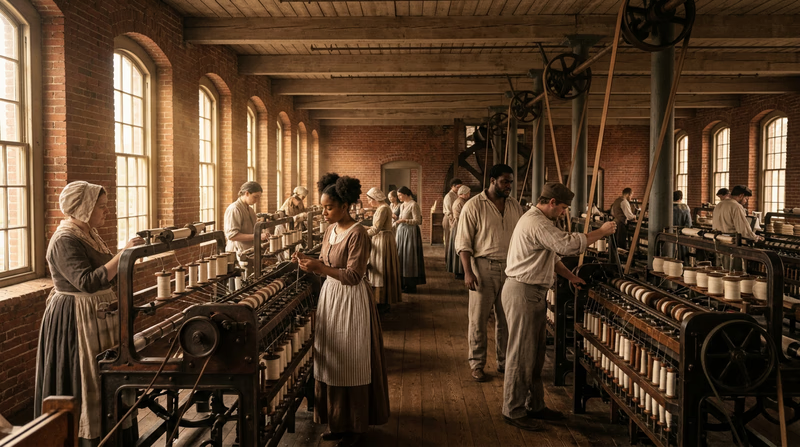
The Industrial Revolution was a period of massive change that transformed how goods were made, how people worked, and how the economy operated. It began in Great Britain in the mid-1700s and reached the United States by the early 1800s. Before the Industrial Revolution, most products were made by hand in small workshops or at home. Afterward, machines in large factories could produce goods faster, cheaper, and in much larger quantities.
This was not just a change in technology — it was a change in how people lived. Families moved from farms to cities. New jobs were created. Entire industries appeared almost overnight. The way Americans earned a living, traveled, and communicated was permanently altered.
Major Developments in the U.S.
Several key developments marked the beginning of the modern industrial era in America:
The Factory System
In 1793, Samuel Slater built the first successful water-powered cotton mill in Pawtucket, Rhode Island, using designs he memorized from English factories. This marked the beginning of the American factory system. Instead of individual craftspeople making goods one at a time, workers now operated machines in centralized locations.
The Cotton Gin (1794)
Eli Whitney’s cotton gin could clean cotton fifty times faster than a person working by hand. This invention made cotton enormously profitable and fueled the growth of the textile industry — though it also tragically increased the demand for enslaved labor in the South.
Railroads
By the 1860s, railroads connected cities and towns across the continent. The Transcontinental Railroad, completed in 1869, linked the East Coast to the West Coast for the first time. Railroads moved raw materials to factories and finished goods to markets faster than ever before.
The Telegraph
Samuel Morse’s telegraph (1844) allowed instant communication over long distances. For the first time, a business owner in New York could send a message to a partner in Chicago and get a reply the same day. This sped up commerce and made national business networks possible.
Mass Production
Henry Ford did not invent the automobile, but in 1913 he perfected the assembly line — a system where each worker performed one specific task as the product moved down the line. This made cars affordable for ordinary families and became the model for manufacturing around the world.
Three Influential Business Leaders
The requirement asks you to discuss three people who greatly influenced American business or industry. Here are several examples to consider — pick the ones that interest you most, or research others on your own.
Andrew Carnegie (1835–1919)
Carnegie immigrated to the United States from Scotland as a poor child and eventually built the largest steel company in the world. He introduced the Bessemer process for making steel cheaply and efficiently, which made steel the building material of choice for bridges, railroads, and skyscrapers. Carnegie later sold his company for $480 million (roughly $17 billion today) and spent the rest of his life giving his fortune away — funding libraries, universities, and concert halls across the country. He believed in what he called the “Gospel of Wealth,” the idea that the rich have a duty to use their money for the public good.
Madam C.J. Walker (1867–1919)
Born Sarah Breedlove, Madam C.J. Walker became one of the first female self-made millionaires in America. She developed a line of hair care products for Black women at a time when few business opportunities existed for women or African Americans. Walker built a national company, trained thousands of sales agents, and used her wealth to support civil rights causes and educational institutions. Her story shows how entrepreneurship can break barriers.
Henry Ford (1863–1947)
Ford revolutionized manufacturing with the moving assembly line and transformed the automobile from a luxury item into an everyday necessity. He also pioneered the idea of paying workers well — his famous $5-a-day wage in 1914 was roughly double the industry average. Ford believed that if workers could afford the products they made, the entire economy would benefit.
Other Leaders to Consider
You are not limited to the examples above. Here are a few more names worth researching:
- John D. Rockefeller — Founded Standard Oil and dominated the petroleum industry
- Thomas Edison — Inventor and businessman who created the modern electric utility industry
- Steve Jobs — Co-founded Apple and transformed personal computing, music, and mobile phones
- Oprah Winfrey — Built a media empire and pioneered new models of brand-driven business
You have seen how American industry was born and who shaped it. Next, let’s look at the five main areas that every business operates within.
Req 1c — Areas of Business
The Five Primary Areas of Business
Every business — whether it is a one-person lawn mowing service or a multinational corporation — relies on five primary areas to function. These areas work together like gears in a machine. If one area breaks down, the whole business suffers.
Understanding these five areas will give you a framework for analyzing any business you encounter, which is exactly what you will do later in Requirement 5.
1. Accounting
Accounting is the process of tracking, recording, and reporting a business’s financial transactions. Think of it as the scoreboard of business — it tells you whether you are winning or losing money.
Accountants keep records of every dollar that comes in (revenue) and every dollar that goes out (expenses). They prepare financial statements that show the financial health of the business. Without accurate accounting, a business owner would have no idea whether the company is profitable or headed for trouble.
Key activities: Recording transactions, preparing tax returns, managing payroll, creating financial reports
2. Finance
While accounting looks backward at what has already happened, finance looks forward. Finance is about managing money and making decisions about how to use it. Should the business borrow money to expand? Should it save cash for a rainy day? Should it invest in new equipment?
Finance professionals analyze risks, forecast future earnings, and figure out the best ways to fund the business’s goals. They work with banks, investors, and markets to make sure the company has the money it needs — when it needs it.
Key activities: Budgeting, investing, borrowing, managing cash flow, planning for the future
3. Economics
Economics is the study of how people and societies make choices about using limited resources. In business, economics helps leaders understand the bigger picture — supply and demand, market trends, inflation, and competition.
A business that understands economics can anticipate changes. If gas prices are rising, a delivery company can plan ahead. If a new competitor enters the market, a smart business can adjust its strategy before it loses customers.
Key activities: Analyzing market conditions, studying supply and demand, understanding pricing, tracking economic indicators
4. Marketing
Marketing is how a business connects its product or service with the people who need it. It is much more than advertising — marketing includes researching what customers want, designing products to meet those needs, setting prices, and figuring out the best way to reach buyers.
The goal of marketing is to create value for the customer. A company might have the best product in the world, but if nobody knows about it or understands why they need it, the product will not sell.
Key activities: Market research, advertising, branding, social media, pricing strategy, customer relationships
5. Management
Management is the art of organizing people, resources, and processes to achieve a goal. Managers plan what needs to happen, assign tasks, motivate teams, and solve problems when things go wrong.
Good management is what turns a great idea into a functioning business. It involves leadership, communication, decision-making, and the ability to adapt when plans change — skills that are useful in every part of life, not just business.
Key activities: Planning, organizing, leading teams, hiring, setting goals, solving problems

How the Five Areas Work Together
Imagine you are running a lemonade stand. Here is how all five areas come into play:
- Accounting tells you that you spent $15 on lemons, sugar, and cups, and you earned $40 in sales — so your profit is $25.
- Finance helps you decide whether to reinvest that $25 in a bigger sign and more supplies or save it.
- Economics helps you notice that the stand across the street is charging less, so you might need to adjust your price or offer something extra.
- Marketing is the eye-catching sign, the free samples, and the social media post your friend shared.
- Management is you deciding who runs the stand when, making sure supplies are stocked, and keeping your team motivated on a hot afternoon.
The Five Areas at a Glance
Make sure you can explain each one to your counselor- Accounting: Tracking and reporting financial transactions
- Finance: Managing money and planning how to use it
- Economics: Understanding markets, supply, demand, and the bigger picture
- Marketing: Connecting products with the people who need them
- Management: Organizing people and resources to achieve goals
Next, you will learn about an important force in American business history — labor unions.
Req 1d — Labor Unions
What Is a Labor Union?
A labor union is an organized group of workers who come together to negotiate with their employer for better wages, safer working conditions, and fair treatment. Instead of each worker bargaining alone, the union bargains on behalf of everyone — a process called collective bargaining.
Think of it this way: one worker asking for a raise can be easily ignored. But when all the workers in a factory speak with one voice, the employer has to listen.
A Brief History of Labor Unions in America
The Early Days (1700s–1800s)
The first American labor organizations appeared in the late 1700s among skilled workers like shoemakers, carpenters, and printers. These early groups were small and local. They often formed to protest wage cuts or demand shorter working hours.
As factories spread during the Industrial Revolution, working conditions got worse — especially for women and children. Workers sometimes labored twelve to sixteen hours a day, six or seven days a week, in dangerous, overcrowded factories. There were no safety regulations, no minimum wage, and no limits on child labor.
The Rise of Organized Labor (1860s–1930s)
Several major unions formed during this period:
- The Knights of Labor (1869) was one of the first national unions. It welcomed workers of all trades, races, and genders — unusual for the time.
- The American Federation of Labor (AFL) (1886), led by Samuel Gompers, focused on skilled workers and fought for higher wages, shorter hours, and better conditions through collective bargaining.
This era was marked by intense conflict. Strikes sometimes turned violent. The Pullman Strike of 1894 shut down railroad traffic across the country. The Triangle Shirtwaist Factory fire of 1911, which killed 146 workers (mostly young immigrant women), exposed horrific safety conditions and led to major reforms.
Government Gets Involved (1930s–1940s)
During the Great Depression, the federal government passed landmark labor laws:
- The National Labor Relations Act (1935) — also called the Wagner Act — guaranteed workers the right to form unions and bargain collectively.
- The Fair Labor Standards Act (1938) established a national minimum wage, a 40-hour work week, and restrictions on child labor.
These laws gave unions legal backing and led to a period of rapid growth. By the mid-1950s, about one in three American workers belonged to a union.
Modern Era (1950s–Today)
Union membership has declined significantly since its peak. Today, about 10% of American workers are union members. Manufacturing has shrunk while service industries have grown. Some states have passed right-to-work laws that make union membership optional even in unionized workplaces.
Despite declining membership, unions remain influential in many industries including education, public safety, healthcare, and transportation.
Why Working Together Matters
The relationship between labor unions and employers works best when both sides cooperate rather than fight. Here is why:
For workers: Unions give employees a voice in decisions that affect their daily lives — wages, benefits, schedules, and safety. When workers feel heard and fairly treated, they tend to be more productive and loyal.
For employers: When a company works constructively with its union, it gets a more stable, experienced workforce. Collective bargaining agreements provide predictability — both sides know the rules, and disputes can be resolved through negotiation rather than walkouts.
For the economy: When workers earn fair wages, they spend money in their communities, which supports other businesses. Workplace safety reduces costly accidents and healthcare expenses.

Major Labor Unions Today
Here are several major unions currently active in the United States. You need to identify at least two for this requirement:
- AFL-CIO (American Federation of Labor and Congress of Industrial Organizations) — The largest federation of unions in the U.S., representing over 12.5 million workers across dozens of unions in construction, education, healthcare, public service, and more.
- SEIU (Service Employees International Union) — Represents about 2 million workers in healthcare, public services, and property services. It is one of the fastest-growing unions in the country.
- NEA (National Education Association) — The largest labor union in the United States by membership, representing about 3 million teachers and education professionals.
- Teamsters (International Brotherhood of Teamsters) — Represents about 1.3 million workers in trucking, freight, warehousing, and other industries.
- UAW (United Auto Workers) — Represents workers in the automobile, aerospace, and agricultural equipment industries.
You have traced the arc of labor in America. Next, let’s zoom out and look at how business shapes the economy at every level.
Req 1e — Business & the Economy
Business and the Economy Are Connected
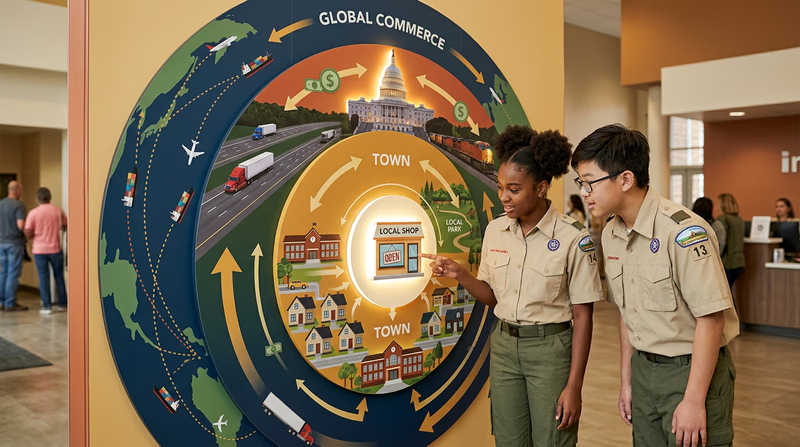
Every business, no matter how small, creates ripples in the economy. When a new restaurant opens in your town, it hires employees, buys supplies from other businesses, pays taxes, and gives people a place to spend their money. Those ripples spread outward — from your neighborhood to the nation to the world.
Understanding these connections will help you see why business matters at every level.
Local Impact
Your local economy is the one you can see and touch. It is the shops on Main Street, the employers in your community, and the tax base that funds your schools and parks.
Jobs and income. Local businesses are often the largest employers in a community. When a factory, hospital, or retail center opens, it brings jobs. Workers earn wages and spend that money at other local businesses — grocery stores, gas stations, restaurants — creating even more jobs. Economists call this the multiplier effect.
Tax revenue. Businesses pay property taxes, sales taxes, and licensing fees that fund local government services — everything from road repairs to fire departments to public libraries.
Community identity. Businesses shape the character of a town. Think about your own community — the restaurants, shops, and services that make it unique are all part of the local business landscape.
National Impact
When you zoom out from your community, business activity adds up to the national economy — the total value of all goods and services produced in the country, measured as Gross Domestic Product (GDP).
Employment. American businesses collectively employ over 160 million people. Major industries like healthcare, retail, technology, manufacturing, and finance each support millions of workers and families.
Innovation. American businesses drive technological and scientific progress. The smartphone in your pocket, the medications at the pharmacy, and the streaming service you watch at night all came from businesses investing in research and development.
Trade. American businesses sell their products to customers around the world (exports) and buy materials and goods from other countries (imports). This trade activity connects the U.S. economy to every other nation.
Standard of living. Business productivity — how efficiently goods and services are produced — directly affects how well people live. When businesses operate efficiently, products become more affordable and wages can rise.
Global Impact
American businesses do not operate in isolation. The global economy connects countries through trade, investment, and shared supply chains.
Supply chains. A single product might involve raw materials from South America, manufacturing in Asia, design in California, and sales across Europe. Global supply chains make products cheaper and more varied, but they also mean that a disruption in one country — like a natural disaster or a trade dispute — can affect businesses thousands of miles away.
Multinational corporations. Companies like Apple, Amazon, and Coca-Cola operate in dozens of countries. Their decisions about where to build factories, hire workers, and sell products have enormous impact on local economies around the world.
Currency and trade agreements. The value of the U.S. dollar, trade agreements between countries, and tariffs (taxes on imported goods) all influence how businesses compete globally. When the dollar is strong, American products are more expensive for foreign buyers. When it is weak, American exports become more competitive.
Shared challenges. Climate change, labor standards, and economic inequality are global issues that businesses both contribute to and can help solve. Increasingly, companies are expected to consider their impact on the world, not just their bottom line.
Discussion Prep
Points to cover with your counselor- Local: How businesses create jobs, pay taxes, and shape your community
- National: How business drives GDP, innovation, and the standard of living
- Global: How supply chains, trade, and multinational companies connect the world’s economies
- The multiplier effect: How one business’s activity creates ripple effects
You have completed the foundations. Now it is time to follow the money — starting with the financial statements that every business uses to keep score.
Req 2a — Financial Statements
The Three Financial Statements
Financial statements are like a business’s report card. They show how much money is coming in, how much is going out, what the business owns, and what it owes. Every business — from a lemonade stand to a tech giant — uses these three statements to understand its financial health.
Think of each statement as answering a different question:
- Income Statement: “Are we making money?”
- Balance Sheet: “What do we own, and what do we owe?”
- Cash Flow Statement: “Where is our cash actually going?”
The Income Statement
The income statement — sometimes called the profit and loss statement (or P&L) — shows whether a business made or lost money over a specific period of time (a month, a quarter, or a year).
It follows a simple formula:
Revenue − Expenses = Net Income (Profit or Loss)
- Revenue is the total money earned from selling products or services.
- Expenses are the costs of running the business — rent, salaries, materials, utilities, marketing, and more.
- Net Income is what is left after all expenses are subtracted. If revenue is greater than expenses, the business made a profit. If expenses are greater, the business had a loss.
How it helps leaders decide: If a product line is losing money, the income statement reveals it. If expenses are climbing faster than revenue, leaders can see the trend and take action — cut costs, raise prices, or shift focus to more profitable products.
The Balance Sheet
The balance sheet is a snapshot of everything a business owns and owes at a single moment in time. It answers the question: “If we added up everything we own and subtracted everything we owe, what would be left?”
It follows this formula:
Assets = Liabilities + Equity
- Assets are everything the business owns — cash, equipment, inventory, buildings, and accounts receivable (money customers owe).
- Liabilities are everything the business owes — loans, unpaid bills, and other debts.
- Equity (also called owner’s equity or shareholders’ equity) is what is left after liabilities are subtracted from assets. It represents the owners’ stake in the business.
How it helps leaders decide: The balance sheet reveals whether a business has enough assets to cover its debts. A company with too much debt relative to its assets may struggle to survive a downturn. A company with strong equity is in a better position to invest and grow.
The Statement of Cash Flows
The cash flow statement tracks the actual movement of cash into and out of the business over a period of time. This might sound like the income statement, but there is an important difference: a business can be profitable on paper and still run out of cash.
How? Imagine you sell $10,000 worth of products, but your customers have not paid yet. Your income statement shows $10,000 in revenue, but your bank account is empty. The cash flow statement catches this.
Cash flows are divided into three categories:
- Operating activities — Cash from day-to-day business operations (selling products, paying employees and suppliers)
- Investing activities — Cash spent on or earned from buying or selling long-term assets like equipment or property
- Financing activities — Cash from borrowing money, repaying loans, or receiving investments from owners
How it helps leaders decide: The cash flow statement shows whether the business can actually pay its bills right now — not in theory, but in reality. A business with strong profits but weak cash flow is in danger. Leaders use this statement to time purchases, manage debt, and ensure they always have enough cash on hand.

Why All Three Matter Together
No single statement tells the full story. Smart business leaders look at all three together:
| Statement | Time Frame | Key Question |
|---|---|---|
| Income Statement | Period (month/quarter/year) | Are we profitable? |
| Balance Sheet | Single point in time | Are we financially healthy? |
| Cash Flow Statement | Period (month/quarter/year) | Do we have enough cash? |
A business might show a profit on the income statement but be running dangerously low on cash. Or it might have lots of cash but be losing money each month. Only by reading all three can a leader get the complete picture.
Key Terms to Know
Be ready to explain these to your counselor- Revenue: Money earned from sales
- Expenses: Costs of running the business
- Net Income: Revenue minus expenses (profit or loss)
- Assets: Everything the business owns
- Liabilities: Everything the business owes
- Equity: Assets minus liabilities — the owners’ share
- Cash Flow: The actual movement of cash in and out
Now that you can read a business’s financial scoreboard, let’s explore the outside forces that affect how money moves.
Req 2b — Interest, Taxes & Spending
Three Levers That Move Money
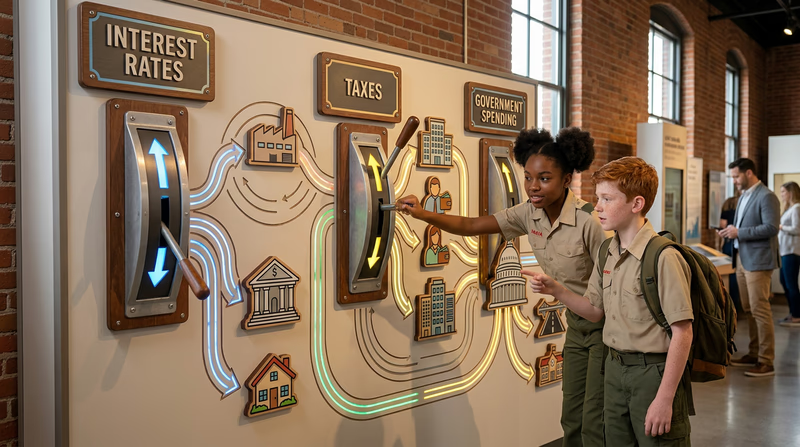
Businesses do not operate in a vacuum. Three powerful forces — interest rates, taxes, and government spending — influence how much money flows into or out of the business world. Understanding these forces helps explain why the economy sometimes booms and sometimes slows down.
Interest Rates
An interest rate is the cost of borrowing money, expressed as a percentage. When you take out a loan, you pay back the amount you borrowed plus interest. When you put money in a savings account, the bank pays you interest for letting it use your money.
The Federal Reserve (often called “the Fed”) sets a key interest rate that influences all other rates in the economy. When the Fed changes this rate, it sends ripples through the entire business world.
When Interest Rates Go Down
- Borrowing becomes cheaper. Businesses are more likely to take out loans to build new factories, hire workers, or develop products.
- Consumers are more likely to borrow money for big purchases like cars and homes.
- More spending and investment means more money flowing into the economy.
When Interest Rates Go Up
- Borrowing becomes more expensive. Businesses may delay expansion plans or cut back on hiring.
- Consumers spend less on big purchases because loans cost more.
- Money flows more slowly through the economy, which can cool down an overheated market.
Taxes
Taxes are payments that individuals and businesses make to federal, state, and local governments. The money funds public services — roads, schools, national defense, healthcare programs, and more.
Changes in tax policy directly affect how much money businesses and consumers have to spend.
When Taxes Decrease
- Businesses keep more of their profits. They may use this money to hire more workers, invest in equipment, or lower prices for customers.
- Consumers take home more of their paychecks, which can increase spending.
- More money stays in the private sector (businesses and individuals).
When Taxes Increase
- Businesses have less money available for investment and growth.
- Consumers have less disposable income, so they may spend less.
- More money flows to the government, which can fund public projects and services.
Neither high nor low taxes are automatically “good” or “bad.” The debate is about balance — how much money should flow to government services versus how much should stay with businesses and individuals.
Government Spending
Government spending is the other side of the tax coin. The federal, state, and local governments spend money on everything from building highways to funding military operations to providing Social Security benefits.
When Government Spending Increases
- The government pumps more money into the economy by hiring workers, buying supplies, and funding projects.
- Businesses that provide goods and services to the government see more revenue (construction companies, defense contractors, technology firms).
- More money circulates through the economy, which can boost growth.
When Government Spending Decreases
- Fewer government contracts and projects mean less revenue for some businesses.
- Public sector workers may face layoffs or pay freezes.
- Less money circulates, which can slow economic activity.
How They Work Together
These three forces do not operate independently — they interact with each other. For example:
- During a recession, the government might cut interest rates and increase spending to get money flowing again. This is like pressing the gas pedal on the economy.
- During a period of rapid inflation (prices rising too fast), the government might raise interest rates to slow things down. This is like tapping the brakes.
- Tax changes often accompany spending changes. A government might cut taxes to stimulate business growth, or raise taxes to fund a new infrastructure program.
Now let’s look at where businesses get the money they need to start and grow.
Req 2c — Raising Capital
What Is Capital?
Capital is the money a business needs to start, operate, and grow. It pays for equipment, inventory, rent, employees, and everything else a business needs. Without capital, even the best business idea stays just an idea.
Where that money comes from depends on what type of business you are running.
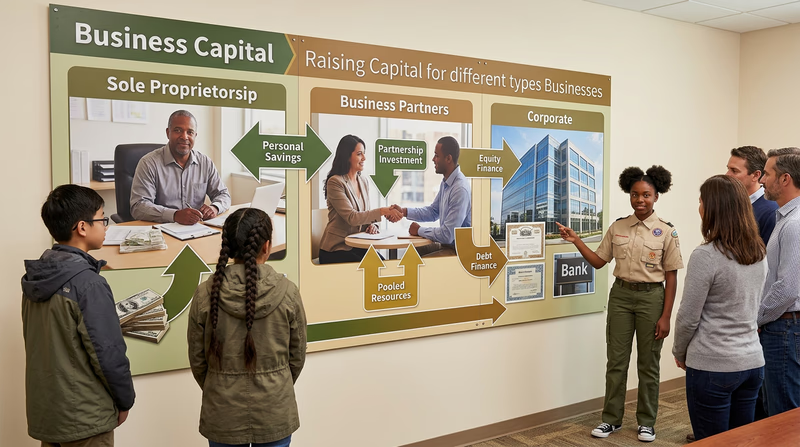
How Smaller Business Structures Get Capital
Sole Proprietorship
A sole proprietorship is a business owned and operated by one person. It is the simplest business structure — you are the business, and the business is you.
Getting capital as a sole proprietor usually means:
- Personal savings — Most sole proprietors invest their own money to start the business.
- Personal loans — Borrowing from a bank, credit union, or family members. The loan is in the owner’s personal name, which means personal assets (like a car or house) may be at risk if the business cannot repay.
- Credit cards — Some small business owners use personal or business credit cards to cover startup costs, though high interest rates make this risky.
- Microloans and grants — Organizations like the SBA offer small loans and occasionally grants to help entrepreneurs get started.
The key thing about a sole proprietorship is that there is no separation between the owner’s personal finances and the business’s finances. If the business fails, the owner is personally responsible for all debts.
Partnership
A partnership is a business owned by two or more people who share responsibilities, profits, and losses. Partnerships raise capital in ways similar to sole proprietorships, but with one added advantage — more people means more resources.
- Combined personal savings — Each partner contributes money to fund the business.
- Loans — Partners may borrow from banks or other lenders. Each partner is typically personally liable for the business’s debts (in a general partnership).
- New partners — Bringing in a new partner is a way to raise capital. The new partner contributes money in exchange for a share of the profits and decision-making.
Limited Liability Company (LLC)
An LLC combines features of partnerships and corporations. Like a sole proprietorship or partnership, an LLC can be funded through the owners’ personal investments and loans. But like a corporation, it provides limited liability — the owners’ personal assets are generally protected if the business fails.
- Member contributions — LLC owners (called members) invest their own money.
- Bank loans — LLCs can borrow money, and since the business is a separate legal entity, the loan terms may differ from personal loans.
- New members — Adding new members who buy into the LLC brings in additional capital.
Four Ways a Corporation Obtains Capital
A corporation is a more complex business structure that exists as a separate legal entity from its owners. This separation gives corporations unique ways to raise large amounts of capital. Here are four:
1. Selling Stock (Equity Financing)
A corporation can sell shares of stock — small pieces of ownership — to investors. When you buy stock in a company, you become a part-owner (a shareholder). The company gets cash to grow, and you get a stake in its future profits.
When a company sells stock to the public for the first time, it is called an Initial Public Offering (IPO). After the IPO, the stock trades on exchanges like the New York Stock Exchange or NASDAQ.
2. Issuing Bonds (Debt Financing)
A corporation can borrow money by issuing bonds. A bond is essentially an IOU — the company promises to pay back the borrowed amount plus interest over a set period of time. Investors buy bonds because they provide steady, predictable income.
Unlike stock, bonds do not give the buyer any ownership in the company. The bondholder is a lender, not an owner.
3. Retained Earnings
Retained earnings are profits that the corporation keeps and reinvests in the business instead of distributing them to shareholders as dividends. This is often the cheapest source of capital because the company does not have to pay interest or give up ownership.
A company that consistently earns profits can fund its own growth through retained earnings — building new facilities, developing products, or entering new markets.
4. Bank Loans and Lines of Credit
Like any business, corporations can borrow money from banks and other financial institutions. Large corporations often have access to lines of credit — pre-approved amounts they can borrow as needed, similar to how a credit card works but for much larger amounts.
Corporate loans typically have lower interest rates than personal loans because the corporation has assets (buildings, equipment, inventory) that can serve as collateral.
Capital Sources Summary
Quick reference for your counselor discussion- Sole Proprietorship: Personal savings, personal loans, credit cards, microloans
- Partnership: Combined savings, loans, bringing in new partners
- LLC: Member contributions, bank loans, adding new members
- Corporation (4 ways): Selling stock, issuing bonds, retained earnings, bank loans/lines of credit
Money fuels a business, but risk can destroy one. Next, learn how businesses protect themselves with insurance.
Req 2d — Business Insurance
Why Businesses Need Insurance
Running a business means taking risks. A storm could damage your building. An employee could get injured on the job. A customer could slip on a wet floor and file a lawsuit. A cyberattack could steal customer data.
Insurance is how businesses protect themselves against these risks. A business pays a regular fee called a premium to an insurance company. In return, the insurance company agrees to cover certain losses if something goes wrong. Without insurance, a single disaster could wipe out a business entirely.
Five Types of Business Insurance
There are many types of business insurance, but here are five that are especially important. You should be able to name and describe at least five for this requirement.
1. General Liability Insurance
What it covers: Claims that the business caused injury to someone or damaged someone’s property. If a customer trips over a display in your store and breaks an arm, general liability insurance helps pay for their medical bills and any legal fees if they sue.
Why it matters: Lawsuits can cost thousands or even millions of dollars. Even a small business can face a liability claim. This is often the first type of insurance a new business buys.
2. Property Insurance
What it covers: Damage to or loss of the business’s physical property — buildings, equipment, inventory, furniture, and supplies. Covered events typically include fire, storms, theft, and vandalism.
Why it matters: If a fire destroys your warehouse and all the products inside it, property insurance helps you replace what was lost and get back on your feet. Without it, the business might not survive.
3. Workers’ Compensation Insurance
What it covers: Medical expenses and lost wages for employees who get injured or become ill because of their job. If a warehouse worker pulls a muscle lifting a heavy box, workers’ compensation pays for their treatment and covers part of their salary while they recover.
Why it matters: Most states require businesses with employees to carry workers’ compensation insurance. It protects workers and protects the business from being sued by injured employees.
4. Professional Liability Insurance (Errors & Omissions)
What it covers: Claims that the business made a mistake, gave bad advice, or failed to deliver a promised service. This is especially important for businesses that provide professional services — like accountants, consultants, doctors, lawyers, and software developers.
Why it matters: If an accountant makes an error on a client’s tax return and the client owes thousands in penalties, the client could sue. Professional liability insurance covers the defense costs and any damages awarded.
5. Commercial Auto Insurance
What it covers: Vehicles owned or used by the business. If a delivery driver gets into an accident while making a delivery, commercial auto insurance covers vehicle repairs, medical bills, and liability claims.
Why it matters: Personal auto insurance typically does not cover accidents that happen during business use. Any company that uses vehicles for deliveries, service calls, or employee travel needs commercial auto coverage.

Other Types Worth Knowing
Beyond the five above, there are several other types of business insurance you may encounter:
- Product Liability Insurance — Covers claims that a product made or sold by the business caused injury or harm.
- Cyber Liability Insurance — Covers costs related to data breaches and cyberattacks, including notifying affected customers and paying for credit monitoring.
- Business Interruption Insurance — Covers lost income when a business cannot operate due to a covered event (like a fire or flood).
- Key Person Insurance — A life insurance policy on a critical employee or owner. If that person dies or becomes unable to work, the payout helps the business survive the transition.
Five Types of Business Insurance
Quick reference for your counselor discussion- General Liability: Covers injury to others or damage to their property
- Property Insurance: Covers damage to the business’s own buildings and equipment
- Workers’ Compensation: Covers employees injured on the job
- Professional Liability: Covers mistakes or bad advice in professional services
- Commercial Auto: Covers business-owned vehicles and drivers
You have covered the money side of business. Now let’s look at the principles and practices that guide how businesses operate — starting with the role of profit.
Req 3a — The Role of Profit
What Is Profit?
At its simplest, profit is the money left over after a business pays all of its expenses. If a bakery earns $5,000 in sales during a month and spends $3,500 on ingredients, rent, utilities, and wages, the profit is $1,500.
But profit is more than just a number on a financial statement. It plays a central role in how the American business system works.
Why Profit Matters
Profit Is the Engine of Free Enterprise
In a free enterprise system, the possibility of earning a profit is what motivates people to take risks. Starting a business is hard — it takes time, money, and effort with no guarantee of success. The potential reward of profit is what makes people willing to try.
Without profit, there would be little incentive to innovate, compete, or improve. Profit is the fuel that keeps the economic engine running.
Profit Keeps Businesses Alive
A business that does not earn a profit will eventually run out of money and close. Profit is what allows a business to:
- Pay its bills — rent, utilities, supplies, and employee wages
- Invest in growth — new equipment, new locations, new products
- Build a safety net — savings to survive slow periods or unexpected problems
- Reward owners and investors — the people who put their money at risk to start or support the business
Profit Signals Value
When a business earns a profit, it means customers are willing to pay more for its product or service than it costs to produce. That is a powerful signal — it tells the market that the business is creating something people value.
When a business loses money, it may mean that customers do not value the product enough, the costs are too high, or the business model needs to change. Profit and loss act as signals that guide businesses toward what works and away from what does not.
Profit and Responsibility
Earning a profit is essential, but how a business earns it matters just as much. A company that makes money by cheating customers, exploiting workers, or damaging the environment may turn a short-term profit, but it will face consequences — lawsuits, boycotts, government fines, and loss of trust.
The most successful businesses over the long run are those that earn profit while treating employees well, serving customers honestly, and contributing to their communities. Profit and responsibility are not opposites — they go hand in hand.

Profit vs. Revenue — A Common Confusion
Many people confuse revenue with profit. They are not the same thing:
- Revenue (or sales) is the total money a business takes in.
- Profit is what remains after all expenses are subtracted.
A company can have millions of dollars in revenue and still lose money if its expenses are too high. That is why profit — not revenue — is the true measure of a business’s financial success.
Understanding Business Profit — Investopedia A clear explanation of the different types of profit and why they matter for businesses of all sizes. Link: Understanding Business Profit — Investopedia — https://www.investopedia.com/terms/p/profit.aspProfit drives business, but today’s consumers also care about how businesses treat the planet. Let’s explore green marketing and sustainability.
Req 3b — Green Marketing & Sustainability
What Is Green Marketing?
Green marketing is when a business promotes its products or services by highlighting their environmental benefits. It is marketing that says, “Buy from us because we care about the planet.” This can include using recycled materials, reducing packaging, lowering carbon emissions, or supporting conservation efforts.
Green marketing works because more and more consumers — especially younger ones — want to support businesses that take environmental responsibility seriously. When given a choice between two similar products, many shoppers will pick the one with the smaller environmental footprint.
Examples of Green Marketing
- A clothing company advertises that its shirts are made from 100% organic cotton.
- A coffee brand highlights its commitment to fair-trade sourcing and compostable packaging.
- An appliance manufacturer promotes its energy-efficient refrigerators that use less electricity.
- A car company markets its electric and hybrid vehicles as better for the environment.
In each case, the environmental benefit is part of the sales pitch. The business is using its green practices as a competitive advantage.
What Are Sustainable Business Practices?
Sustainability in business means operating in a way that meets today’s needs without harming the ability of future generations to meet their needs. It goes beyond marketing — it is about how the business actually runs, from sourcing materials to disposing of waste.
Sustainable business practices fall into three categories, often called the triple bottom line:
1. Environmental Sustainability
- Reducing waste and pollution
- Using renewable energy sources
- Conserving water and natural resources
- Designing products that can be recycled or reused
- Minimizing carbon emissions in transportation and manufacturing
2. Social Sustainability
- Treating employees fairly and paying living wages
- Ensuring safe working conditions throughout the supply chain
- Supporting local communities
- Promoting diversity and inclusion in hiring
3. Economic Sustainability
- Building a business model that is profitable over the long term
- Investing in innovation that reduces costs and waste simultaneously
- Creating products and services that customers will need for years to come

Greenwashing: When Marketing Goes Wrong
Not all green marketing is honest. Greenwashing is when a company makes misleading or exaggerated claims about how environmentally friendly its products or practices are. A company might slap a “natural” label on a product that is full of synthetic chemicals, or it might advertise one small green initiative while its overall operations are highly polluting.
Greenwashing is a problem because it:
- Deceives consumers who are trying to make responsible choices
- Undermines trust in businesses that are genuinely sustainable
- Can lead to government investigations and fines
Why Sustainability Is Good Business
Being sustainable is not just the right thing to do — it often makes good business sense:
- Cost savings — Using less energy, water, and materials reduces operating costs.
- Customer loyalty — Consumers increasingly prefer brands that align with their values.
- Risk reduction — Companies that depend on scarce resources face supply chain risks. Sustainable practices reduce that vulnerability.
- Talent attraction — Many workers, especially younger ones, want to work for companies that have a positive impact on the world.
- Regulatory compliance — Environmental regulations are becoming stricter. Companies that adopt sustainable practices early avoid costly scrambles to catch up.
Sustainability is one part of doing business responsibly. Next, let’s look at the broader role of ethics in business decisions.
Req 3c — Business Ethics
What Are Business Ethics?
Ethics are the principles that help you decide what is right and what is wrong. In business, ethics guide how a company treats its customers, employees, competitors, and community. Business ethics are the rules — written and unwritten — that ensure a company acts honestly, fairly, and responsibly.
Every business decision has an ethical dimension. Should we use cheaper materials even if they are lower quality? Should we raise prices during a shortage? Should we lay off workers to increase profits? There is often a tension between what is most profitable and what is most ethical, and how a business navigates that tension defines its character.
Why Ethics Matter in Business
Trust Is the Foundation of Commerce
Customers buy from businesses they trust. Employees work harder for companies they respect. Investors put money into organizations they believe will act responsibly. When a business behaves unethically, it erodes trust — and once trust is lost, it is extremely hard to rebuild.
Reputation Is a Business Asset
A company’s reputation is one of its most valuable assets. A single scandal — a product recall, a fraud case, an environmental disaster caused by negligence — can destroy decades of goodwill. Ethical behavior protects that reputation.
The Law Is Not Enough
Many things are legal but not ethical. A company might find a loophole that lets it avoid paying taxes, or it might use deceptive advertising that technically does not break any law. Just because something is legal does not mean it is right. Ethical businesses go beyond what the law requires and ask, “Is this the right thing to do?”
Ethics in Action: Common Dilemmas
Here are some real-world ethical situations businesses face:
Honesty in Advertising
Is it ethical to show a product looking better than it actually is? To make claims that are technically true but misleading? Ethical businesses advertise honestly, even when exaggeration might boost short-term sales.
Treatment of Employees
Is it ethical to pay workers the absolute minimum, schedule them unpredictably, or avoid offering benefits? Companies that treat employees well tend to have lower turnover, higher morale, and better customer service.
Environmental Responsibility
Is it ethical to cut costs by dumping waste or using polluting processes, even when it is technically legal? Ethical businesses consider their environmental impact as part of every decision.
Data Privacy
Is it ethical to collect, sell, or misuse customer data? In the digital age, companies hold enormous amounts of personal information. How they use (or protect) that data is a major ethical issue.
Fair Competition
Is it ethical to copy a competitor’s product, spread false information about a rival, or use monopoly power to crush smaller businesses? Fair competition keeps the free enterprise system healthy.

How the Scout Law Connects
The Scout Law is essentially a code of ethics. Many of its points translate directly to business:
- Trustworthy — Keep your promises to customers and business partners.
- Loyal — Stand by your employees and community, not just your bottom line.
- Helpful — Create products and services that genuinely solve problems.
- Friendly — Build positive relationships with everyone you do business with.
- Kind — Consider the impact of your decisions on others.
- Obedient — Follow the law and your industry’s standards.
- Brave — Make the right choice even when it costs you money.
Building an Ethical Business Culture
Ethics in business does not happen by accident. Companies that consistently behave ethically usually have:
- A written code of ethics that employees at all levels are expected to follow
- Training programs that help employees recognize and handle ethical dilemmas
- Open communication — employees feel safe reporting concerns without fear of retaliation (called whistleblower protection)
- Leaders who model ethical behavior — ethics starts at the top
Ethics Discussion Guide
Key points for your counselor conversation- Ethics are principles of right and wrong applied to business decisions
- Trust and reputation are valuable business assets that ethics protect
- Legal is not always the same as ethical
- Common dilemmas include advertising honesty, employee treatment, environmental impact, and data privacy
- The Scout Law provides a strong ethical framework for business
You have explored the ethical side of business. Now let’s compare two very different ways to run a business — on the street and on the screen.
Req 3d — Brick-and-Mortar vs. Online
Two Ways to Do Business
A brick-and-mortar business operates from a physical location — a store, office, restaurant, or workshop that customers visit in person. An online business (also called an e-commerce business) sells products or services through the internet, often without any physical storefront at all.
Both models have strengths and challenges. Many modern businesses use a combination of both — called an omnichannel approach.
Brick-and-Mortar Business
How It Works
Customers walk through a door, browse products on shelves, talk to employees, and make purchases in person. Think of your local grocery store, dentist office, barbershop, or hardware store.
Advantages
- Personal interaction. Customers can see, touch, and try products before buying. They can ask questions and get immediate help from staff.
- Trust and community. A physical presence in a neighborhood builds trust and loyalty. People like supporting businesses they can see and visit.
- Impulse purchases. When customers are in a store, they often buy things they did not plan to buy. This boosts revenue.
- Instant fulfillment. Customers take their purchase home immediately — no waiting for shipping.
Challenges
- High overhead costs. Rent, utilities, store fixtures, and in-person staff are expensive. These costs exist whether the store is busy or empty.
- Limited reach. A physical store can only serve customers within driving distance.
- Fixed hours. The store is only open during business hours. Customers cannot shop at midnight.
- Inventory risk. Products sitting on shelves tie up cash. If they do not sell, the business loses money.
Online Business
How It Works
Customers visit a website or app, browse products digitally, and place orders that are shipped to their door (or delivered digitally, like music or software). The business may operate from a warehouse, a home office, or even a laptop at a coffee shop.
Advantages
- Global reach. An online store can sell to anyone with an internet connection, anywhere in the world.
- Lower overhead. No need to pay for a retail space, store fixtures, or as many in-person staff.
- 24/7 availability. The website never closes. Customers can shop anytime, from anywhere.
- Data and personalization. Online businesses can track customer behavior and preferences, allowing them to recommend products and target marketing more effectively.
- Scalability. An online business can grow quickly without needing to build new physical locations.
Challenges
- No physical experience. Customers cannot touch, try, or see products in person before buying. This leads to higher return rates.
- Shipping and logistics. Getting products to customers quickly and affordably is a major operational challenge.
- Intense competition. The internet makes it easy for competitors to appear. A customer can compare dozens of options in seconds.
- Trust building. Without a physical presence, it can be harder to build customer trust, especially for new or unknown brands.
- Technology dependence. Website crashes, cybersecurity threats, and platform changes can disrupt business overnight.

Side-by-Side Comparison
| Factor | Brick-and-Mortar | Online |
|---|---|---|
| Startup costs | Higher (rent, build-out, fixtures) | Lower (website, hosting, software) |
| Customer reach | Local / regional | National / global |
| Hours | Fixed business hours | 24/7 |
| Customer experience | In-person, hands-on | Digital, convenience-focused |
| Overhead | Higher (rent, utilities, staff) | Lower (but shipping, tech, marketing) |
| Competition | Local competitors | Global competitors |
| Trust | Built through presence and relationships | Built through reviews, ratings, branding |
The Blended Approach
Many successful businesses today use both channels. A clothing retailer might have a flagship store downtown and also sell through its website. A restaurant might serve dine-in customers and also take online orders for delivery. This omnichannel strategy combines the strengths of both models.
E-Commerce vs. Brick and Mortar — SBA The SBA's guide to choosing a business location, including considerations for online and physical businesses. Link: E-Commerce vs. Brick and Mortar — SBA — https://www.sba.gov/business-guide/launch-your-business/pick-your-business-locationYou have explored how businesses operate in the physical and digital worlds. Next, we shift to the role of government — specifically, the laws that protect American workers.
Req 4 — Labor Laws & Protections
The U.S. Department of Labor
The U.S. Department of Labor (DOL) is a federal agency whose mission is to protect the rights and welfare of American workers. It was created in 1913, and its work touches the lives of nearly every working person in the country.
The Department of Labor:
- Enforces labor laws that protect workers’ wages, safety, health, and rights
- Collects and publishes data about employment, wages, and working conditions through the Bureau of Labor Statistics (BLS)
- Administers programs like unemployment insurance, job training, and veterans’ employment services
- Sets standards for workplace safety, overtime pay, and child labor protections
- Investigates complaints from workers who believe their rights have been violated
The DOL is led by the Secretary of Labor, a member of the president’s cabinet. It employs thousands of inspectors, analysts, and staff across the country.
U.S. Department of Labor — About Us Learn about the Department of Labor's mission, history, and the programs it administers. Link: U.S. Department of Labor — About Us — https://www.dol.gov/general/aboutdolChoose TWO of the following four topics to discuss with your counselor. Read about all four to decide which two interest you most.
Option 1: Fair Labor Standards Act (FLSA)
The Fair Labor Standards Act, passed in 1938, is one of the most important labor laws in American history. It established three fundamental protections that still shape the workplace today:
Minimum Wage
The FLSA set the first federal minimum wage — 25 cents per hour in 1938. Today the federal minimum wage is $7.25 per hour, though many states and cities have set their own higher minimums. The minimum wage ensures that workers receive at least a baseline level of pay for their labor.
Overtime Pay
The FLSA requires that most workers who work more than 40 hours in a week receive overtime pay — at least 1.5 times their regular hourly rate. This rule prevents employers from demanding unlimited hours without additional compensation.
Child Labor Protections
The FLSA set limits on when and how many hours minors can work, and it banned children from working in dangerous occupations. Before this law, it was common for children as young as ten to work long hours in factories, mines, and mills.
Option 2: Occupational Safety and Health Act (OSHA)
The Occupational Safety and Health Act of 1970 created the Occupational Safety and Health Administration — also known as OSHA. Its purpose is simple but critical: to make sure American workplaces are safe and healthy.
What OSHA Does
- Sets safety standards for workplaces — rules about protective equipment, chemical handling, machine guards, ventilation, noise levels, and more
- Conducts inspections — OSHA inspectors can visit workplaces to check for hazards, often without advance notice
- Investigates accidents — when a serious injury or death occurs at work, OSHA investigates to determine the cause and prevent future incidents
- Issues fines — businesses that violate safety standards can be fined thousands of dollars
Why OSHA Matters
Before OSHA, workplace safety was largely up to individual employers. The results were often tragic — thousands of workers died on the job each year, and many more were seriously injured. Since OSHA was created, workplace fatalities have dropped by more than 60%, even as the workforce has grown significantly.
Option 3: Family and Medical Leave Act (FMLA)
The Family and Medical Leave Act, passed in 1993, gives eligible workers the right to take unpaid time off from work for important family and medical reasons — without losing their job.
What FMLA Covers
Under FMLA, eligible employees can take up to 12 weeks of unpaid leave per year for:
- The birth or adoption of a child
- Caring for a spouse, child, or parent with a serious health condition
- The employee’s own serious health condition that prevents them from working
- Certain situations related to a family member’s military service
Key Rules
- The law applies to employers with 50 or more employees.
- The employee must have worked for the employer for at least 12 months.
- The employer must hold the employee’s job (or an equivalent one) while they are on leave.
- The leave is unpaid — the law does not require employers to pay wages during leave, though some employers choose to.
Why FMLA Matters
Before FMLA, workers could be fired for taking time off to care for a sick child or recover from surgery. FMLA recognizes that life events — births, illnesses, family emergencies — are part of being human, and workers should not have to choose between their job and their family.
Option 4: Employee Retirement Income Security Act (ERISA)
The Employee Retirement Income Security Act, passed in 1974, protects workers’ retirement savings and benefits. It sets standards for pension plans and other benefit programs offered by private employers.
What ERISA Does
- Sets minimum standards for how employers manage retirement plans — including rules about funding, reporting, and fiduciary responsibility
- Requires transparency — employers must provide participants with information about their plan, including fees and investment options
- Protects benefits — if a company goes bankrupt or a pension plan fails, the Pension Benefit Guaranty Corporation (PBGC) — created by ERISA — can step in to pay some benefits
- Gives workers rights — employees can sue if their plan is mismanaged or if they are denied benefits they earned
Why ERISA Matters
Before ERISA, workers sometimes lost their entire retirement savings when companies went bankrupt or pension funds were mismanaged. ERISA ensures that the money workers set aside for retirement is handled responsibly and is there when they need it.

Discussion Prep
For each topic you choose, be ready to explain- What the law is called and when it was passed
- What problem it was created to solve
- What protections it provides to workers
- Why it matters to the American business system
You have explored the government’s role in protecting workers. Now it is time to put everything together by researching a real business.
Req 5 — Researching a Business
Your Chance to Be a Business Analyst
This requirement brings everything together. You will pick a real business and examine it through the lens of the five primary areas you learned about in Req 1c — Areas of Business. Think of yourself as a business analyst — someone whose job is to understand how a company operates and explain it clearly.
Choosing a Business
Pick a business you can actually learn about. Here are some good options:
- A local business you can visit — a restaurant, auto shop, retail store, or service company. You might even be able to interview the owner or manager.
- A well-known public company — companies like Apple, Nike, Costco, or Starbucks publish annual reports with detailed financial and operational information.
- A business you or your family uses regularly — understanding a business you already know makes the research more personal and interesting.
What to Research: The Five Areas
For each of the five primary areas, try to answer the key questions below. You do not need to know every detail — your counselor is looking for a thoughtful understanding of how each area applies.
1. Accounting
- How does the business track its income and expenses?
- Does it use accounting software, hire an accountant, or do it by hand?
- How often does it review its financial records?
- How does accurate accounting help this particular business?
2. Finance
- How did the business get the money to start? (Personal savings, loans, investors?)
- How does it fund day-to-day operations?
- Has it ever borrowed money to expand or buy equipment?
- How does it plan for the financial future?
3. Economics
- Who are its competitors? How does competition affect its prices and services?
- How does supply and demand affect what it sells?
- Is the business affected by economic trends like inflation, interest rates, or local employment levels?
- Does it serve a local, national, or global market?
4. Marketing
- How does the business attract customers? (Advertising, social media, word of mouth, location?)
- Does it have a brand identity — a logo, slogan, or visual style?
- How does it set prices — based on cost, competition, or customer perception?
- Does it use online marketing, in-person marketing, or both?
5. Management
- Who runs the business? Is there one owner, a management team, or a corporate structure?
- How many employees does it have, and how are they organized?
- How does the business make important decisions?
- What challenges does management face?

How to Do Your Research
Here are some practical ways to gather information:
For Local Businesses
- Visit the business and observe how it operates.
- Talk to the owner or manager. Prepare a few questions in advance. Most business owners enjoy talking about their work.
- Look at their marketing — their website, social media, signs, menus, or brochures.
- Check online reviews to see what customers think.
For Public Companies
- Read the annual report. Public companies publish yearly reports that include financial statements, management discussions, and future plans. Search for “[company name] annual report” online.
- Visit the company’s website. Look at the “About Us” and “Investor Relations” sections.
- Read news articles about the company’s recent decisions, challenges, and strategies.
Research Organizer
Use this framework to organize your findings- Business name and what it does: Describe the company in 1–2 sentences
- Accounting: How it tracks money and manages financial records
- Finance: Where its capital comes from and how it funds operations
- Economics: Market conditions, competitors, and economic forces it faces
- Marketing: How it reaches and attracts customers
- Management: Who leads it, how decisions are made, and how employees are organized
Your research skills are ready. For the final requirement, you will explore business careers or interview a business leader.
Req 6 — Careers & Leadership
Choose the option that interests you most. Both paths will deepen your understanding of business careers and leadership.
Option A: Research a Business Career
Step 1: Pick an Area
Go back to the five primary areas of business you learned in Req 1c: accounting, finance, economics, marketing, or management. Which one sounds most interesting to you? That is your starting point.
Step 2: Identify Three Careers
Each area of business offers many career paths. Here are some examples to get you thinking:
| Area | Career Examples |
|---|---|
| Accounting | Certified Public Accountant (CPA), auditor, tax preparer, forensic accountant, bookkeeper |
| Finance | Financial analyst, investment banker, financial planner, loan officer, venture capitalist |
| Economics | Economist, market research analyst, policy advisor, data analyst, urban planner |
| Marketing | Marketing manager, brand strategist, social media manager, market research analyst, public relations specialist |
| Management | Operations manager, project manager, human resources manager, supply chain manager, entrepreneur |
Step 3: Deep Dive Into One Career
Once you have identified three careers, pick the one that excites you most and research these details:
- Education: What degree or training is typically required? Do you need a college degree, or are there alternative paths?
- Training: Are there certifications, apprenticeships, or on-the-job training programs?
- Experience: How do people typically start in this career? What entry-level positions lead to it?
- Salary range: What can someone in this career expect to earn?
- Day-to-day work: What does a typical workday look like?
- Growth outlook: Is this career field growing, stable, or shrinking?
Option B: Interview a Business Leader
Finding a Business Leader to Interview
You do not need to interview a Fortune 500 CEO. A “business leader” can be anyone who runs or manages a business:
- A local business owner — a restaurant owner, shop manager, or service company operator
- A professional in your community — a dentist, lawyer, or accountant who runs their own practice
- A family member or family friend who holds a leadership role in a company
- A manager or executive you connect with through your troop, school, or community
Preparing for the Interview
Good interviews come from good preparation. Write out your questions in advance and bring a notebook to record the answers.
Suggested questions:
- How did you get started in business? What was your career path?
- What does your company do, and what makes it different from competitors?
- What is the hardest part of running a business?
- What is the most rewarding part?
- How do ethics influence your business decisions? Can you share an example?
- What advice would you give a young person interested in business?
- How has your industry changed during your career?
Conducting the Interview
- Be on time. Arriving early shows respect for the person’s schedule.
- Dress appropriately. Business casual is a good default.
- Ask follow-up questions. If something interests you, dig deeper.
- Listen more than you talk. This is about learning from their experience.
- Thank them. Send a handwritten thank-you note or email after the interview.

The Ethics Question
The requirement specifically asks you to discuss the role of ethics in business decisions. This connects back to what you learned in Req 3c — Business Ethics. Ask the business leader for a real example of when they faced an ethical dilemma and how they handled it. Their answer will bring the concept of business ethics to life in a way that textbooks cannot.
Interview Prep Checklist
Get ready for a great conversation- Identify a business leader and schedule the interview
- Write out 6–8 questions in advance, including one about ethics
- Bring a notebook and pen to record answers
- Dress appropriately and arrive on time
- Listen actively and ask follow-up questions
- Send a thank-you note afterward
- Prepare a summary of what you learned for your counselor
You have completed all six requirements. But the world of business has so much more to offer. Head to the Extended Learning section for deeper dives and real-world opportunities.
Extended Learning
A. Congratulations!
You have worked through the foundations of the American business system — from free enterprise and the Industrial Revolution to financial statements, ethics, and career exploration. You now understand how businesses start, grow, compete, and serve their communities. That knowledge will serve you in every part of life, whether or not you pursue a business career.
But there is always more to learn. The sections below go deeper into practical topics that build on what you have already discovered.
B. Starting Your Own Business
You do not have to wait until you are an adult to start a business. Many successful entrepreneurs launched their first ventures as teenagers — mowing lawns, selling handmade crafts, tutoring younger students, or building websites.
The Lean Startup Approach
The lean startup method is a modern approach to starting a business that focuses on testing ideas quickly and cheaply before investing a lot of time and money. Instead of writing a 50-page business plan and hoping it works, you:
- Identify a problem that people actually have.
- Create a simple solution — the simplest version of your product or service that you can build quickly. This is called a minimum viable product (MVP).
- Test it with real customers. Do they want it? Will they pay for it? What would they change?
- Learn and adjust. Based on feedback, improve your product, change your approach, or pivot to a different idea entirely.
- Repeat. Keep testing, learning, and improving.
This approach reduces risk because you learn what works before committing major resources. Many of today’s largest companies — including Dropbox, Airbnb, and Zappos — started with a lean MVP.
Your First Business Plan
If you want to take the next step, write a simple one-page business plan that covers:
- What you will sell — a product, a service, or both
- Who your customers are — be specific about age, location, and needs
- How you will reach them — marketing channels like social media, flyers, word of mouth
- What it will cost to start — supplies, equipment, website, marketing
- How you will make money — pricing, sales volume, profit margins
- What makes you different — your competitive advantage
Money Management for Young Entrepreneurs
Even a small business needs to track its finances from day one. Open a separate bank account (a parent can help you set up a student account), keep receipts for every expense, and record every sale. Good financial habits started young will pay off enormously.
C. Understanding the Stock Market
When you hear about “the stock market” on the news, it can sound complicated. But at its core, the stock market is just a place where people buy and sell small pieces of ownership in companies.
How It Works
When a company sells stock, it is selling a tiny fraction of itself. If a company has issued 1,000 shares and you buy 10 of them, you own 1% of that company. As the company grows and becomes more valuable, the price of each share typically goes up. If the company struggles, the price goes down.
Stock exchanges — like the New York Stock Exchange (NYSE) and NASDAQ — are the marketplaces where this buying and selling happens. Today, most trading is done electronically in fractions of a second.
Key Concepts
- Bull market — A period when stock prices are rising and investor confidence is high.
- Bear market — A period when stock prices are falling and uncertainty is high.
- Dividends — Some companies share a portion of their profits with shareholders through regular payments called dividends.
- Diversification — Spreading your investments across many different stocks and asset types to reduce risk. The saying goes, “Don’t put all your eggs in one basket.”
- Index funds — Investment funds that track a broad market index (like the S&P 500), giving you exposure to hundreds of companies at once. These are popular because they are simple, low-cost, and historically perform well over long periods.
Why It Matters to You
Understanding the stock market helps you become a smarter citizen and a more informed future investor. Even if you do not buy individual stocks, your retirement savings will likely be invested in the market through a 401(k) or IRA someday.
D. Business and Technology
Technology is transforming business at an accelerating pace. Here are some trends reshaping the business world right now:
Artificial Intelligence (AI)
Businesses are using AI to analyze data, automate repetitive tasks, personalize customer experiences, and make faster decisions. AI-powered chatbots handle customer service inquiries. Machine learning algorithms detect fraud in financial transactions. Retailers use AI to predict which products will sell best in each location.
E-Commerce and the Creator Economy
The rise of platforms like Shopify, Etsy, and Amazon has made it possible for anyone to start an online store with minimal upfront investment. Meanwhile, the creator economy — where individuals earn income through content creation on platforms like YouTube, TikTok, and Patreon — is a rapidly growing sector. Millions of people now earn a living by creating content, building audiences, and monetizing their expertise.
Blockchain and Digital Payments
Digital payment systems (like Venmo, Apple Pay, and Square) are changing how money moves. Blockchain technology — the system behind cryptocurrencies — has potential applications in supply chain tracking, secure contracts, and digital identity verification. While still evolving, these technologies could fundamentally change how businesses handle transactions.
Remote Work
The shift toward remote and hybrid work has changed how businesses manage employees, maintain company culture, and organize their operations. Companies that embrace remote work can hire talent from anywhere in the world, but they also face new challenges in communication, collaboration, and accountability.
E. Real-World Experiences
Ready to see business in action? Here are experiences to seek out:
Junior Achievement Programs Participate in JA's hands-on business education programs, including JA Company Program where students actually start and run a business. Link: Junior Achievement Programs — https://jausa.ja.org/programs DECA — Business Competitions for Students DECA prepares emerging leaders in marketing, finance, hospitality, and management through competitive events and community projects. Link: DECA — Business Competitions for Students — https://www.deca.org/ Stock Market Game A simulation where students manage a virtual investment portfolio using real stock market data. Learn investing without real financial risk. Link: Stock Market Game — https://www.stockmarketgame.org/ SCORE Free Workshops and Webinars SCORE offers free workshops on topics like starting a business, marketing, and financial management. Many are open to students. Link: SCORE Free Workshops and Webinars — https://www.score.org/take-workshop Local Chamber of Commerce Events Find your local chamber of commerce. Many host business expos, networking events, and youth entrepreneurship programs. Link: Local Chamber of Commerce Events — https://www.uschamber.com/co/chambersF. Organizations
These organizations support business education, entrepreneurship, and economic literacy:
Junior Achievement USA The nation's largest organization dedicated to giving young people the knowledge and skills they need to own their economic success. Link: Junior Achievement USA — https://jausa.ja.org/ SCORE — Mentors for Small Business A network of over 10,000 volunteer business mentors offering free advice, workshops, and resources for entrepreneurs of all ages. Link: SCORE — Mentors for Small Business — https://www.score.org/ U.S. Small Business Administration (SBA) The federal agency that supports small businesses with loans, grants, counseling, and educational resources. Link: U.S. Small Business Administration (SBA) — https://www.sba.gov/ National Foundation for Teaching Entrepreneurship (NFTE) Provides entrepreneurship education programs for young people, including curriculum, competitions, and mentoring. Link: National Foundation for Teaching Entrepreneurship (NFTE) — https://www.nfte.com/ Federal Reserve Education Free educational resources about economics, money, and the financial system, created by the Federal Reserve. Link: Federal Reserve Education — https://www.federalreserveeducation.org/ EconEdLink — Council for Economic Education Free lessons, videos, and interactive tools for learning about economics and personal finance. Link: EconEdLink — Council for Economic Education — https://www.econedlink.org/