Req 1a — Free Enterprise
What Is the Free Enterprise System?
The free enterprise system — also called capitalism or a market economy — is the economic system that powers the United States. At its core, it means that individuals and businesses are free to make their own economic choices with limited government interference. You can start a business, choose where to work, decide what to buy, and set your own prices.
But freedom in business does not mean anything goes. The system works because of certain key features that keep it fair and productive.
Four Features of Free Enterprise
1. Private Property
In a free enterprise system, individuals and businesses have the right to own property — land, buildings, equipment, inventions, and ideas. You can buy it, sell it, or use it to create something new. This is different from economic systems where the government owns most property and decides how it is used.
Private property gives people a reason to invest, improve, and build. If you know you can keep what you earn, you are more motivated to work hard.
2. Competition
When multiple businesses offer similar products or services, they compete for your attention and your money. Competition pushes businesses to offer better quality, lower prices, and more innovation. If one pizza shop charges too much or serves cold pizza, you can walk down the street to another one.
Competition benefits consumers because it gives them choices. It also benefits the economy because it drives improvement.
3. Profit Motive
Profit is the money a business keeps after paying all its expenses. The opportunity to earn a profit motivates people to take risks, start businesses, and create new products. Without the profit motive, there would be far less reason to innovate or work efficiently.
4. Voluntary Exchange
In a free enterprise system, every transaction is voluntary. No one forces you to buy a particular product, and no one forces a business to sell at a particular price. Buyers and sellers come together willingly, and both sides expect to benefit from the exchange.
Freedom vs. License
This is an important distinction that goes beyond economics.
Freedom means the right to act, speak, or think as you choose — within the boundaries of responsibility and respect for others. In business, freedom means you can start a company, set prices, and pursue opportunities. But freedom comes with obligations: you must treat customers fairly, follow the law, and consider how your actions affect your community.
License, on the other hand, means acting without any restraint — doing whatever you want regardless of the consequences. A business owner who dumps toxic waste into a river to save money is exercising license, not freedom. A company that lies about its products to trick customers is exercising license.
The difference matters because a free enterprise system only works when people use their freedom responsibly. When businesses act with license — ignoring ethics and harming others — the system breaks down, and the government must step in with more rules.
The Scout Oath, Scout Law, and Business
You might not think of the Scout Oath and Scout Law as business principles, but they fit naturally into the world of free enterprise.
“On my honor I will do my best…” — In business, your reputation is everything. Companies that act with honor — keeping promises, delivering quality, and treating people fairly — build trust. Trust brings customers back and attracts good employees.
Key points of the Scout Law in business:
- Trustworthy — A business that keeps its word earns loyal customers and reliable partners.
- Loyal — Companies that stand by their employees, communities, and values build lasting organizations.
- Helpful — Businesses succeed when they solve real problems for real people.
- Thrifty — Managing money wisely is the foundation of every successful business.
- Brave — Entrepreneurs must take risks, make tough decisions, and sometimes stand up for what is right even when it is costly.
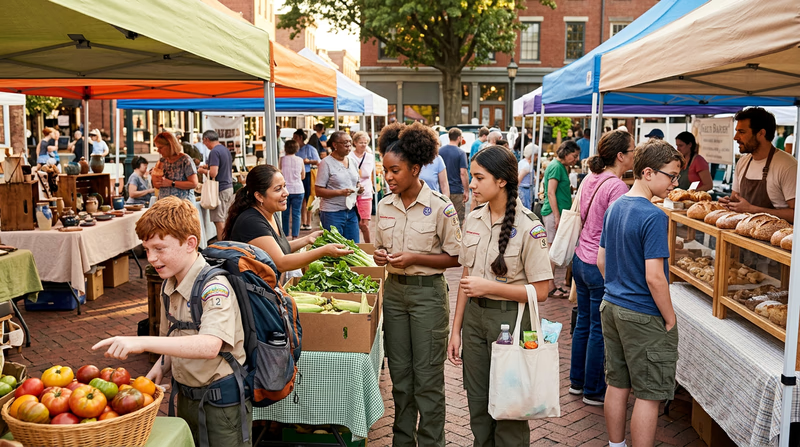
Now that you understand the principles behind America’s economic system, let’s look at how it all got started — with the Industrial Revolution.