Req 2b — Interest, Taxes & Spending
Three Levers That Move Money
Businesses do not operate in a vacuum. Three powerful forces — interest rates, taxes, and government spending — influence how much money flows into or out of the business world. Understanding these forces helps explain why the economy sometimes booms and sometimes slows down.
Interest Rates
An interest rate is the cost of borrowing money, expressed as a percentage. When you take out a loan, you pay back the amount you borrowed plus interest. When you put money in a savings account, the bank pays you interest for letting it use your money.
The Federal Reserve (often called “the Fed”) sets a key interest rate that influences all other rates in the economy. When the Fed changes this rate, it sends ripples through the entire business world.
When Interest Rates Go Down
- Borrowing becomes cheaper. Businesses are more likely to take out loans to build new factories, hire workers, or develop products.
- Consumers are more likely to borrow money for big purchases like cars and homes.
- More spending and investment means more money flowing into the economy.
When Interest Rates Go Up
- Borrowing becomes more expensive. Businesses may delay expansion plans or cut back on hiring.
- Consumers spend less on big purchases because loans cost more.
- Money flows more slowly through the economy, which can cool down an overheated market.
Taxes
Taxes are payments that individuals and businesses make to federal, state, and local governments. The money funds public services — roads, schools, national defense, healthcare programs, and more.
Changes in tax policy directly affect how much money businesses and consumers have to spend.
When Taxes Decrease
- Businesses keep more of their profits. They may use this money to hire more workers, invest in equipment, or lower prices for customers.
- Consumers take home more of their paychecks, which can increase spending.
- More money stays in the private sector (businesses and individuals).
When Taxes Increase
- Businesses have less money available for investment and growth.
- Consumers have less disposable income, so they may spend less.
- More money flows to the government, which can fund public projects and services.
Neither high nor low taxes are automatically “good” or “bad.” The debate is about balance — how much money should flow to government services versus how much should stay with businesses and individuals.
Government Spending
Government spending is the other side of the tax coin. The federal, state, and local governments spend money on everything from building highways to funding military operations to providing Social Security benefits.
When Government Spending Increases
- The government pumps more money into the economy by hiring workers, buying supplies, and funding projects.
- Businesses that provide goods and services to the government see more revenue (construction companies, defense contractors, technology firms).
- More money circulates through the economy, which can boost growth.
When Government Spending Decreases
- Fewer government contracts and projects mean less revenue for some businesses.
- Public sector workers may face layoffs or pay freezes.
- Less money circulates, which can slow economic activity.
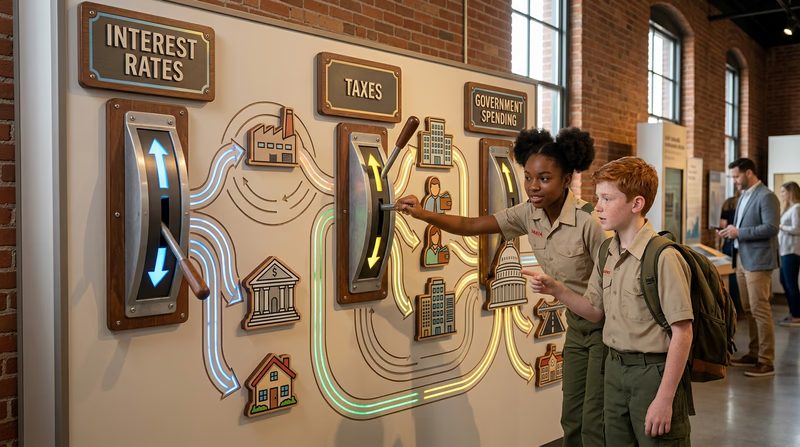
How They Work Together
These three forces do not operate independently — they interact with each other. For example:
- During a recession, the government might cut interest rates and increase spending to get money flowing again. This is like pressing the gas pedal on the economy.
- During a period of rapid inflation (prices rising too fast), the government might raise interest rates to slow things down. This is like tapping the brakes.
- Tax changes often accompany spending changes. A government might cut taxes to stimulate business growth, or raise taxes to fund a new infrastructure program.
Now let’s look at where businesses get the money they need to start and grow.