Req 3d — Brick-and-Mortar vs. Online
Two Ways to Do Business
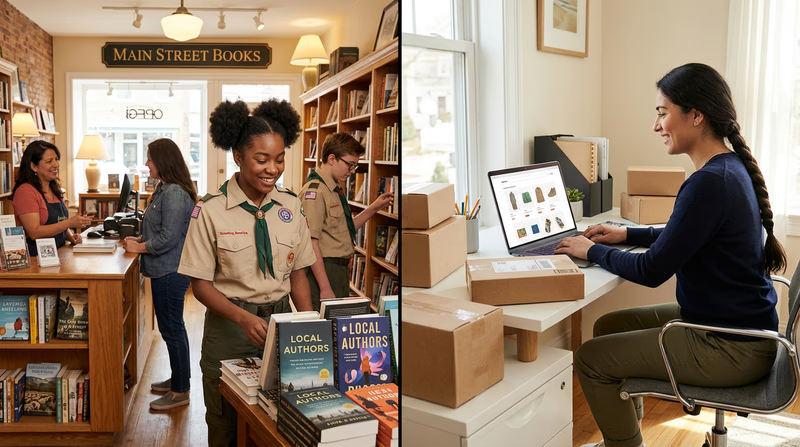
A brick-and-mortar business operates from a physical location — a store, office, restaurant, or workshop that customers visit in person. An online business (also called an e-commerce business) sells products or services through the internet, often without any physical storefront at all.
Both models have strengths and challenges. Many modern businesses use a combination of both — called an omnichannel approach.
Brick-and-Mortar Business
How It Works
Customers walk through a door, browse products on shelves, talk to employees, and make purchases in person. Think of your local grocery store, dentist office, barbershop, or hardware store.
Advantages
- Personal interaction. Customers can see, touch, and try products before buying. They can ask questions and get immediate help from staff.
- Trust and community. A physical presence in a neighborhood builds trust and loyalty. People like supporting businesses they can see and visit.
- Impulse purchases. When customers are in a store, they often buy things they did not plan to buy. This boosts revenue.
- Instant fulfillment. Customers take their purchase home immediately — no waiting for shipping.
Challenges
- High overhead costs. Rent, utilities, store fixtures, and in-person staff are expensive. These costs exist whether the store is busy or empty.
- Limited reach. A physical store can only serve customers within driving distance.
- Fixed hours. The store is only open during business hours. Customers cannot shop at midnight.
- Inventory risk. Products sitting on shelves tie up cash. If they do not sell, the business loses money.
Online Business
How It Works
Customers visit a website or app, browse products digitally, and place orders that are shipped to their door (or delivered digitally, like music or software). The business may operate from a warehouse, a home office, or even a laptop at a coffee shop.
Advantages
- Global reach. An online store can sell to anyone with an internet connection, anywhere in the world.
- Lower overhead. No need to pay for a retail space, store fixtures, or as many in-person staff.
- 24/7 availability. The website never closes. Customers can shop anytime, from anywhere.
- Data and personalization. Online businesses can track customer behavior and preferences, allowing them to recommend products and target marketing more effectively.
- Scalability. An online business can grow quickly without needing to build new physical locations.
Challenges
- No physical experience. Customers cannot touch, try, or see products in person before buying. This leads to higher return rates.
- Shipping and logistics. Getting products to customers quickly and affordably is a major operational challenge.
- Intense competition. The internet makes it easy for competitors to appear. A customer can compare dozens of options in seconds.
- Trust building. Without a physical presence, it can be harder to build customer trust, especially for new or unknown brands.
- Technology dependence. Website crashes, cybersecurity threats, and platform changes can disrupt business overnight.
Side-by-Side Comparison
| Factor | Brick-and-Mortar | Online |
|---|---|---|
| Startup costs | Higher (rent, build-out, fixtures) | Lower (website, hosting, software) |
| Customer reach | Local / regional | National / global |
| Hours | Fixed business hours | 24/7 |
| Customer experience | In-person, hands-on | Digital, convenience-focused |
| Overhead | Higher (rent, utilities, staff) | Lower (but shipping, tech, marketing) |
| Competition | Local competitors | Global competitors |
| Trust | Built through presence and relationships | Built through reviews, ratings, branding |
The Blended Approach
Many successful businesses today use both channels. A clothing retailer might have a flagship store downtown and also sell through its website. A restaurant might serve dine-in customers and also take online orders for delivery. This omnichannel strategy combines the strengths of both models.
E-Commerce vs. Brick and Mortar — SBA The SBA's guide to choosing a business location, including considerations for online and physical businesses.You have explored how businesses operate in the physical and digital worlds. Next, we shift to the role of government — specifically, the laws that protect American workers.