 Getting Started
Introduction & Overview
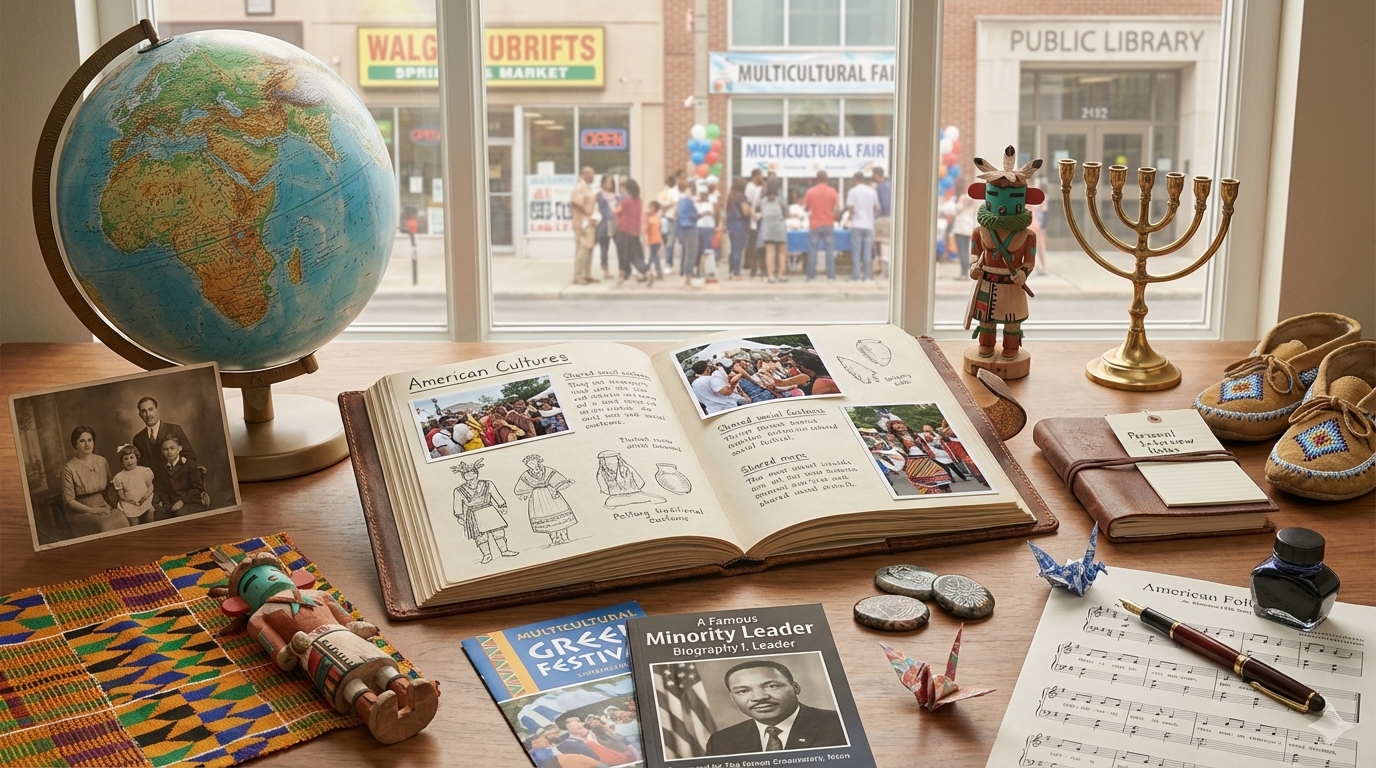
America is not one culture — it is hundreds of cultures woven together. Every neighborhood, every city, and every region carries traditions, languages, foods, and stories brought by people from all over the world. The American Cultures merit badge invites you to step outside your own experience and explore how this incredible mix of backgrounds shapes the country you live in.
This badge is about curiosity. It asks you to visit new places, talk to new people, and think about how different groups contribute to the American story. Along the way, you will discover that even groups with very different customs often share the same hopes and values.
Then and Now
Then — A Nation Built by Many Peoples
Long before European explorers arrived, hundreds of Indigenous nations thrived across the continent, each with distinct languages, traditions, and ways of life. Beginning in the 1600s, waves of immigrants came from Europe, Africa, Asia, and Latin America — some by choice, some by force. Enslaved Africans built much of the nation’s early economy while being denied basic freedoms. Chinese laborers helped construct the transcontinental railroad. Irish, Italian, German, and Eastern European immigrants filled factories and farms. Each group brought its own culture and, over time, changed what “American” meant.
- Key idea: America was never a single culture. It was shaped from the very beginning by the collision and blending of many peoples.
Now — From Melting Pot to Cultural Mosaic
For a long time, people described America as a “melting pot” — a place where all cultures blended into one. Today, many people prefer the idea of a “cultural mosaic” or “salad bowl,” where each group keeps its own identity while contributing to the whole. Heritage months, cultural festivals, bilingual communities, and multicultural education all reflect this shift. The conversation about how we live together is still evolving — and you are part of it.
- Key idea: Modern America celebrates cultural diversity rather than expecting everyone to be the same.
Get Ready! You are about to become a cultural explorer. Keep your eyes open, your questions respectful, and your mind ready to learn. The people and traditions you discover may surprise you — and they will definitely expand how you see the world.
Kinds of Cultural Groups
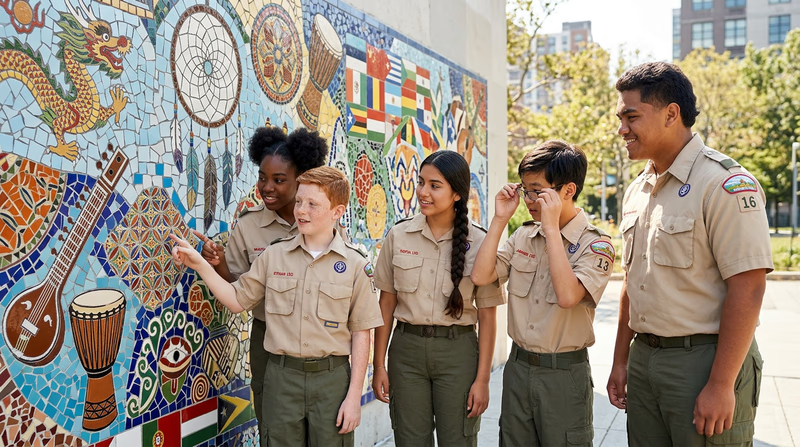
When this merit badge talks about “groups,” it means the racial, ethnic, and religious communities that make up America. Here is a look at some of the broad categories you might explore. Remember — every group listed here contains many sub-groups, each with its own unique traditions.
Racial and Ethnic Groups
America is home to people of every racial and ethnic background. African Americans, Asian Americans, Hispanic and Latino Americans, Native Americans, Pacific Islanders, and many others each have rich histories in this country. Some families have been here for centuries. Others arrived recently. Each group’s story is different, and each has shaped American life in important ways — through music, food, language, art, law, science, and more.
Religious Groups
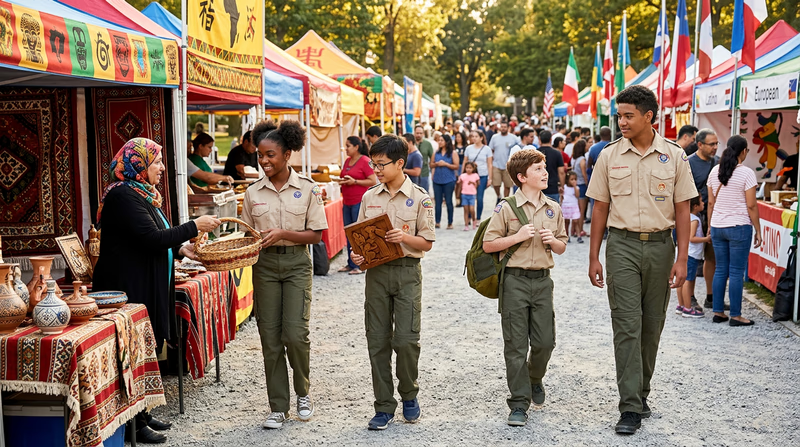
America’s commitment to religious freedom has made it one of the most religiously diverse countries on Earth. Christianity, Judaism, Islam, Hinduism, Buddhism, Sikhism, and many other faiths all have strong communities here. Each religion brings its own holidays, rituals, values, and community institutions — from churches and synagogues to mosques and temples. Understanding these traditions helps you see the world through someone else’s eyes.
Immigrant Communities
Throughout American history, communities have formed around shared national origins. You might find a Chinatown, a Little Italy, a Koreatown, or a Little Havana in cities across the country. These neighborhoods often preserve the language, food, and customs of the “old country” while creating something entirely new in America. Visiting one of these communities is like taking a short trip around the world without leaving your city.
Indigenous Peoples
Native American nations and Alaska Native peoples were the original inhabitants of this land. Today, there are 574 federally recognized tribes, each with its own sovereignty, language, and cultural practices. Indigenous cultures have contributed deeply to American life — from agriculture (corn, beans, squash) to government (the Iroquois Confederacy influenced the U.S. Constitution) to art, music, and environmental stewardship.
Now that you have a sense of the cultural landscape of America, it is time to get out there and explore it firsthand.