American Cultures Merit Badge — Complete Digital Resource Guide
https://merit-badge.university/merit-badges/american-cultures/guide/
Introduction & Overview
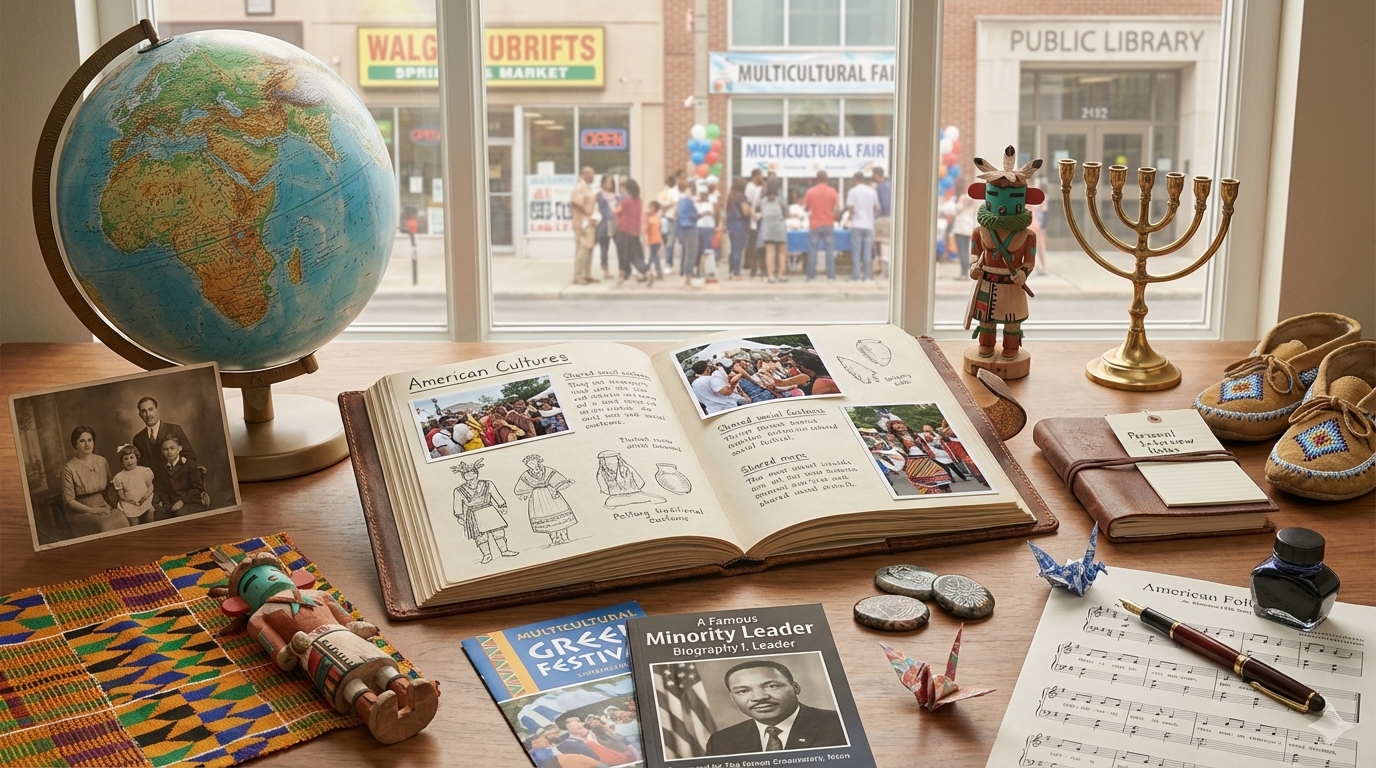
America is not one culture — it is hundreds of cultures woven together. Every neighborhood, every city, and every region carries traditions, languages, foods, and stories brought by people from all over the world. The American Cultures merit badge invites you to step outside your own experience and explore how this incredible mix of backgrounds shapes the country you live in.
This badge is about curiosity. It asks you to visit new places, talk to new people, and think about how different groups contribute to the American story. Along the way, you will discover that even groups with very different customs often share the same hopes and values.
Then and Now
Then — A Nation Built by Many Peoples
Long before European explorers arrived, hundreds of Indigenous nations thrived across the continent, each with distinct languages, traditions, and ways of life. Beginning in the 1600s, waves of immigrants came from Europe, Africa, Asia, and Latin America — some by choice, some by force. Enslaved Africans built much of the nation’s early economy while being denied basic freedoms. Chinese laborers helped construct the transcontinental railroad. Irish, Italian, German, and Eastern European immigrants filled factories and farms. Each group brought its own culture and, over time, changed what “American” meant.
- Key idea: America was never a single culture. It was shaped from the very beginning by the collision and blending of many peoples.
Now — From Melting Pot to Cultural Mosaic
For a long time, people described America as a “melting pot” — a place where all cultures blended into one. Today, many people prefer the idea of a “cultural mosaic” or “salad bowl,” where each group keeps its own identity while contributing to the whole. Heritage months, cultural festivals, bilingual communities, and multicultural education all reflect this shift. The conversation about how we live together is still evolving — and you are part of it.
- Key idea: Modern America celebrates cultural diversity rather than expecting everyone to be the same.
Get Ready! You are about to become a cultural explorer. Keep your eyes open, your questions respectful, and your mind ready to learn. The people and traditions you discover may surprise you — and they will definitely expand how you see the world.
Kinds of Cultural Groups
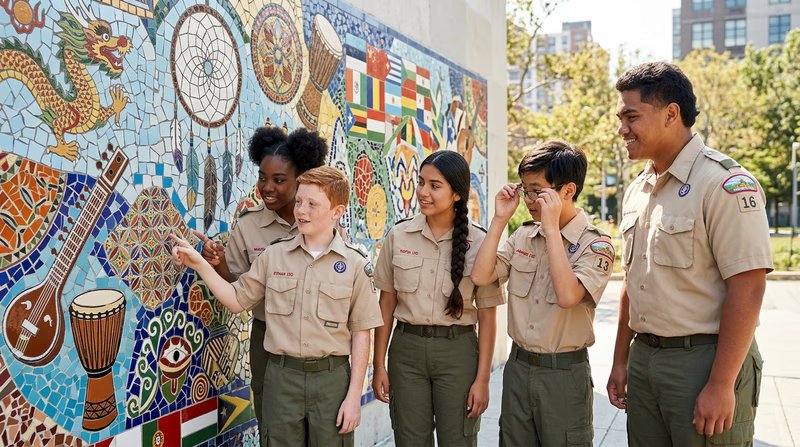
When this merit badge talks about “groups,” it means the racial, ethnic, and religious communities that make up America. Here is a look at some of the broad categories you might explore. Remember — every group listed here contains many sub-groups, each with its own unique traditions.
Racial and Ethnic Groups
America is home to people of every racial and ethnic background. African Americans, Asian Americans, Hispanic and Latino Americans, Native Americans, Pacific Islanders, and many others each have rich histories in this country. Some families have been here for centuries. Others arrived recently. Each group’s story is different, and each has shaped American life in important ways — through music, food, language, art, law, science, and more.
Religious Groups
America’s commitment to religious freedom has made it one of the most religiously diverse countries on Earth. Christianity, Judaism, Islam, Hinduism, Buddhism, Sikhism, and many other faiths all have strong communities here. Each religion brings its own holidays, rituals, values, and community institutions — from churches and synagogues to mosques and temples. Understanding these traditions helps you see the world through someone else’s eyes.
Immigrant Communities
Throughout American history, communities have formed around shared national origins. You might find a Chinatown, a Little Italy, a Koreatown, or a Little Havana in cities across the country. These neighborhoods often preserve the language, food, and customs of the “old country” while creating something entirely new in America. Visiting one of these communities is like taking a short trip around the world without leaving your city.
Indigenous Peoples
Native American nations and Alaska Native peoples were the original inhabitants of this land. Today, there are 574 federally recognized tribes, each with its own sovereignty, language, and cultural practices. Indigenous cultures have contributed deeply to American life — from agriculture (corn, beans, squash) to government (the Iroquois Confederacy influenced the U.S. Constitution) to art, music, and environmental stewardship.
Now that you have a sense of the cultural landscape of America, it is time to get out there and explore it firsthand.
Req 1 — Cultural Experiences
This requirement is your chance to step into someone else’s world. You will choose two of the five options below, and each one must involve a different cultural group. For example, you might attend a Diwali festival (Hindu tradition) for one option and visit a historically Black university for another.
Before you dive in, take a moment to think about the groups you want to explore. Choose communities that are genuinely new to you — that is where the real learning happens.
Option A: Attend a Festival or Celebration
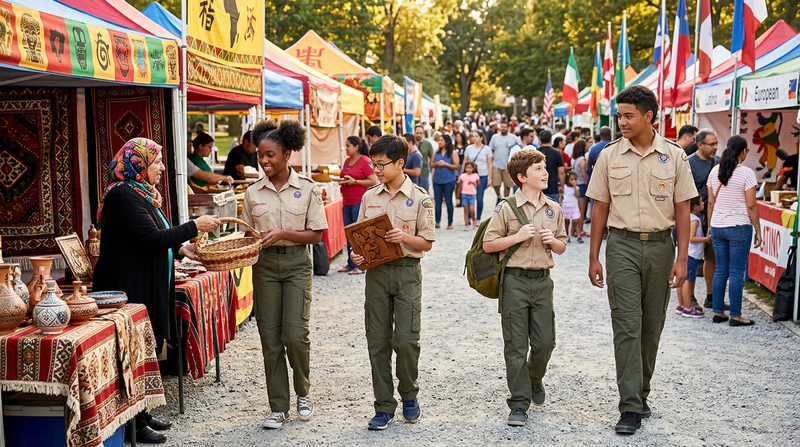
Cultural festivals are some of the most exciting and welcoming ways to experience another group’s traditions. Many communities hold public celebrations that are open to everyone.
What to look for:
- Food — What dishes are served? What ingredients and flavors are common?
- Music and dance — Are there live performances? What instruments are used?
- Clothing — Do people wear traditional dress? What does it represent?
- Rituals or ceremonies — Are there speeches, prayers, or symbolic acts?
- Art and crafts — Are there displays, demonstrations, or items for sale?
Where to find festivals:
- Local community calendars and event listings
- Cultural centers and community organizations
- City or county websites listing public events
- Social media pages for local cultural groups
Option B: Visit a Place of Worship, School, or Institution
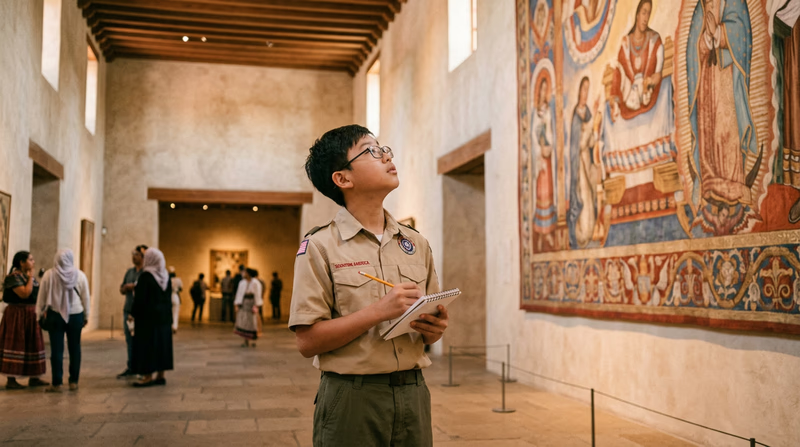
Institutions tell you a lot about what a community values. A place of worship reveals spiritual beliefs and rituals. A school shows how a community educates its children and preserves its language. A cultural center or museum shows how a group wants to be remembered and understood.
Ideas for visits:
- A mosque, synagogue, temple, gurdwara, or church serving a community different from your own
- A tribal college or historically Black college or university (HBCU)
- A cultural heritage center or community organization
- A language school (Chinese school, Hebrew school, etc.)
What to observe:
- How is the space designed? What symbols, artwork, or architecture stand out?
- What activities take place there? Services, classes, community meals?
- How does the institution connect people within the group?
- What role does it play in the surrounding neighborhood?
Option C: Talk with a Person from the Group
A one-on-one conversation can teach you things no book or website ever could. Hearing someone describe their own heritage — in their own words — gives you a personal connection to a culture that statistics and history lessons cannot match.
How to find someone to talk to:
- Ask your merit badge counselor, Scout leader, or teacher for a recommendation
- Reach out to local cultural organizations or community leaders
- Talk to classmates, neighbors, or family friends from a different background
Good questions to ask:
- “What traditions are most important to your family?”
- “What holidays or celebrations do you observe?”
- “What is something about your heritage that you wish more people understood?”
- “How do you keep your traditions alive in everyday life?”
- “What has changed about your community’s traditions over time?”
Option D: Learn and Teach a Song, Dance, Poem, or Story
This option asks you to go beyond observing — you actually learn a piece of a culture and then share it with others. Teaching something forces you to understand it deeply. And when you share a tradition with your friends, you are building a small bridge between cultures.
What to choose:
- Songs — folk songs, spirituals, hymns, or traditional melodies. Many cultural traditions have songs that tell stories or mark important moments.
- Dances — folk dances, ceremonial dances (only if appropriate to share), or social dances tied to a cultural tradition.
- Poems — classic or traditional poetry from a culture’s literary heritage.
- Stories — folk tales, creation stories, or oral history traditions.
Where to learn:
- Ask a member of the cultural group to teach you directly (this counts for Option C too!)
- Visit your local library for recordings, books of folk tales, or poetry anthologies
- Look for community classes or workshops in traditional dance or music
- Museums and cultural centers often have educational programs
When you teach it:
- Explain the cultural background — where does this song, dance, poem, or story come from? What does it mean to the people who created it?
- Be respectful of the tradition’s significance. Some cultural expressions are sacred and not meant to be performed casually — if in doubt, ask a member of the group.
- Have fun with it! Your friends will learn something new, and you will gain confidence as a cultural ambassador.
Option E: Visit a Library or Museum Program
Libraries and museums are treasure troves of cultural knowledge. Many host rotating exhibits, film screenings, lectures, and hands-on programs that bring a culture to life.
Where to look:
- Local public libraries — Check their events calendar for cultural programs, author talks, or film series
- History museums — State and local history museums often feature exhibits on the communities that shaped the region
- National museums — The Smithsonian Institution has multiple museums dedicated to cultural heritage (see links below)
- University museums and galleries — College campuses often host free exhibits on cultural topics
What to pay attention to:
- What story is the exhibit or program telling? Whose perspective is represented?
- What artifacts, images, or media are used to tell the story?
- What surprised you? What did you learn that you did not know before?
- How does this group’s history connect to the broader American story?
Writing Your Report
No matter which two options you choose, you will need to report on what you see and learn. Your report does not need to be a formal essay — but it should be thoughtful. Here is a framework:
Report Framework
Cover these points in your report- Which cultural group did you explore?
- What specific event, place, person, or program did you engage with?
- What did you observe or learn that was new to you?
- What traditions or values seem especially important to this group?
- How did this experience change or expand your understanding?
Now that you have experienced two different cultures firsthand, you are ready to start thinking more deeply about what happens when cultures share the same space.
Req 2 — Imagining a Single-Culture World
This requirement is a thought experiment — and it is one of the most creative parts of the badge. You are not looking for a “right answer.” You are using your imagination and your knowledge of real cultures to think about how diversity shapes the world.
Step 1: Pick One Group
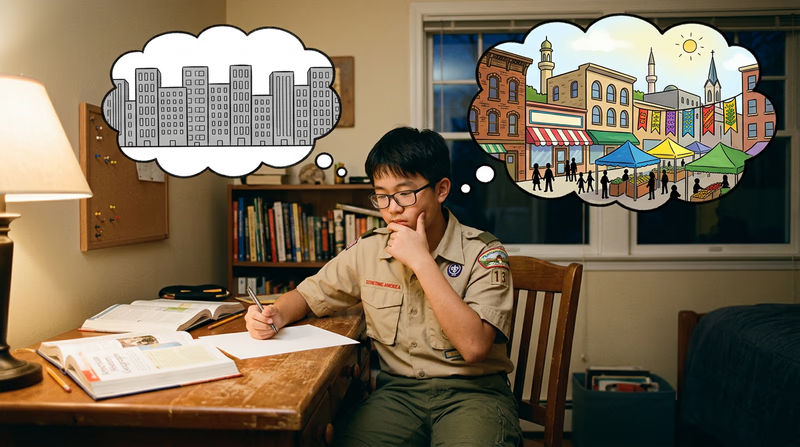
Start with one of the three cultural groups you selected for this merit badge. Think about what you already know about this group’s traditions, values, food, music, architecture, and social customs. Now picture a city or country where only this group has ever existed. No outside influence. No contact with other cultures.
What to Think About
Use these questions to guide your thinking:
Daily life:
- What language would everyone speak?
- What would a typical meal look like?
- What music would play on the radio? What instruments would people use?
- What holidays would people celebrate?
Buildings and spaces:
- What would the architecture look like? Think about the places of worship, homes, and public buildings this culture has created in the real world.
- What kind of art or decoration would you see on the streets?
Government and society:
- How might the group’s values shape its laws and leadership?
- How would the community make decisions?
- What would schools teach?
Innovation and economy:
- What skills, trades, and professions is this group historically known for?
- What inventions or technologies might this society develop — or miss out on?
Step 2: Now Add Two More Groups
Here is where things get interesting. Imagine the same city or country, but now all three of your chosen groups live there together. What changes?
Think about:
- Food: What happens when different culinary traditions share the same city? New fusion dishes? Restaurants from many traditions on the same block?
- Language: Do people become bilingual or multilingual? Do new slang words emerge from the blending of languages?
- Celebrations: Do communities share their holidays with each other? Do new traditions form?
- Conflict and cooperation: What challenges might arise when people with different customs live side by side? How might they resolve disagreements?
- Innovation: When different perspectives and skills come together, new ideas are born. What inventions, businesses, or art forms might emerge?
The Bigger Picture
This thought experiment reveals something important: no culture exists in a vacuum. Even the traditions we think of as “purely” one group’s heritage have usually been shaped by contact with other groups over centuries. The American story is a story of cultures meeting, clashing, borrowing, and creating something new together.
That does not mean the process is always smooth. When different groups share space, there can be misunderstanding, prejudice, and conflict. But there is also the possibility of something richer and more creative than any single group could build alone.
PBS — The Story of Us: Immigration Explore how immigration has shaped American communities, culture, and identity through documentaries and educational resources. Link: PBS — The Story of Us: Immigration — https://www.pbs.org/topic/immigration/Presenting Your Ideas
When you share your thoughts with your counselor, organize them clearly:
- Describe the single-group city first. Paint a picture — what does it look, sound, smell, and feel like?
- Then describe the multi-group city. What stays the same? What changes? What is new?
- Compare the two. What did the multi-group city gain? What challenges did it face?
You have just done something historians and sociologists spend careers studying — imagining how cultures shape the world around them. Now let’s look at how real cultural differences and similarities play out in everyday life.
Req 3 — Customs and Commonalities
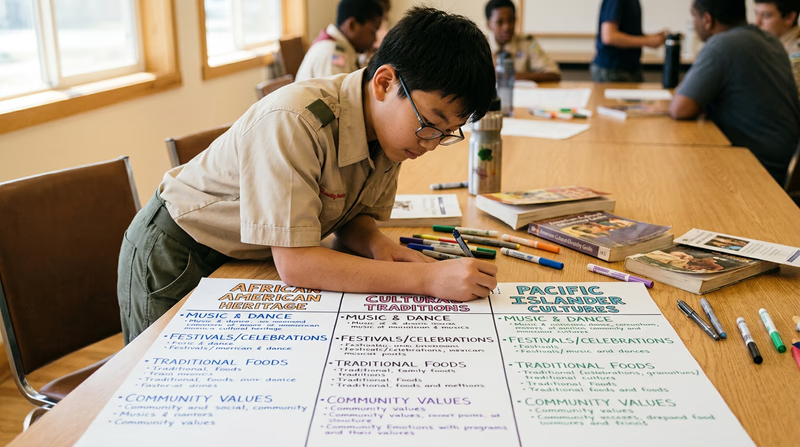
This requirement asks you to look at your three chosen groups side by side. What makes each one unique? And — just as importantly — what do they share? You might be surprised at how much common ground exists between groups that seem very different on the surface.
Understanding “Religious Customs”
Religious customs are the practices, rituals, and beliefs that shape how a community worships and lives according to its faith. Even within the same religion, different communities may observe very different customs.
Here are some categories to explore:
Worship and prayer:
- When and how often do members of this group pray or attend services?
- What does a typical worship service look like? Is it formal or informal? Quiet or energetic?
- Are there special garments, objects, or symbols used during worship?
Holy days and holidays:
- What are the most important religious holidays or observances?
- How are they celebrated — with fasting, feasting, prayer, community gatherings?
- Do any of these holidays fall at similar times of year as holidays from the other groups?
Rites of passage:
- How does the group mark birth, coming of age, marriage, and death?
- Are there ceremonies or rituals tied to these life events?
Food and dietary practices:
- Are there religious dietary rules (kosher, halal, vegetarian, fasting periods)?
- Is sharing food part of worship or community life?
Understanding “Social Customs”
Social customs are the everyday habits, traditions, and unwritten rules that shape how people in a group interact with each other and with outsiders.
Family structure:
- How are families organized? Is the extended family (grandparents, aunts, uncles, cousins) involved in daily life?
- Who makes major family decisions? How are children raised?
Greetings and respect:
- How do people greet each other — handshake, bow, embrace, cheek kiss?
- How is respect shown to elders or authority figures?
Celebrations and gathering:
- What kinds of social events bring the community together (beyond religious services)?
- What role does music, dance, or storytelling play in gatherings?
Food culture:
- What are the group’s signature dishes or cooking traditions?
- Are meals a social event? Who cooks? Is hospitality important?
Art, music, and expression:
- What art forms, musical traditions, or crafts are associated with this group?
- How are these traditions passed down?
Finding the Common Threads
After you have explored the differences, look for the similarities. This is the heart of the requirement. Here are common threads that appear across many cultures:
The Golden Rule: Nearly every culture and religion has some version of “treat others as you want to be treated.” This idea appears in Christianity, Judaism, Islam, Hinduism, Buddhism, Confucianism, and the ethical traditions of Indigenous peoples worldwide.
Hospitality: Welcoming strangers with food, shelter, and kindness is a deeply held value in cultures around the world — from the Bedouin tradition of offering tea to travelers, to the Southern American tradition of sweet tea on the porch, to the Japanese custom of omotenashi (wholehearted hospitality).
Respect for elders: Across racial, ethnic, and religious lines, the idea that older members of the community deserve special respect and care is nearly universal.
Marking life’s milestones: Every culture celebrates birth, coming of age, marriage, and the passing of loved ones — even if the specific rituals look completely different.
Storytelling: Every group passes down its history, values, and wisdom through stories — whether written, spoken, sung, or danced.
Smithsonian Center for Folklife and Cultural Heritage Explore cultural traditions from communities around the world through articles, videos, and interactive exhibits from the Smithsonian. Link: Smithsonian Center for Folklife and Cultural Heritage — https://folklife.si.edu/Organizing Your Discussion
When you talk with your counselor, try this structure:
Discussion Outline
Organize your comparison- Name your three groups clearly.
- Describe two or three specific differences in religious customs.
- Describe two or three specific differences in social customs.
- Then share the similarities you found — ideas, values, or practices that all three groups share.
- Explain why you think those common threads exist.
You have now explored both the differences and the common threads among your three groups. Next, you will look at specific individuals from different backgrounds who made lasting contributions to America.
Req 4 — Contributions to America
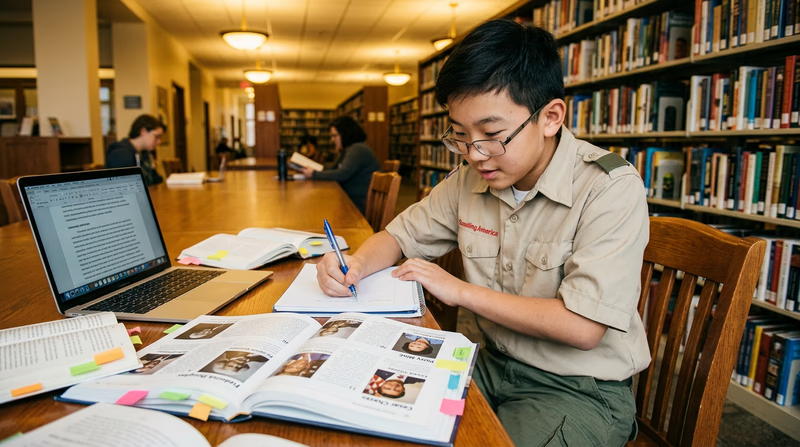
America’s greatest achievements are not the work of one group — they are the combined contributions of people from every background imaginable. This requirement asks you to research and share the stories of three individuals who made a real difference, each from a different racial, ethnic, or religious background.
How to Choose Your Three People
You have a lot of freedom here. Your three people can come from any time period, any field, and any part of the country. The key rule is that each person must be from a different racial, ethnic, or religious background.
Think broadly. “Contributions to our country” does not just mean presidents and generals. It includes scientists, artists, activists, inventors, educators, entrepreneurs, athletes, writers, and everyday people who changed their communities.
Where to Look
Here are some starting points for your research:
Science and technology:
- Who invented or discovered something that changed American life?
- Think about medicine, agriculture, engineering, computing, space exploration
Arts and culture:
- Who created music, literature, film, or art that defined an era?
- Think about writers, musicians, filmmakers, visual artists, architects
Civil rights and social change:
- Who fought for justice, equality, or the rights of others?
- Think about activists, lawyers, organizers, religious leaders
Government and military:
- Who served the country through leadership, diplomacy, or military service?
- Think about elected officials, diplomats, service members, judges
Business and innovation:
- Who built companies, industries, or economic opportunities?
- Think about entrepreneurs, labor organizers, agricultural innovators
Examples to Inspire You
These examples are here to spark your thinking — not to be your answers. Use them as a starting point, then find your own people.
Science: Chien-Shiung Wu, a Chinese American physicist, designed an experiment that disproved a fundamental law of physics (the conservation of parity) in 1957. Her work reshaped our understanding of the universe, yet she was overlooked for the Nobel Prize that her male colleagues received.
Arts: Langston Hughes, an African American poet and writer, became one of the defining voices of the Harlem Renaissance. His poems and stories captured the beauty, struggle, and resilience of Black life in America and influenced generations of writers.
Civil rights: Fred Korematsu, a Japanese American civil rights activist, defied the forced internment of Japanese Americans during World War II. He took his case to the Supreme Court, and although he lost in 1944, his conviction was overturned decades later. He received the Presidential Medal of Freedom in 1998.
Innovation: Nikola Tesla, a Serbian Orthodox Christian immigrant from Croatia, invented the alternating current (AC) electrical system that powers virtually every home and business in America today. His work made modern electricity possible.
What to Include in Your Presentation
For each person, cover these points:
Contribution Profile
Cover these for each of your three people- The person’s name and background (racial, ethnic, or religious identity)
- What they contributed — be specific about what they did or created
- Why it mattered — how did this contribution change America or affect other people?
- What obstacles they faced — many contributors had to overcome prejudice, poverty, or other barriers
- What you found most interesting or inspiring about their story
Going Beyond the Famous Names
One of the most powerful things you can do for this requirement is to find someone local. Is there a person from your own community — past or present — who made a significant contribution from a different cultural background? A local hero’s story can be even more meaningful than a famous figure’s because it shows that contributions to America happen everywhere, not just in history books.
Ask your librarian, check your local historical society, or talk to longtime residents. You might be amazed at what you find.
You have now explored how individuals from different backgrounds have shaped this country. The final requirement asks you to take everything you have learned and share it with others.
Req 5 — Leading a Discussion
This is the capstone of the American Cultures merit badge. Everything you have learned — the festivals you attended, the customs you compared, the contributions you researched — comes together here. You will share what you have discovered and then guide your audience through a real conversation about understanding across differences.
This requirement has two parts: a talk (you present information) and a discussion (you ask questions and help others share their ideas). Both matter.
Part 1: Your Talk
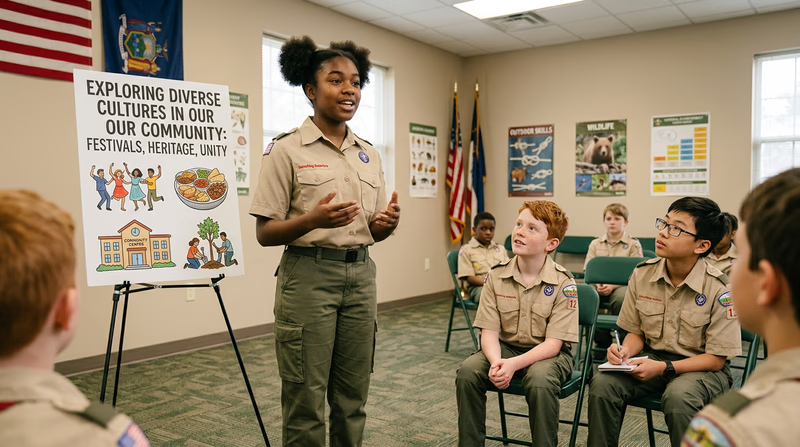
Your talk should be 5–10 minutes long and cover how people from different cultural groups have lived alongside each other in America — the good, the hard, and the hopeful.
Planning Your Talk
Start with an outline. Here is a structure that works well:
Opening (1–2 minutes):
- Hook your audience with a surprising fact, a personal story from your badge work, or a question
- Tell them what you are going to talk about
Body (3–5 minutes):
- Share examples of how different groups have gotten along — real stories of cooperation, shared traditions, or moments when people came together across differences
- Be honest about challenges too — misunderstanding and prejudice are part of the story
- Use specific examples from your own badge experiences (festivals, conversations, research)
Closing (1–2 minutes):
- Summarize your main point
- Bridge into the discussion by posing a question to the group
Delivery Tips
Talk Delivery Checklist
Before and during your talk- Practice your talk at least twice out loud before the real thing.
- Make eye contact with different people in the audience.
- Speak slowly and clearly — nerves make most people rush.
- Use a visual aid if it helps (a poster, a map, photos from your badge experiences).
- Keep your notes on index cards, not a full script. Talk to your audience, not at your paper.
- It is okay to be nervous. Your audience wants you to succeed.
Part 2: Leading the Discussion
After your talk, you shift from presenter to facilitator. Your job is no longer to share your ideas — it is to help others share theirs.
Good Discussion Questions
Here are some questions you can use to get the conversation started:
About personal experience:
- “Has anyone here attended a cultural event or celebration different from their own? What was it like?”
- “Have you ever had a friend from a very different background? What did you learn from each other?”
About understanding:
- “Why do you think misunderstandings happen between different groups?”
- “What is the difference between knowing about a culture and actually understanding it?”
About action:
- “What could our Scout unit (or school) do to help people from different backgrounds understand each other better?”
- “What is one thing each of us could do this week to learn about a group different from our own?”
How to Facilitate Well
Leading a discussion is different from giving a talk. Here is how to do it:
Listen more than you talk. Your role is to guide, not lecture. After asking a question, wait. Give people time to think. Silence is okay.
Encourage participation. If the same two people are doing all the talking, gently invite others: “What do other people think?” or “Does anyone have a different perspective?”
Stay neutral. As the facilitator, your job is to keep the conversation respectful and productive — not to push your own opinion. If someone says something you disagree with, ask a follow-up question rather than correcting them.
Handle disagreement with respect. If people disagree, that is healthy. Say something like, “It sounds like we have different perspectives on this — can each of you explain why you see it that way?” Keep the tone curious, not confrontational.
Wrap up with action. End the discussion by asking: “Based on what we have talked about, what is one thing we could actually do?” A discussion that leads to action is more powerful than one that stays abstract.
Learning for Justice — Facilitating Critical Conversations Practical strategies for leading productive conversations about culture, identity, and justice — useful for anyone facilitating a group discussion. Link: Learning for Justice — Facilitating Critical Conversations — https://www.learningforjustice.org/professional-development/facilitating-critical-conversationsPutting It All Together
This requirement brings your entire American Cultures journey full circle. You started by exploring cultures firsthand. You imagined how cultures shape societies. You compared customs and found common ground. You researched individuals who made America stronger. And now you are helping others think about these ideas too.
The ability to talk about culture respectfully, listen to different perspectives, and help people find common ground is one of the most valuable skills you can develop — not just for Scouting, but for life.
Extended Learning
A. Introduction
You have completed the American Cultures merit badge — congratulations! You have attended cultural events, imagined new worlds, compared traditions, researched remarkable people, and led a discussion on understanding. But the real work of cultural understanding does not stop when the badge is earned. The more you learn about the people around you, the richer your world becomes.
B. Deep Dive: The Power of Food as a Cultural Bridge
One of the fastest ways to connect with a different culture is through its food. Every dish tells a story — of geography, history, trade, migration, and family. When you sit down to eat food from another culture, you are experiencing centuries of tradition in a single bite.
Consider how many “American” foods actually come from other cultures. Pizza arrived with Italian immigrants. Tacos came from Mexican culinary traditions. Sushi was introduced by Japanese Americans. Gumbo was born from the blending of West African, French, Spanish, and Native American cooking traditions in Louisiana. Even the hamburger traces its roots to German immigrants from Hamburg.
Food also shows how cultures change when they meet. Tex-Mex cuisine is not Mexican food and it is not Texan food — it is something entirely new that was created when two traditions collided and collaborated. Korean-Mexican fusion tacos, which became a sensation in Los Angeles, were invented by a Korean American chef who grew up eating both cuisines. These blended dishes are living proof that cultural mixing creates something greater than the sum of its parts.
If you want to go deeper, try cooking a dish from one of the cultures you studied. Find an authentic recipe — ideally from a member of that community or a cookbook written by someone from that background. Pay attention to the ingredients, the techniques, and the way the meal is meant to be shared. Better yet, cook with someone from that culture and learn the stories behind the recipes. You will discover that a kitchen is one of the best classrooms in the world.
C. Deep Dive: How Language Shapes Culture
Language is far more than a tool for communication — it is a window into how a culture sees the world. The words a language has (and the words it lacks) reveal what that culture values, fears, celebrates, and prioritizes.
For example, the Inuit languages of Alaska and northern Canada have dozens of words for different types of snow and ice, reflecting the critical importance of understanding frozen landscapes for survival. The Japanese concept of wabi-sabi — finding beauty in imperfection and impermanence — has no direct English translation because it reflects a philosophical outlook deeply rooted in Japanese culture. The Spanish word sobremesa describes the time spent lingering at the table after a meal, talking and enjoying each other’s company. English does not have a word for this because the concept is not as culturally central — but many Hispanic families practice it every day.
In the United States, language diversity is staggering. More than 350 languages are spoken across the country. Spanish is spoken by over 40 million people. Chinese (in its many dialects), Tagalog, Vietnamese, Arabic, French, Korean, and German each have millions of speakers. And there are approximately 170 Native American languages still spoken, though many are endangered — some by only a handful of elderly speakers.
Learning even a few words in another language is a powerful act of respect. When you greet someone in their native language, you are saying, “I see you. Your culture matters.” You do not need to become fluent — even learning to say “hello,” “thank you,” and “please” in another language opens doors and builds goodwill.
D. Deep Dive: Being a Cultural Ally
Understanding other cultures is valuable on its own, but the real impact comes when you put that understanding into action. Being a “cultural ally” means using what you know to stand up for people who are being treated unfairly because of their background — even when it is uncomfortable.
What does that look like in practice? It starts small. If someone at school makes a joke that stereotypes a cultural group, an ally speaks up — not with anger, but with honesty: “That is not cool. That is a real group of people you are talking about.” If a classmate is being excluded because they dress differently, speak with an accent, or practice an unfamiliar religion, an ally makes space for them — sits with them at lunch, asks about their day, treats them like a person rather than an outsider.
Being an ally also means educating yourself. Do not rely on people from other groups to explain their entire culture to you. Read books by authors from different backgrounds. Watch films and documentaries that tell stories from perspectives different from your own. Follow news sources that cover communities you do not normally hear about. The more you know, the better equipped you are to challenge stereotypes when you encounter them.
It also means being humble. You will make mistakes. You might mispronounce a name, misunderstand a custom, or say something unintentionally insensitive. When that happens, apologize sincerely, learn from it, and move on. Nobody expects perfection — but people do notice effort.
The Scout Law says a Scout is friendly, courteous, and kind. Being a cultural ally is simply living those values across the lines of race, ethnicity, and religion. It is Scouting at its best.
E. Real-World Experiences
Take your cultural learning beyond the badge with these hands-on experiences.
Attend a Powwow
Visit the Smithsonian National Museum of African American History and Culture
Volunteer at a Refugee Resettlement Organization
Take a Cultural Walking Tour
Participate in an Interfaith Dialogue
F. Organizations
These organizations are dedicated to cultural understanding, preservation, and education.
Part of the Smithsonian, dedicated to the life, languages, literature, history, and arts of Native Americans.
Organization: National Museum of the American Indian — https://americanindian.si.edu/
Works to stop the defamation of the Jewish people and to secure justice and fair treatment for all. Offers educational programs on bias and bullying.
Organization: Anti-Defamation League (ADL) — https://www.adl.org/
America’s oldest and largest civil rights organization, working to ensure the political, educational, social, and economic equality of all people.
Organization: National Association for the Advancement of Colored People (NAACP) — https://www.naacp.org/
A national affiliation of five organizations advancing the civil and human rights of Asian Americans and Pacific Islanders through advocacy, education, and litigation.
Organization: Asian Americans Advancing Justice — https://www.advancingjustice-aajc.org/
The largest national Hispanic civil rights and advocacy organization in the United States, working on issues from education to immigration to health.
Organization: National Council of La Raza (UnidosUS) — https://www.unidosus.org/
Builds interfaith cooperation on college campuses and in communities, helping young people from different religious and non-religious backgrounds work together on shared concerns.
Organization: Interfaith Youth Core (IFYC) — https://ifyc.org/