Req 2 — Imagining a Single-Culture World
This requirement is a thought experiment — and it is one of the most creative parts of the badge. You are not looking for a “right answer.” You are using your imagination and your knowledge of real cultures to think about how diversity shapes the world.
Step 1: Pick One Group
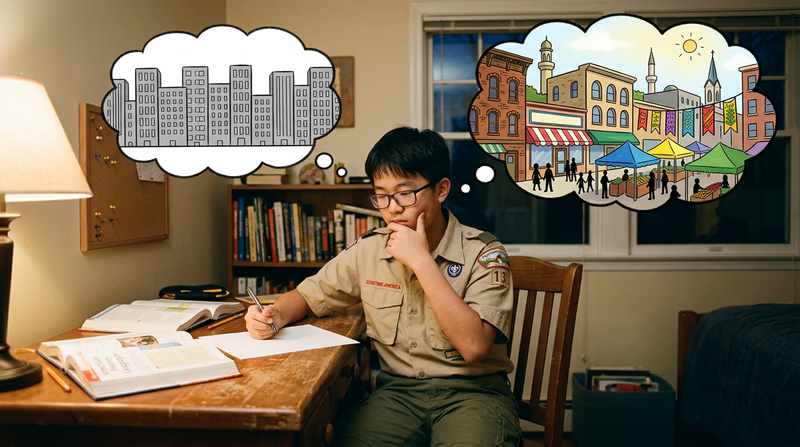
Start with one of the three cultural groups you selected for this merit badge. Think about what you already know about this group’s traditions, values, food, music, architecture, and social customs. Now picture a city or country where only this group has ever existed. No outside influence. No contact with other cultures.
What to Think About
Use these questions to guide your thinking:
Daily life:
- What language would everyone speak?
- What would a typical meal look like?
- What music would play on the radio? What instruments would people use?
- What holidays would people celebrate?
Buildings and spaces:
- What would the architecture look like? Think about the places of worship, homes, and public buildings this culture has created in the real world.
- What kind of art or decoration would you see on the streets?
Government and society:
- How might the group’s values shape its laws and leadership?
- How would the community make decisions?
- What would schools teach?
Innovation and economy:
- What skills, trades, and professions is this group historically known for?
- What inventions or technologies might this society develop — or miss out on?
Step 2: Now Add Two More Groups
Here is where things get interesting. Imagine the same city or country, but now all three of your chosen groups live there together. What changes?
Think about:
- Food: What happens when different culinary traditions share the same city? New fusion dishes? Restaurants from many traditions on the same block?
- Language: Do people become bilingual or multilingual? Do new slang words emerge from the blending of languages?
- Celebrations: Do communities share their holidays with each other? Do new traditions form?
- Conflict and cooperation: What challenges might arise when people with different customs live side by side? How might they resolve disagreements?
- Innovation: When different perspectives and skills come together, new ideas are born. What inventions, businesses, or art forms might emerge?
The Bigger Picture
This thought experiment reveals something important: no culture exists in a vacuum. Even the traditions we think of as “purely” one group’s heritage have usually been shaped by contact with other groups over centuries. The American story is a story of cultures meeting, clashing, borrowing, and creating something new together.
That does not mean the process is always smooth. When different groups share space, there can be misunderstanding, prejudice, and conflict. But there is also the possibility of something richer and more creative than any single group could build alone.
PBS — The Story of Us: Immigration Explore how immigration has shaped American communities, culture, and identity through documentaries and educational resources.Presenting Your Ideas
When you share your thoughts with your counselor, organize them clearly:
- Describe the single-group city first. Paint a picture — what does it look, sound, smell, and feel like?
- Then describe the multi-group city. What stays the same? What changes? What is new?
- Compare the two. What did the multi-group city gain? What challenges did it face?
You have just done something historians and sociologists spend careers studying — imagining how cultures shape the world around them. Now let’s look at how real cultural differences and similarities play out in everyday life.