Req 3 — Customs and Commonalities
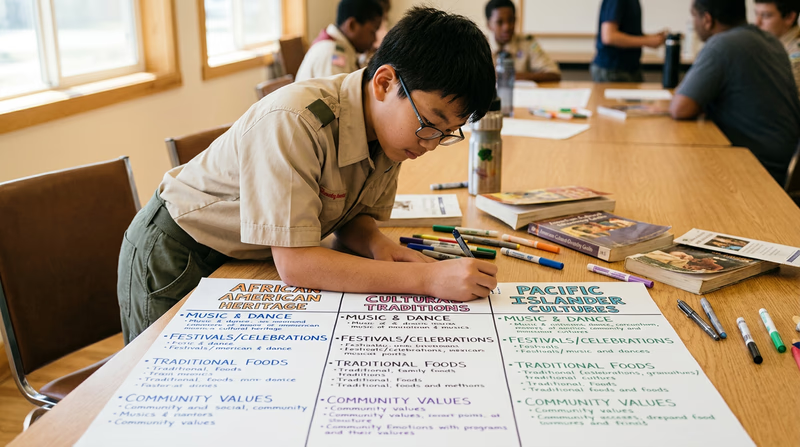
This requirement asks you to look at your three chosen groups side by side. What makes each one unique? And — just as importantly — what do they share? You might be surprised at how much common ground exists between groups that seem very different on the surface.
Understanding “Religious Customs”
Religious customs are the practices, rituals, and beliefs that shape how a community worships and lives according to its faith. Even within the same religion, different communities may observe very different customs.
Here are some categories to explore:
Worship and prayer:
- When and how often do members of this group pray or attend services?
- What does a typical worship service look like? Is it formal or informal? Quiet or energetic?
- Are there special garments, objects, or symbols used during worship?
Holy days and holidays:
- What are the most important religious holidays or observances?
- How are they celebrated — with fasting, feasting, prayer, community gatherings?
- Do any of these holidays fall at similar times of year as holidays from the other groups?
Rites of passage:
- How does the group mark birth, coming of age, marriage, and death?
- Are there ceremonies or rituals tied to these life events?
Food and dietary practices:
- Are there religious dietary rules (kosher, halal, vegetarian, fasting periods)?
- Is sharing food part of worship or community life?
Understanding “Social Customs”
Social customs are the everyday habits, traditions, and unwritten rules that shape how people in a group interact with each other and with outsiders.
Family structure:
- How are families organized? Is the extended family (grandparents, aunts, uncles, cousins) involved in daily life?
- Who makes major family decisions? How are children raised?
Greetings and respect:
- How do people greet each other — handshake, bow, embrace, cheek kiss?
- How is respect shown to elders or authority figures?
Celebrations and gathering:
- What kinds of social events bring the community together (beyond religious services)?
- What role does music, dance, or storytelling play in gatherings?
Food culture:
- What are the group’s signature dishes or cooking traditions?
- Are meals a social event? Who cooks? Is hospitality important?
Art, music, and expression:
- What art forms, musical traditions, or crafts are associated with this group?
- How are these traditions passed down?
Finding the Common Threads
After you have explored the differences, look for the similarities. This is the heart of the requirement. Here are common threads that appear across many cultures:
The Golden Rule: Nearly every culture and religion has some version of “treat others as you want to be treated.” This idea appears in Christianity, Judaism, Islam, Hinduism, Buddhism, Confucianism, and the ethical traditions of Indigenous peoples worldwide.
Hospitality: Welcoming strangers with food, shelter, and kindness is a deeply held value in cultures around the world — from the Bedouin tradition of offering tea to travelers, to the Southern American tradition of sweet tea on the porch, to the Japanese custom of omotenashi (wholehearted hospitality).
Respect for elders: Across racial, ethnic, and religious lines, the idea that older members of the community deserve special respect and care is nearly universal.
Marking life’s milestones: Every culture celebrates birth, coming of age, marriage, and the passing of loved ones — even if the specific rituals look completely different.
Storytelling: Every group passes down its history, values, and wisdom through stories — whether written, spoken, sung, or danced.
Smithsonian Center for Folklife and Cultural Heritage Explore cultural traditions from communities around the world through articles, videos, and interactive exhibits from the Smithsonian.Organizing Your Discussion
When you talk with your counselor, try this structure:
Discussion Outline
Organize your comparison
- Name your three groups clearly.
- Describe two or three specific differences in religious customs.
- Describe two or three specific differences in social customs.
- Then share the similarities you found — ideas, values, or practices that all three groups share.
- Explain why you think those common threads exist.
You have now explored both the differences and the common threads among your three groups. Next, you will look at specific individuals from different backgrounds who made lasting contributions to America.