Extended Learning
A. Congratulations!
You have earned the American Heritage merit badge — and along the way, you have explored the ideas, people, symbols, and stories that make the United States what it is. But earning the badge is just the beginning. The more you learn about American heritage, the more connections you will see between the past and the world around you. Here are some ways to keep going.
B. Oral History: Capturing Stories Before They Disappear
One of the most powerful things you can do for American heritage is record the stories of the people around you. Oral history is the practice of interviewing people and preserving their accounts of events they experienced firsthand. These recordings become primary sources — the raw material of history.
You already practiced interviewing skills in Requirement 2. Now consider taking it further. Veterans, community elders, immigrant families, and longtime residents all carry stories that will be lost if no one captures them. The Library of Congress runs the Veterans History Project, which collects and preserves firsthand accounts from American veterans. You can contribute by conducting recorded interviews and submitting them to the project.
To do oral history well, prepare thoughtful questions but let the person guide the conversation. Use a quality recording device — even a smartphone works if you find a quiet space. Always get written permission from the person you interview. Transcribe the interview afterward so the words are searchable and accessible. Store copies in multiple places to protect against data loss.
Oral history does something textbooks cannot: it captures the emotion, the pauses, the laughter, and the weight of lived experience. A transcript of a D-Day veteran describing the landing at Omaha Beach conveys something that no historian’s summary can match. By recording these stories now, you are preserving pieces of American heritage that would otherwise vanish.
Veterans History Project — Library of Congress Learn how to contribute oral history interviews with veterans to the Library of Congress collection.C. Historical Thinking: Reading the Past Like a Detective
History is not just a list of facts — it is an ongoing investigation. Historians do not simply accept what they read. They ask questions, examine evidence, consider perspective, and look for what is missing. This way of thinking is called historical thinking, and it is a skill you can develop and use for the rest of your life.
There are several key habits of historical thinking. Sourcing means asking who created a document, when, and why — before you even read it. A newspaper editorial from 1863 tells you as much about the writer’s perspective as it does about the events described. Contextualization means placing events in their time and place. Judging people from 200 years ago by today’s standards misses the point — the goal is to understand why people acted the way they did, given the world they lived in.
Corroboration is the practice of checking multiple sources against each other. If one account says a battle was a decisive victory and another says it was inconclusive, you need to dig deeper. Close reading means paying attention to word choice, tone, and what is not said. A political speech that talks about “freedom” without defining it might mean very different things to different audiences.
You can practice these skills with any historical document — old newspapers, letters, photographs, maps, or government records. The Stanford History Education Group offers free resources for building historical thinking skills, including lessons built around primary sources.
Stanford History Education Group — Reading Like a Historian Free history lessons built around primary source documents, designed to build critical historical thinking skills.D. Preservation in Action: How Communities Save Their Heritage
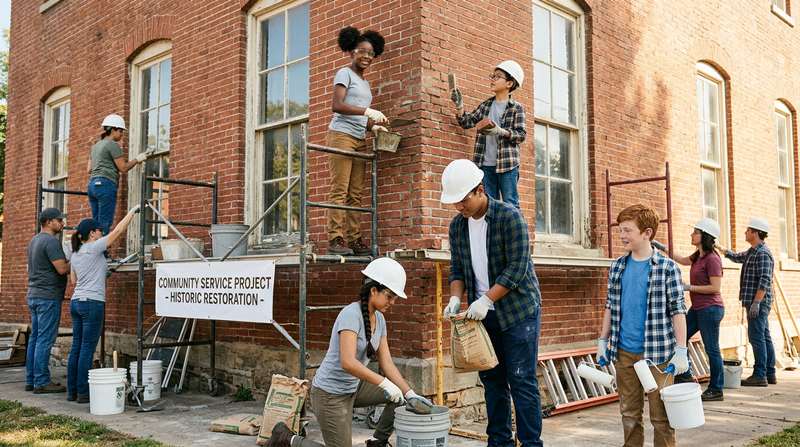
Historic preservation is not just for professionals — communities across the country are finding creative ways to protect the places and traditions that tell their stories. Understanding how preservation works helps you participate in and advocate for it.
The preservation movement in America gained national momentum with the National Historic Preservation Act of 1966, which created the National Register of Historic Places and established State Historic Preservation Offices (SHPOs) in every state. But preservation happens at the local level too. Many cities have historic district commissions that review changes to buildings in designated areas. Neighborhoods organize to document and protect their architectural heritage. Volunteers restore old buildings, maintain cemeteries, and create walking tours.
Adaptive reuse is one of the most exciting trends in preservation. Instead of tearing down old buildings, communities find new purposes for them. A 19th-century factory becomes a community arts center. A one-room schoolhouse becomes a local history museum. A decommissioned fire station becomes a restaurant. These projects save historic structures while giving them new life and economic value.
You can get involved in preservation right now. Many communities have historic preservation volunteer days where you can help with restoration projects. Your State Historic Preservation Office can point you to local organizations. If you discover a building or site that you think deserves recognition, you can even research whether it qualifies for the National Register and work with your SHPO to prepare a nomination.
National Trust for Historic Preservation The leading organization for historic preservation in the United States. Explore their programs, campaigns, and ways to get involved.E. Real-World Experiences
Visit a National Park Service Site
The National Park Service manages more than 400 sites across the country, including battlefields, historic homes, monuments, and cultural landscapes. Many offer free admission, ranger-led programs, and Junior Ranger activities. Find one near you and experience history firsthand.
Attend a Living History Event
Living history events and reenactments bring the past to life. Participants dress in period clothing, demonstrate historical skills, and recreate scenes from history. These events happen year-round at battlefields, historic sites, and community festivals across the country.
Volunteer at a Local Museum or Historical Society
Museums and historical societies rely on volunteers to help with everything from cataloging collections to leading tours. Volunteering gives you hands-on experience with heritage preservation and looks great on college applications.
Explore a Historic District
Many towns and cities have designated historic districts with distinctive architecture and rich stories. Take a self-guided or docent-led walking tour and pay attention to the architectural styles, historical markers, and the way the neighborhood has evolved over time.
Participate in a Cemetery Documentation Project
Historic cemeteries contain a wealth of information about a community’s past. Volunteer organizations document headstones, research the people buried there, and work to preserve these important sites. The “Billion Graves” and “Find A Grave” projects let you contribute photographs and records from anywhere.
F. Organizations
National Trust for Historic Preservation
The leading nonprofit organization dedicated to saving historic places across America. The National Trust runs programs, advocates for preservation policies, and maintains a list of America’s Most Endangered Historic Places. They also operate historic sites open to the public.
National Trust for Historic Preservation Explore programs, campaigns, and ways to get involved in historic preservation.American Historical Association
The oldest and largest organization of professional historians in the United States, founded in 1884. The AHA promotes historical research, teaching, and public engagement with history. Their website includes resources for students interested in studying history.
American Historical Association Resources for students, educators, and anyone interested in the study of American and world history.National Council on Public History
An organization focused on making history accessible and useful to the public. Public historians work in museums, government agencies, businesses, and communities — anywhere history intersects with everyday life.
National Council on Public History Learn about public history careers, programs, and how history is applied outside of the classroom.Smithsonian Institution
The world’s largest museum, education, and research complex, with 21 museums and galleries (most of them free), the National Zoo, and numerous research centers. The Smithsonian’s collections tell the story of America and the world.
Smithsonian Institution Explore the Smithsonian's museums, collections, and educational resources — most of which are free and open to the public.National Park Service
The NPS preserves and interprets America’s natural and cultural heritage across more than 400 sites. Beyond visiting parks, the NPS offers volunteer programs, youth internships, and educational resources for all ages.
National Park Service Plan visits, explore educational resources, and find volunteer and internship opportunities at America's national parks and historic sites.