Req 2 — American Leaders & Change-Makers
Choose TWO of the four options below. Each one explores a different way that people and organizations have shaped America’s heritage. Read through all four options to decide which two interest you most.
Option A: Political Leader & Private Citizen
This option asks you to explore how different kinds of people shape a country. Political leaders pass laws and lead armies — but writers, activists, and religious leaders change the way people think.
Choosing Your Two People
Pick people who genuinely interest you. Here are some starting points, but you are free to choose anyone:
Political leaders — presidents, senators, Supreme Court justices, governors, members of Congress
Private citizens — writers, inventors, religious leaders, artists, scientists, activists, educators
How to Compare
Once you have researched both people, think about these questions:
- What problems did each person face?
- How did each person use their position (leader vs. citizen) to make change?
- Could the private citizen have accomplished the same thing as a political leader — or vice versa?
- Whose contribution has lasted longer? Why?
Option B: An Organization That Changed America
Many of the biggest changes in American history were driven not by a single person but by organized groups of people working together toward a shared goal.
What Counts as an Organization?
Any group that worked to make a positive change in American society qualifies. Here are some categories to consider:
- Civil rights organizations — groups that fought for equal rights
- Conservation organizations — groups that protected land, water, and wildlife
- Service organizations — groups like the Red Cross, Salvation Army, or Habitat for Humanity
- Labor organizations — unions that fought for fair wages and safe working conditions
- Civic organizations — groups that promoted education, voting, or community improvement
Research Framework
When studying your chosen organization, find out:
- When and why was it founded? What problem was it trying to solve?
- What actions did it take? (campaigns, lawsuits, lobbying, direct service)
- What changed because of its work?
- How does it connect to larger themes in American history?
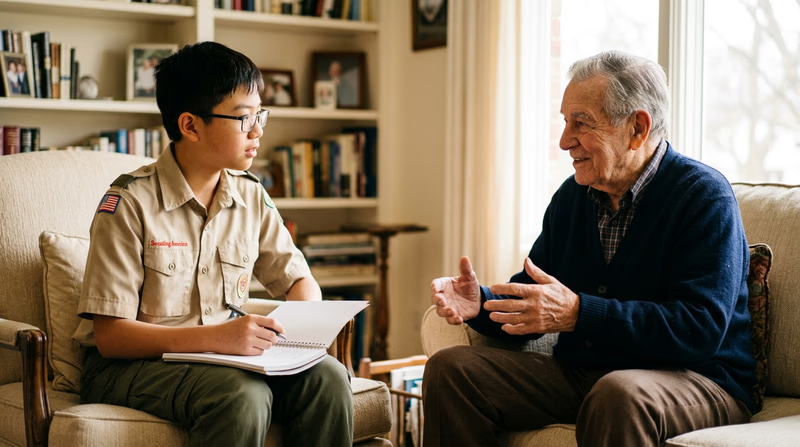
Option C: Interview Two Veterans
Veterans carry firsthand knowledge of American history that you will not find in any book. Their stories connect national events to personal experience.
Finding Veterans to Interview
- Members of your family or your troop
- Local Veterans of Foreign Wars (VFW) or American Legion posts
- Community organizations or houses of worship
- Veterans’ service organizations
Interview Tips
Interview Preparation
Steps to prepare for a great interview
- Contact the veteran in advance: Explain who you are, why you want to interview them, and how long it will take.
- Prepare questions ahead of time: Write down 8–10 open-ended questions.
- Bring a notebook and pen: Take notes during the interview (ask permission first if you want to record).
- Listen more than you talk: Let the veteran tell their story in their own way.
- Say thank you: A handwritten thank-you note goes a long way.
Good questions to ask:
- What branch did you serve in, and when?
- What was your role or job?
- What was the most meaningful experience you had during your service?
- What do you believe your service accomplished?
- What do you wish more people understood about military service?
Option D: Interview Three Community Members
This option helps you discover that American heritage is not just one story — it is millions of stories. Different people experience America differently depending on their age, background, and life experiences.
Choosing Your Three People
Pick people of different ages and occupations — that is the key. The more diverse your interviewees, the richer your results.
Examples:
- A teenager and a senior citizen
- A teacher and a business owner
- A recent immigrant and someone whose family has been here for generations
What to Ask
The requirement gives you three main questions, but you can add your own:
- What does America mean to you?
- What do you think is special about this country?
- What American traditions do you feel are important to preserve?
You have explored how leaders, citizens, organizations, and veterans have shaped America. Now let’s look at how the past connects to the present.