Req 3c — Your Family's Story
Your Family Is Part of American History
Every family in America has a story — and that story is woven into the larger fabric of the nation. Whether your ancestors arrived on the Mayflower, were brought to America against their will, crossed the border for a better life last year, or have lived on this land for thousands of years, your family’s experiences connect to the big events and movements of American history.
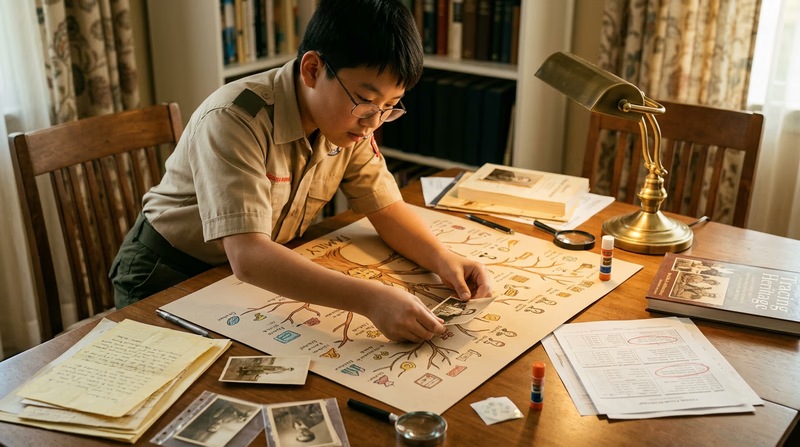
This requirement asks you to become a family historian. You will talk to relatives, dig through records, and discover how the forces of American history shaped your family’s path.
Where to Start
Talk to Your Family
The best source of family history is the people who lived it. Start with the oldest relatives you can reach — grandparents, great-aunts, great-uncles — and work your way through the generations.
Family Interview Questions
Questions to ask your relatives
- Where did our family originally come from?
- When and why did our family come to America (if applicable)?
- Where have family members lived in the United States?
- Were any family members involved in wars, migrations, or major historical events?
- What jobs or trades did family members have?
- Are there any family stories or traditions that have been passed down?
- Do you have old photos, letters, or documents I could look at?
Search Online Records
After talking to relatives, you can dig deeper with free online tools:
FamilySearch Free genealogy research platform run by The Church of Jesus Christ of Latter-day Saints. Billions of historical records including census data, immigration records, and birth/death certificates. Ellis Island Passenger Search Search records of immigrants who arrived in New York through Ellis Island between 1892 and 1957.Check Public Libraries
Many libraries have local history collections, old newspapers on microfilm, and access to genealogy databases. A librarian can help you find records specific to your area and family.
Connecting Family to History
Once you have gathered information, look for connections between your family’s experiences and major events in American history. Here are some examples:
| American Event | How It Might Have Affected Your Family |
|---|---|
| Revolutionary War (1775–1783) | Ancestors may have fought for independence or remained loyal to Britain |
| Westward Expansion (1800s) | Family may have migrated west for land, gold, or opportunity |
| Civil War (1861–1865) | Ancestors may have fought, been enslaved, or been freed |
| Immigration waves (1880s–1920s) | Family may have arrived at Ellis Island from Europe |
| Great Depression (1929–1939) | Family may have lost jobs, farms, or homes |
| World War II (1941–1945) | Family members may have served, worked in factories, or been interned |
| Civil Rights Movement (1950s–1960s) | Family may have participated in or been affected by the fight for equality |
| Post-1965 immigration | Family may have arrived from Asia, Latin America, Africa, or the Middle East |
What If You Cannot Find Much?
Not every family has detailed records. Adoption, displacement, slavery, and other circumstances can make tracing a family’s history difficult or impossible. If this is your situation, here are some approaches:
- Focus on what you know. Even one or two generations of family stories are valuable.
- Research the community where your family lived. Local history can fill in gaps.
- Explore broader patterns. If you know your family’s cultural background, research the experiences of that group in American history.
- Talk to your counselor. They can help you shape your research to fit your situation.
Sharing with Your Counselor
When you present your research, be ready to:
- Describe your family’s background and how they came to be where they are
- Connect at least one or two family experiences to specific American historical events
- If your family immigrated, explain the reasons why
- Share any interesting stories, photos, or documents you discovered
Time to step outside the history books and explore the history that is right in your own neighborhood.