Req 6 — Heritage Careers
Careers in American Heritage
If you have enjoyed working on this merit badge, you might be surprised to learn how many careers involve preserving, interpreting, and sharing American heritage. These jobs exist in government, museums, universities, nonprofits, and the private sector — and they combine a love of history with real-world skills.
Career Areas
Museum Work
Museums are where history comes to life for the public. Museum careers include:
- Curator — Selects, researches, and cares for collections of artifacts. Curators design exhibits and decide which stories to tell.
- Museum Educator — Creates programs for students, families, and visitors. Leads tours, workshops, and hands-on activities.
- Collections Manager — Catalogs, stores, and preserves artifacts. Makes sure items are safe and accessible for future generations.
- Exhibit Designer — Designs the physical layout of exhibits, combining visual storytelling with historical accuracy.
Education: Most museum positions require a bachelor’s degree in history, art history, museum studies, or a related field. Senior roles often require a master’s degree.
Historic Preservation
Preservationists protect historic buildings, landscapes, and sites from demolition or neglect. Careers include:
- Preservation Specialist — Evaluates properties for historical significance and develops plans to restore or protect them.
- Architectural Historian — Studies the history and design of buildings to determine their significance.
- Heritage Planner — Works with local governments to integrate historic preservation into community planning.
Education: A bachelor’s degree in history, architecture, or planning, plus specialized training in preservation. Many professionals earn a master’s degree in historic preservation.
Archives & Libraries
Archivists and librarians are the keepers of primary sources — the original documents, photographs, maps, and recordings that make historical research possible.
- Archivist — Organizes and preserves documents and records. Makes them accessible to researchers and the public.
- Digital Archivist — Specializes in digitizing and preserving materials in electronic formats.
- Reference Librarian — Helps people find historical information and navigate research databases.
Education: A bachelor’s degree is required; a master’s degree in library science (MLS) or archival studies is standard for most positions.
Archaeology
Archaeologists study human history by excavating and analyzing physical evidence — artifacts, structures, and landscapes. In the United States, archaeologists work on everything from pre-colonial Indigenous sites to 20th-century industrial sites.
- Field Archaeologist — Conducts excavations, surveys, and site assessments.
- Cultural Resource Manager — Ensures that construction and development projects comply with historic preservation laws.
Education: A bachelor’s degree in archaeology or anthropology for entry-level work. Most professional positions require a master’s degree or higher.
National Park Service & Government
The National Park Service (NPS) manages more than 400 sites across the country, including battlefields, historic homes, monuments, and cultural landscapes.
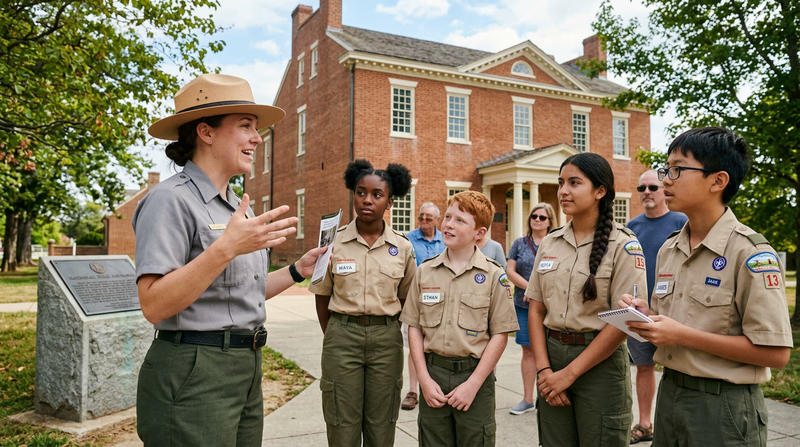
- Park Ranger (Interpretation) — Educates visitors about the history and significance of park sites through talks, tours, and programs.
- Historian — Conducts research and writes reports for government agencies on historical topics.
- Cultural Landscape Architect — Preserves and manages historically significant outdoor spaces.
Education & Research
Teachers, professors, and researchers keep the study of American heritage alive by training the next generation and advancing knowledge.
- History Teacher — Teaches American history at the middle school, high school, or college level.
- Documentary Filmmaker — Creates films that tell historical stories for public audiences.
- Public Historian — Works outside of traditional academia to make history accessible to the general public through writing, consulting, and community projects.
Education: Teaching requires a bachelor’s degree and teaching certification. University positions typically require a Ph.D.
Preparing for a Heritage Career
No matter which career interests you, here are steps you can take right now:
Getting Started
Steps you can take now to explore heritage careers
- Volunteer at a local museum, historical society, or library.
- Visit National Park Service sites and talk to rangers about their work.
- Take history, art history, and social studies courses in school.
- Participate in your community’s historic preservation efforts.
- Start a personal history project — document your family, neighborhood, or school.
- Look into summer programs, internships, and camps focused on history or archaeology.
Congratulations — you have worked through all six requirements. Let’s wrap up with some ways to go even further.