 Getting Started
Introduction & Overview
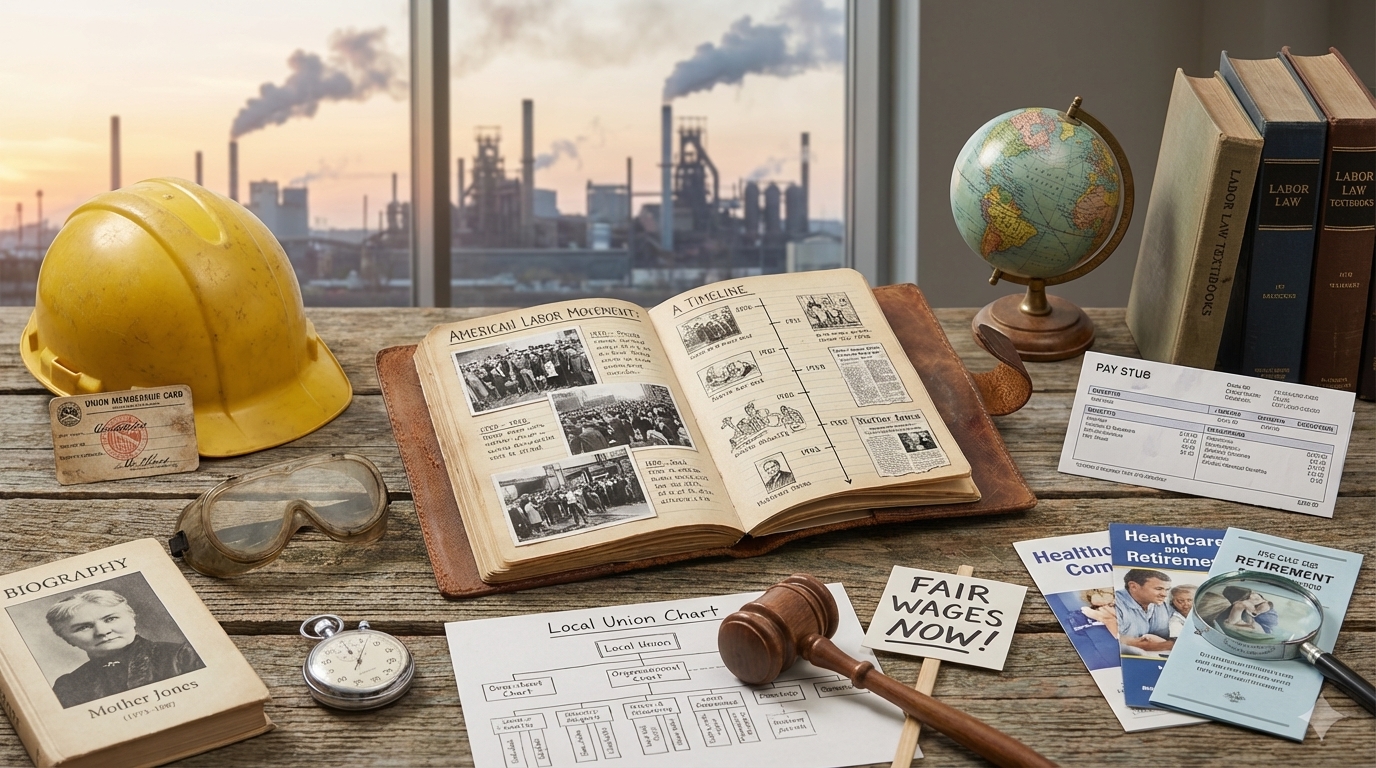
Every job you see people doing — building houses, teaching classes, driving trucks, writing code — has a story behind it. The American Labor merit badge invites you to explore those stories: how workers have organized, fought for fair treatment, and shaped the country we live in today.
Labor is about more than paychecks. It is about dignity, safety, opportunity, and the relationship between the people who do the work and the people who run the businesses. Understanding labor means understanding a fundamental part of American life.
Then and Now
Then — The Fight for Basic Rights
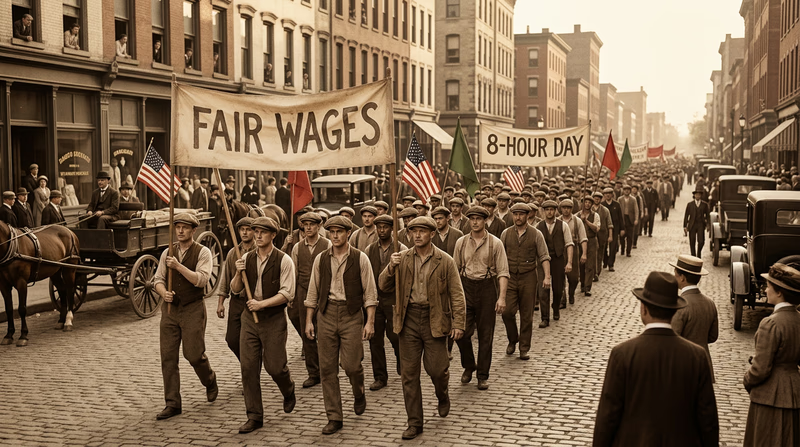
In the 1800s and early 1900s, American workers faced brutal conditions. Children as young as five worked in coal mines and textile mills. Factory shifts lasted 12 to 16 hours, six or seven days a week. Injuries were common, and workers who were hurt on the job were simply replaced. There were no weekends, no minimum wage, and no safety rules.
Workers began organizing into unions to demand change. They marched, they went on strike, and sometimes they were met with violence. Slowly, laws were passed: child labor was banned, the eight-hour workday became standard, and workers gained the right to bargain collectively with their employers.
- Working conditions: Dangerous, unregulated, with no protections
- Key victories: Child labor laws, the 40-hour workweek, workplace safety standards
Now — New Challenges, Same Questions
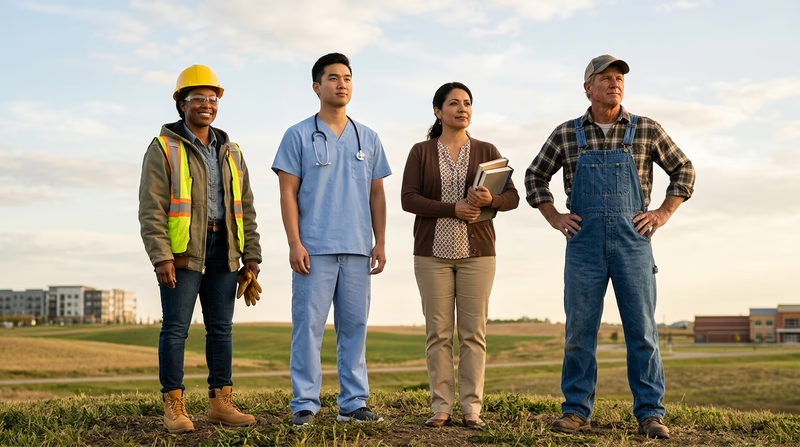
Today, American workers have protections that earlier generations could only dream of. But the world of work keeps changing. Automation replaces some jobs and creates new ones. The gig economy — think rideshare drivers and freelance designers — blurs the line between employee and independent contractor. Debates about minimum wage, healthcare benefits, and remote work are in the news every week.
The core questions remain the same: What do workers deserve? How should decisions about work be made? Who has a voice at the table?
- Working conditions: Regulated, but evolving with technology and globalization
- Key debates: Gig worker rights, automation, living wages, work-life balance
Get Ready! This merit badge will challenge you to think about work from every angle — the worker’s perspective, the employer’s perspective, and the broader community. You will explore history, visit real organizations, and even argue both sides of a debate. Let’s get started!
Kinds of Labor
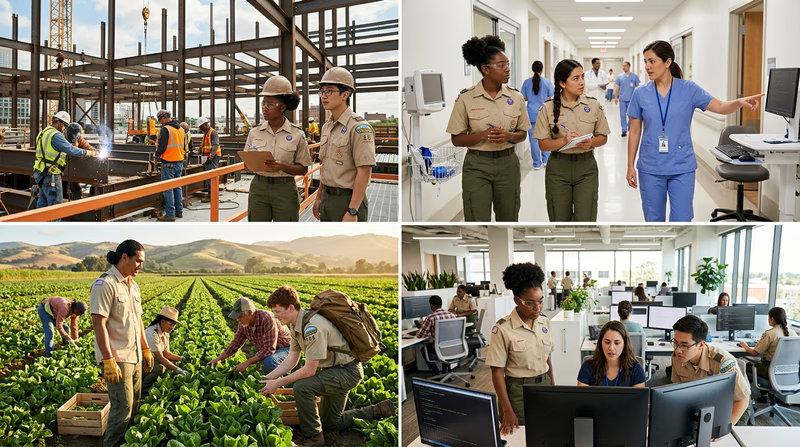
The American workforce is incredibly diverse. Before you dive into the requirements, take a look at the major categories of work that shape our economy.
Skilled Trades
Electricians, plumbers, carpenters, welders, and HVAC technicians are skilled tradespeople. They learn their craft through apprenticeships — structured programs where they work alongside experienced professionals while also taking classes. Skilled trades are in high demand and are essential to building and maintaining the infrastructure we all depend on.
Industrial and Manufacturing Labor
Factory workers produce everything from cars to electronics to packaged food. Manufacturing jobs were once the backbone of the American economy, and they remain critically important. Modern manufacturing increasingly involves advanced technology, robotics, and computer-controlled machinery.
Service Industry Workers
Restaurants, hotels, retail stores, hospitals, and entertainment venues all rely on service workers. This is the largest sector of the American economy. Service jobs range from entry-level positions to highly skilled roles like registered nurses and chefs.
Agricultural Workers
Farmworkers plant, tend, and harvest the food that feeds the nation. Agricultural labor is physically demanding and often seasonal. Farmworkers have historically been among the most vulnerable workers, and their fight for fair treatment is a major chapter in American labor history.
Public Sector Workers
Teachers, firefighters, police officers, postal workers, and government employees are all public sector workers — they are employed by federal, state, or local governments. Public sector unions are some of the largest in the country and play a significant role in labor discussions.
Knowledge Workers and the Gig Economy
Software developers, writers, consultants, and data analysts are knowledge workers — people whose primary tools are their skills and expertise rather than physical labor. Meanwhile, the gig economy has created a new class of workers: rideshare drivers, freelance graphic designers, and delivery couriers who work on a task-by-task basis, often without traditional benefits like health insurance or retirement plans.
Now that you have a picture of the American workforce, let’s explore what matters most to the people who do the work.