American Labor Merit Badge — Complete Digital Resource Guide
https://merit-badge.university/merit-badges/american-labor/guide/
Introduction & Overview
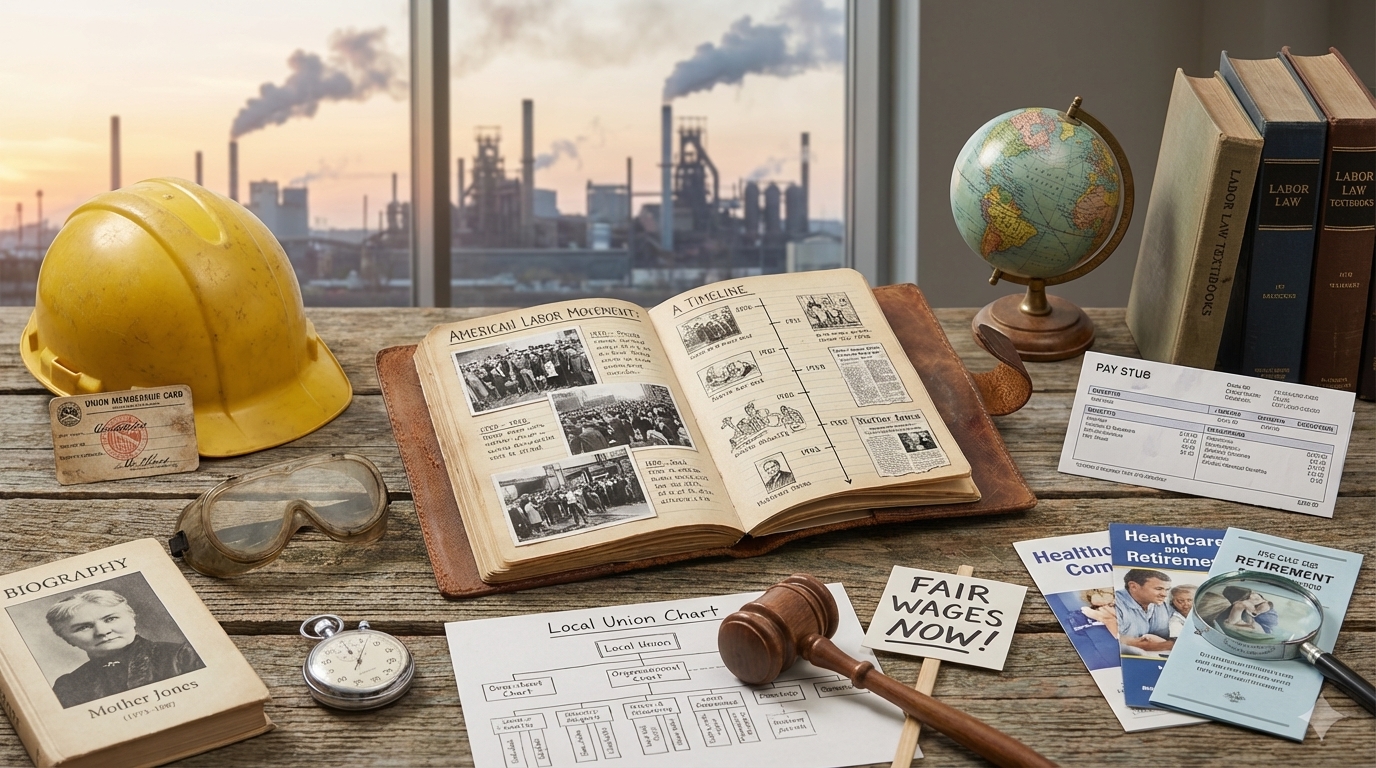
Every job you see people doing — building houses, teaching classes, driving trucks, writing code — has a story behind it. The American Labor merit badge invites you to explore those stories: how workers have organized, fought for fair treatment, and shaped the country we live in today.
Labor is about more than paychecks. It is about dignity, safety, opportunity, and the relationship between the people who do the work and the people who run the businesses. Understanding labor means understanding a fundamental part of American life.

Then and Now
Then — The Fight for Basic Rights
In the 1800s and early 1900s, American workers faced brutal conditions. Children as young as five worked in coal mines and textile mills. Factory shifts lasted 12 to 16 hours, six or seven days a week. Injuries were common, and workers who were hurt on the job were simply replaced. There were no weekends, no minimum wage, and no safety rules.
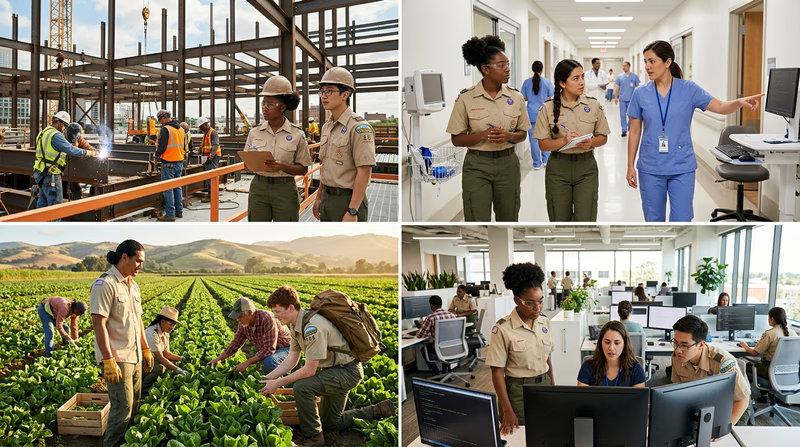
Workers began organizing into unions to demand change. They marched, they went on strike, and sometimes they were met with violence. Slowly, laws were passed: child labor was banned, the eight-hour workday became standard, and workers gained the right to bargain collectively with their employers.
- Working conditions: Dangerous, unregulated, with no protections
- Key victories: Child labor laws, the 40-hour workweek, workplace safety standards
Now — New Challenges, Same Questions
Today, American workers have protections that earlier generations could only dream of. But the world of work keeps changing. Automation replaces some jobs and creates new ones. The gig economy — think rideshare drivers and freelance designers — blurs the line between employee and independent contractor. Debates about minimum wage, healthcare benefits, and remote work are in the news every week.
The core questions remain the same: What do workers deserve? How should decisions about work be made? Who has a voice at the table?
- Working conditions: Regulated, but evolving with technology and globalization
- Key debates: Gig worker rights, automation, living wages, work-life balance
Get Ready! This merit badge will challenge you to think about work from every angle — the worker’s perspective, the employer’s perspective, and the broader community. You will explore history, visit real organizations, and even argue both sides of a debate. Let’s get started!
Kinds of Labor
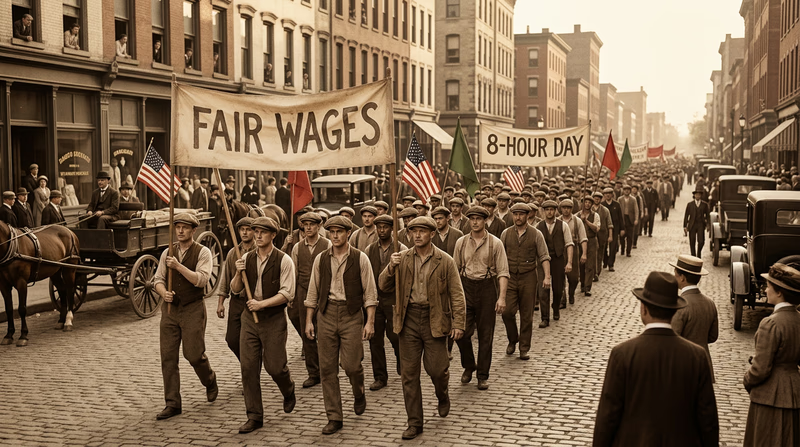
The American workforce is incredibly diverse. Before you dive into the requirements, take a look at the major categories of work that shape our economy.
Skilled Trades
Electricians, plumbers, carpenters, welders, and HVAC technicians are skilled tradespeople. They learn their craft through apprenticeships — structured programs where they work alongside experienced professionals while also taking classes. Skilled trades are in high demand and are essential to building and maintaining the infrastructure we all depend on.
Industrial and Manufacturing Labor
Factory workers produce everything from cars to electronics to packaged food. Manufacturing jobs were once the backbone of the American economy, and they remain critically important. Modern manufacturing increasingly involves advanced technology, robotics, and computer-controlled machinery.
Service Industry Workers
Restaurants, hotels, retail stores, hospitals, and entertainment venues all rely on service workers. This is the largest sector of the American economy. Service jobs range from entry-level positions to highly skilled roles like registered nurses and chefs.
Agricultural Workers
Farmworkers plant, tend, and harvest the food that feeds the nation. Agricultural labor is physically demanding and often seasonal. Farmworkers have historically been among the most vulnerable workers, and their fight for fair treatment is a major chapter in American labor history.
Public Sector Workers
Teachers, firefighters, police officers, postal workers, and government employees are all public sector workers — they are employed by federal, state, or local governments. Public sector unions are some of the largest in the country and play a significant role in labor discussions.
Knowledge Workers and the Gig Economy
Software developers, writers, consultants, and data analysts are knowledge workers — people whose primary tools are their skills and expertise rather than physical labor. Meanwhile, the gig economy has created a new class of workers: rideshare drivers, freelance graphic designers, and delivery couriers who work on a task-by-task basis, often without traditional benefits like health insurance or retirement plans.
Now that you have a picture of the American workforce, let’s explore what matters most to the people who do the work.
Req 1 — Worker Concerns
What Do Workers Care About?
When people go to work every day, they bring more than their skills — they bring their hopes, their families, and their futures. A worker’s concerns are not just about today’s paycheck. They are about whether the workplace is safe, whether there will still be a job next year, and whether the pay is enough to support a family.
This requirement asks you to research and describe at least eight concerns. The list in the requirement gives you plenty of options, but you should go beyond just copying definitions. Think about why each concern matters to real people.

Major Concerns of American Workers
Here is an overview of many concerns that affect workers. Use this as a starting point for your own research — your goal is to pick at least eight and describe them in your own words with real examples.
Working Conditions
Working conditions cover everything about the environment where people do their jobs: temperature, cleanliness, noise, physical demands, and even how workers are treated by supervisors. A warehouse worker in extreme heat and an office worker with a broken chair both have working-conditions concerns — just very different ones.
Workplace Safety
Every year, thousands of workers are injured or killed on the job. The Occupational Safety and Health Administration (OSHA) sets rules to protect workers, but enforcement is an ongoing challenge. Industries like construction, mining, and agriculture have especially high injury rates.
Hours and Overtime
The Fair Labor Standards Act establishes the standard 40-hour workweek and requires employers to pay overtime (usually 1.5 times the normal rate) for hours beyond 40. But not all workers are covered, and debates continue about which employees should be classified as “exempt” from overtime.
Wages
Wages are one of the most debated labor topics in America. The federal minimum wage sets a floor, but many states and cities set higher minimums. Workers in tipped occupations (like restaurant servers) often have a lower base wage. The question of what constitutes a “living wage” — enough to cover basic needs like housing, food, and transportation — is at the center of many labor discussions.
Job Security and Seniority
Job security means knowing your position is stable and you will not be let go without cause. Seniority systems give advantages (like protection from layoffs or first choice of shifts) to workers who have been with a company the longest. In some industries, seniority is a core part of how things work; in others, it barely exists.
Equal Opportunity and Discrimination
Federal laws prohibit discrimination based on race, color, religion, sex, national origin, age, disability, and other characteristics. But discrimination still happens — in hiring, in promotions, and in daily treatment on the job. Equal-opportunity employment means that all workers should be judged on their abilities and performance, not who they are.
Automation and Technology
Robots, artificial intelligence, and software can do many tasks faster and cheaper than humans. This creates new, high-skill jobs — but it can also eliminate positions that workers have held for years. Workers in manufacturing, transportation, and even white-collar fields face questions about how technology will change their careers.
Outsourcing and Offshoring
Outsourcing means hiring outside companies to do work that used to be done in-house. Offshoring means moving jobs to other countries where labor costs are lower. Both practices can save companies money, but they can also result in American workers losing their jobs.
Employee Benefits
Benefits include health insurance, retirement plans, paid vacation, sick leave, child care assistance, profit sharing, and continuing education opportunities. For many workers, benefits are as important as the paycheck itself. Whether an employer offers strong benefits can make the difference between a job that supports a family and one that does not.
Other Concerns Worth Exploring
- Guest workers — People from other countries who come to the U.S. temporarily to fill specific jobs, often in agriculture or technology
- Unemployment and layoffs — What happens when workers lose their jobs, and the systems (like unemployment insurance) designed to help
- Child care — Many working parents struggle to afford quality child care, which directly affects their ability to hold a job
- Continuing education — Workers who want to learn new skills or earn certifications to advance their careers
Making It Your Own
The requirement asks you to list and describe at least eight concerns. Here are some strategies for strong responses:
- Be specific. Instead of saying “wages are a concern,” explain what the minimum wage debate is about and why it matters.
- Use examples. A real statistic or news story brings each concern to life.
- Think broadly. Try to cover concerns that affect different types of workers — factory workers, service workers, office workers, and gig workers.
- Connect the dots. Many concerns are related. Automation can lead to job insecurity, which affects wages, which affects benefits. Showing these connections demonstrates deeper understanding.
Ready for the Real World
Now that you understand what workers care about, it is time to step outside the classroom and connect with people who are actively working on these issues.
Req 2 — Visiting a Labor Organization
Connecting with Real People
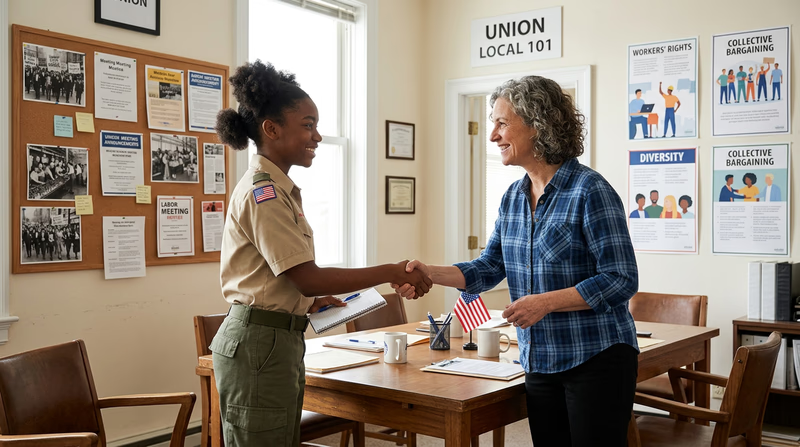
This requirement takes your learning off the page and into the real world. You will make contact with an actual labor organization — a union, a labor council, or an employee group — and learn from the people who do this work every day. This is one of the most valuable parts of the merit badge because you get to hear firsthand perspectives that you cannot find in a textbook.
Types of Organizations You Can Contact
You have several options for this requirement. Here is what each type of organization is:
Local union — A branch of a larger union that represents workers at a specific company or in a specific area. Examples include a local chapter of the United Auto Workers (UAW), the International Brotherhood of Electrical Workers (IBEW), or the American Federation of Teachers (AFT). Local unions handle day-to-day issues like grievances, contract negotiations, and member services.
Central labor council — A regional body that brings together multiple local unions in a city or county. The council coordinates efforts across different unions, organizes community events, and advocates for workers on issues that affect everyone — not just one trade or industry.
Employee organization — A broader term that includes professional associations, employee advocacy groups, and other organizations that represent workers’ interests. Not all employee organizations are unions, but they share similar goals of supporting workers.
Preparing for Your Visit or Contact
Whether you visit in person, attend a meeting, or reach out online, preparation makes a big difference.
Before You Go
Steps to prepare for your visit or online contact- Get approval: Confirm with your parent or guardian AND your merit badge counselor before making contact.
- Research first: Look up the organization online so you arrive with basic knowledge about who they are.
- Bring your list: Have your Requirement 1 list of worker concerns ready to share and discuss.
- Prepare questions: Write down 3–5 questions beyond the requirement basics (see suggestions below).
- Bring materials: Notebook, pen, and your merit badge pamphlet or workbook.
Good Questions to Ask
Beyond the required questions, consider asking:
- How did this organization get started, and how has it changed over the years?
- What is the biggest challenge facing your members right now?
- How do new members join, and what does the process look like?
- What would you want a young person to know about the labor movement?
- How does your organization work with the community beyond the workplace?
Requirement 2a: What Does the Organization Do?
When you ask what the organization does, listen for details about their mission, their daily activities, and their impact. Most labor organizations:
- Negotiate contracts (called collective bargaining agreements) with employers
- Represent members in disputes or grievances with management
- Provide training, apprenticeship programs, or continuing education
- Advocate for legislation that benefits workers
- Offer benefits like health insurance, legal assistance, or scholarships
- Organize community service and outreach
Take good notes. Your counselor will want to hear you explain the organization’s purpose in your own words — not just read from a brochure.
Requirement 2b: Sharing Your Concerns List
This part of the requirement is a real conversation. Share the list of eight or more worker concerns you developed in Requirement 1 and ask which ones matter most to the people you are speaking with.
Pay attention to why certain issues matter more to them than others. Their answers will give you real-world context that deepens your understanding far beyond what you read during your research.
Requirement 2c: Drawing an Organizational Diagram
Many labor organizations have a structure that goes from the local level all the way up to the national level. Your diagram should show these layers and how they connect.
A typical union structure looks something like this:
- Local union — Represents workers at a specific workplace or in a specific geographic area. Led by elected officers like a president, vice president, secretary, and steward.
- District or regional council — Groups several locals together for coordination across a larger area.
- State federation — Coordinates union activities at the state level and lobbies state legislatures.
- National/international union — The parent organization that charters local unions, sets broad policy, and provides resources. Examples: United Steelworkers, AFSCME, SEIU.
- AFL-CIO or other federation — A federation of federations. The AFL-CIO is the largest, representing over 60 national and international unions and over 12 million workers.
Your diagram does not need to be artistic — a clear flowchart with boxes and arrows showing the hierarchy is perfect. Label each level and include the name of the specific organization at each tier if you can.
AFL-CIO — About Us Learn how the AFL-CIO is structured and what America's largest federation of unions does. Link: AFL-CIO — About Us — https://aflcio.org/about-usAfter Your Visit
Take a few minutes after your visit to review your notes while the conversation is still fresh. Write down anything you found surprising or especially interesting. These details will come in handy as you work through the remaining requirements — particularly Requirements 3, 7, and 8, which build directly on what you learn here.
Req 3 — What Labor Unions Do
The Language of Labor
Requirement 3 is the vocabulary-building requirement. It asks you to understand and explain a long list of labor concepts. Do not just memorize definitions — your counselor will want you to explain these ideas in a conversation, using your own words and showing that you understand how they connect to each other.
Let’s break down each concept so you can walk into that discussion with confidence.
What Is a Labor Union?
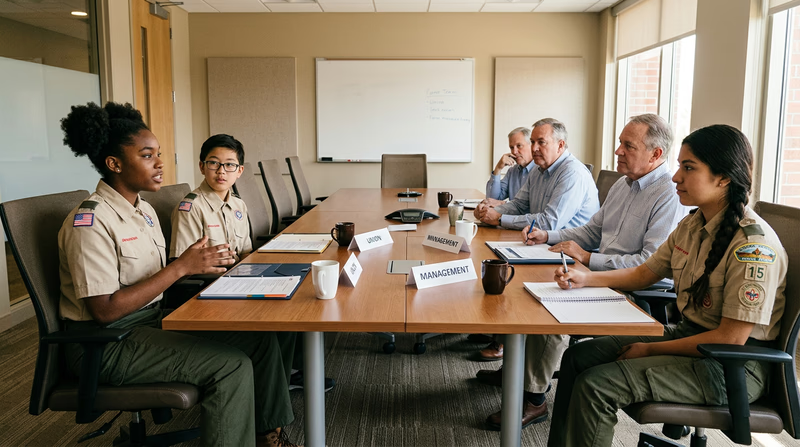
A labor union is an organization of workers who come together to protect their shared interests. Instead of each worker negotiating alone with a large employer, the union negotiates on behalf of all its members. This gives workers much more bargaining power than any individual would have.
Unions do many things:
- Negotiate contracts that set wages, hours, benefits, and working conditions
- Represent members in disputes with management
- Provide training and apprenticeship programs
- Advocate for laws that protect workers
- Offer services like legal assistance, scholarships, and health insurance plans
Key Concepts You Need to Know
Labor and Management
These two terms describe the two sides of the employment relationship:
- Labor refers to the workers — the people who perform the work. In a unionized workplace, “labor” usually means the union and its members.
- Management refers to the employer — the people who own or run the business and make decisions about hiring, firing, scheduling, and company direction.
The relationship between labor and management is at the heart of everything in this merit badge.
Collective Bargaining
Collective bargaining is the process where union representatives and management sit down together to negotiate the terms of a contract. This contract — called a collective bargaining agreement (CBA) — spells out wages, hours, benefits, workplace rules, and procedures for resolving disputes.
The word “collective” is key. Workers bargain as a group, not as individuals. This levels the playing field because a single worker has very little leverage compared to a large company, but a united workforce has significant influence.
Negotiation
Negotiation is the back-and-forth discussion where both sides try to reach an agreement. Good negotiation involves compromise — each side gives up something to get something else. Union negotiators might push for higher wages, while management might push for more flexible scheduling. The goal is to find terms that both sides can accept.
Union Shops vs. Open Shops
These terms describe whether workers at a particular workplace are required to join the union:
- Union shop — Workers must join the union (or at least pay dues) within a certain period after being hired. The idea is that since all workers benefit from the union’s negotiations, all workers should contribute.
- Open shop — Workers can choose whether or not to join the union. They are not required to pay dues, even though they still benefit from the contract the union negotiated.
This is one of the most debated topics in labor law. Some states have “right-to-work” laws that prohibit union shops, meaning no worker can be required to join a union or pay dues as a condition of employment.
Grievance Procedures
A grievance is a formal complaint by a worker (or the union) that the employer has violated the contract. Grievance procedures are the step-by-step process for resolving these complaints. A typical grievance procedure works like this:
- The worker raises the issue with their immediate supervisor, often with a union steward present.
- If unresolved, the grievance moves to a higher level of management and union leadership.
- If still unresolved, it may go to a formal hearing.
- The final step is usually arbitration (see below).
Having a clear, written process protects both workers and management from unfair treatment.
Mediation and Arbitration
When labor and management cannot agree, outside help may be needed:
- Mediation — A neutral third party (the mediator) helps both sides talk through their disagreements and find common ground. The mediator does not make a decision — they guide the conversation. Either side can accept or reject the mediator’s suggestions.
- Arbitration — A neutral third party (the arbitrator) hears both sides and then makes a decision that is usually binding — meaning both sides must follow it. Arbitration is like a private court specifically for labor disputes.
Think of it this way: a mediator is a coach helping you work it out, while an arbitrator is a referee making the call.

Work Stoppages, Strikes, and Lockouts
When negotiations break down completely, more dramatic actions may happen:
- Work stoppage — A general term for any interruption of work, whether caused by workers or management.
- Strike — Workers stop working to pressure management into meeting their demands. Strikes are labor’s most powerful tool, but they come at a cost — workers do not get paid during a strike, and the company loses production.
- Lockout — Management prevents workers from entering the workplace to pressure the union into accepting management’s terms. A lockout is essentially a strike in reverse — initiated by the employer instead of the workers.
Both strikes and lockouts are last-resort measures. They hurt both sides and are typically used only after all other negotiation efforts have failed.
National Labor Relations Board — Rights We Protect The NLRB explains the rights of workers to organize, bargain collectively, and take action — including strikes — under federal law. Link: National Labor Relations Board — Rights We Protect — https://www.nlrb.gov/about-nlrb/rights-we-protectPutting It All Together
These concepts are not isolated — they connect like links in a chain. Workers form unions to give labor a stronger voice when dealing with management. They use collective bargaining and negotiation to reach agreements. When disputes arise, grievance procedures, mediation, and arbitration provide structured ways to resolve them. The rules about union shops and open shops determine who participates. And when all else fails, strikes and lockouts are the ultimate expressions of disagreement.
When you talk with your counselor, try to explain how these pieces fit together — not just what each word means, but how the system works as a whole.
Req 4 — Bargaining Models
Two Ways to Sit at the Table
In Requirement 3, you learned the mechanics of how labor and management interact. Now it is time to look at the philosophy behind those interactions. There are two fundamentally different approaches to how labor and management can relate to each other: the adversarial model and the cooperative model.
Neither model is automatically “right” or “wrong.” Both have been used throughout American labor history, and understanding them helps you see why some workplaces have smoother labor relations than others.
The Adversarial Model
The adversarial model treats labor and management as opponents with conflicting interests. In this view, what is good for one side is often bad for the other:
- If workers get higher wages, the company’s profits go down.
- If management cuts costs, workers may lose benefits or jobs.
- Every negotiation is a battle, and each side tries to win as much as possible.
In the adversarial model, unions and management approach the bargaining table the way opposing lawyers approach a courtroom. Each side presents its case, pushes hard for its position, and gives ground only when forced to. Trust is low, and the contract is seen as a truce — a temporary agreement that holds until the next round of negotiations.
Characteristics of the adversarial approach:
- Each side views the other with suspicion
- Information is guarded — neither side wants to reveal too much
- Negotiations are tense and can drag on for months
- Strikes, lockouts, and grievances are more common
- The contract is highly detailed to prevent either side from taking advantage
- “Us vs. them” mentality

The Cooperative-Bargaining Model
The cooperative model starts from a different assumption: labor and management share a common interest in the success of the business. If the company does well, workers benefit through job security, better wages, and growth opportunities. If workers are treated well, they are more productive, which helps the company succeed.
In this model, unions and management work together to solve problems rather than fighting over a fixed pie. They share information openly, look for solutions that benefit both sides, and try to build a long-term relationship based on trust.
Characteristics of the cooperative approach:
- Both sides see shared goals and mutual interests
- Information is shared openly to make better decisions together
- Problem-solving replaces positional bargaining
- Joint committees address issues like safety, training, and productivity
- Conflicts are resolved through dialogue rather than escalation
- “We’re in this together” mentality
Comparing the Two Models
| Feature | Adversarial | Cooperative |
|---|---|---|
| Core belief | Interests conflict | Interests overlap |
| Information | Guarded | Shared |
| Negotiations | Win-lose | Win-win |
| Trust level | Low | High |
| Disputes | Formal grievances, strikes | Joint problem-solving |
| Focus | Dividing the pie | Growing the pie |
Why Both Models Exist
You might wonder: if cooperation sounds better, why does the adversarial model still exist? There are real reasons:
- History: For decades, many employers fought unions aggressively — firing organizers, hiring strikebreakers, and refusing to negotiate in good faith. Workers learned to be cautious and to protect their gains through tough bargaining.
- Power imbalance: If management has significantly more power than labor, cooperation can turn into one side simply giving in. The adversarial approach ensures that workers push hard for their interests.
- Accountability: Detailed, hard-fought contracts leave less room for misunderstanding or manipulation.
On the other hand, the cooperative model has gained ground because:
- Global competition has pushed companies and unions to find ways to be more efficient together.
- Workers want a voice beyond just wages — they want input on how work is organized, how problems are solved, and how the company is run.
- Mutual success is more sustainable than constant conflict.
The Reality: It’s Usually a Mix
Most labor-management relationships are not purely adversarial or purely cooperative. They fall somewhere on a spectrum and can shift over time. A company and a union might cooperate day-to-day on safety and training, but take a more adversarial stance when it comes time to negotiate wages. A relationship that was once hostile can become cooperative if both sides make an effort — and vice versa.
The key insight is that the choice of approach matters. How labor and management decide to relate to each other shapes everything from workplace culture to the local economy.
Federal Mediation and Conciliation Service (FMCS) The FMCS is an independent federal agency that helps labor and management resolve disputes and build cooperative relationships. Link: Federal Mediation and Conciliation Service (FMCS) — https://www.fmcs.gov/From Theory to History
Now that you understand how unions work and the different philosophies behind labor-management relations, it is time to look at the larger story — the history of the American labor movement and the milestones that brought us to where we are today.
Req 5 — Labor History Projects
Choose ONE of these four options. Each one gives you a different way to explore the history of American labor. Read through all four before deciding which one fits your interests and skills best.
The Story of American Labor
Before you pick your project, it helps to understand the broad sweep of labor history. The American labor movement is one of the most important social movements in the country’s history. It transformed working conditions, created the middle class, and established rights that most workers take for granted today.
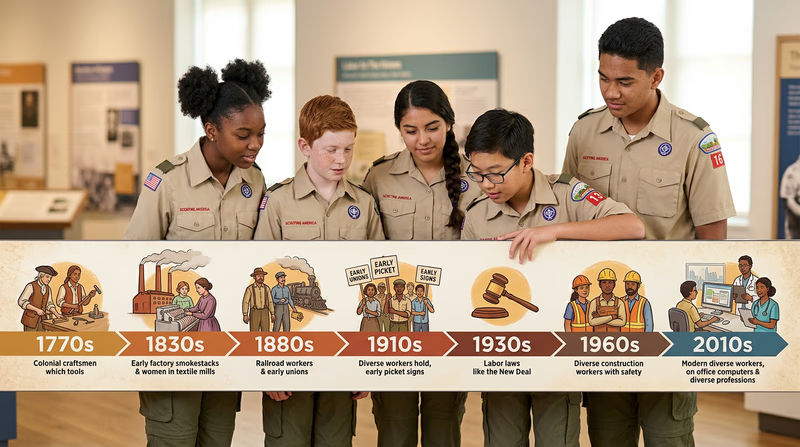
Here are some of the major eras and events you should know about:
Colonial Era to the Early Republic (1770s–1830s)
- Skilled craftsmen (shoemakers, carpenters, printers) formed the first worker organizations in America.
- In 1786, Philadelphia printers organized one of the first recorded strikes in the U.S. to demand a minimum wage.
- Early courts often ruled that unions were illegal “conspiracies.”
The Industrial Revolution (1840s–1890s)
- Factories changed the nature of work. Millions of people — including children — worked long hours in dangerous conditions.
- The Knights of Labor (founded 1869) was one of the first large-scale labor organizations, welcoming workers of all trades, races, and genders.
- The American Federation of Labor (AFL), founded in 1886 by Samuel Gompers, focused on skilled workers and practical goals: better wages, shorter hours, and safer conditions.
- The Haymarket Affair (1886) in Chicago became a turning point in the labor movement, leading to the international observance of May Day as a workers’ holiday.
The Progressive Era and World War I (1900s–1920s)
- The Triangle Shirtwaist Factory fire of 1911 killed 146 workers in New York City. The tragedy led to sweeping workplace safety reforms and fire codes.
- Child labor laws gained momentum. By the 1920s, many states had banned or restricted child labor.
- The Clayton Act (1914) protected unions from being treated as illegal monopolies.
The New Deal and Labor’s Golden Age (1930s–1960s)
- The National Labor Relations Act of 1935 (Wagner Act) guaranteed workers the right to organize and bargain collectively.
- The Fair Labor Standards Act of 1938 established the federal minimum wage, overtime pay, and banned most child labor.
- Union membership peaked in the 1950s, with about one-third of all American workers belonging to a union.
- The Congress of Industrial Organizations (CIO) organized entire industries, including steelworkers, autoworkers, and meatpackers.
- The AFL and CIO merged in 1955 to form the AFL-CIO.
The Civil Rights Era and Beyond (1960s–Present)
- César Chávez and Dolores Huerta organized farmworkers in California, leading to the creation of the United Farm Workers (UFW) and new protections for agricultural laborers.
- The Occupational Safety and Health Act (1970) created OSHA and established the right to a safe workplace.
- Union membership has declined since the 1980s, falling from about 30% of workers to roughly 10% today.
- Public sector unions (teachers, firefighters, government workers) have become a larger share of the union movement.
- New debates about gig workers, minimum wage, and worker organizing continue to shape the movement.
Option A: Build a Timeline
If you choose the timeline option, here is how to make it strong:
Timeline Tips
Making your timeline stand out- Cover the full span: Start in the 1770s and continue to the present day.
- Include at least 15–20 events for a thorough timeline.
- Mix different types of events: laws, strikes, organizations, and key people.
- Add brief descriptions (1–2 sentences) for each event, not just dates and names.
- Consider using color coding to distinguish categories (legislation, strikes, organizations, key figures).
You can create your timeline on paper (a poster or long roll of paper works well), digitally (using a tool like Google Slides, Canva, or a timeline generator), or even as a web page.
Option B: Prepare an Exhibit or Presentation
This option asks you to highlight three major achievements of the labor movement. Some strong choices include:
- The 40-hour workweek and overtime pay
- The end of widespread child labor
- Workplace safety laws (OSHA)
- The right to organize and bargain collectively
- The minimum wage
- Protections against discrimination in employment
For each achievement, explain:
- What the problem was before the achievement
- How workers and unions fought for the change
- How the achievement affects workers today
Option C: Watch a Labor Movie
Several films explore organized labor in the United States. Here are some well-known examples to discuss with your counselor for approval:
- Norma Rae (1979) — A textile worker organizes her co-workers to join a union in the face of management opposition.
- Newsies (1992) — Based on the real 1899 New York City newsboys’ strike against Joseph Pulitzer’s newspaper empire.
- Matewan (1987) — A dramatization of the 1920 Battle of Matewan, a violent confrontation between coal miners and company agents in West Virginia.
- Silkwood (1983) — Based on the true story of Karen Silkwood, a nuclear plant worker and union activist who raised concerns about safety violations.
After watching, be ready to discuss:
- What labor issues were shown in the film?
- How did the workers organize, and what challenges did they face?
- How did management respond?
- What did you learn about the labor movement from the story?
Option D: Read a Labor Biography
Many individuals have shaped the American labor movement. Here are some notable figures to consider:
- Samuel Gompers — Founder of the American Federation of Labor
- César Chávez — Co-founder of the United Farm Workers
- Dolores Huerta — Co-founder of the United Farm Workers and lifelong labor and civil rights activist
- Eugene V. Debs — Railroad union leader and advocate for industrial unionism
- Mother Jones (Mary Harris Jones) — Organizer who fought against child labor and for miners’ rights
- A. Philip Randolph — Founder of the Brotherhood of Sleeping Car Porters, the first major African American labor union
- Frances Perkins — U.S. Secretary of Labor under FDR and a driving force behind the New Deal labor laws
Ask your counselor to approve your book choice before you start reading. When you discuss the biography, focus on the person’s specific contributions and how their work changed things for workers.
Library of Congress — Rise of Industrial America Primary source materials from the Library of Congress covering the rise of industrial America and the early labor movement. Link: Library of Congress — Rise of Industrial America — https://www.loc.gov/classroom-materials/united-states-history-primary-source-timeline/rise-of-industrial-america-1876-1900/ AFL-CIO — Labor History Timeline A comprehensive timeline of key events in American labor history from the AFL-CIO. Link: AFL-CIO — Labor History Timeline — https://aflcio.org/about-us/historyHistory Informs the Present
Whichever option you choose, the goal is the same: to understand how the struggles and achievements of past workers created the rights and protections that exist today. The labor movement is not just history — it is a living, ongoing conversation about the future of work.
Req 6 — Globalization
A World Without Walls
Pick up your phone and look at where it was made. Check the label on your shirt. Think about the last time you called a customer service number and spoke with someone in another country. These everyday experiences are all products of globalization — and they have a profound effect on American workers.

What Is Globalization?
Globalization is the process by which economies, cultures, and populations around the world become increasingly connected and interdependent. In the context of labor, globalization means that goods, services, money, and workers flow across national borders more freely than ever before.
A hundred years ago, most products Americans used were made in America, by American workers. Today, a single product might be designed in California, manufactured in China, assembled in Mexico, and sold by a company headquartered in Ireland. The global economy is a web of connections that touches nearly every job and every industry.
How Globalization Affects American Workers
Globalization is not simply good or bad — it creates both opportunities and challenges. Here are some of the major effects:
Jobs Moving Overseas (Offshoring)
When companies move manufacturing or service operations to countries where labor costs are lower, American workers in those industries can lose their jobs. This has hit manufacturing especially hard. Cities that once thrived on factory work — in the Midwest and Northeast especially — have seen significant job losses over the past few decades.
Lower Prices for Consumers
When goods are produced in countries with lower labor costs, the prices of those goods tend to drop. This benefits American consumers who can buy electronics, clothing, and other products more affordably. However, those lower prices come at the cost of the jobs that used to make those products domestically.
New Types of Jobs
Globalization does not just eliminate jobs — it creates them too. International trade, logistics, technology, finance, and consulting have all grown as the global economy has expanded. Many of these new jobs require higher levels of education and specialized skills.
Competition for Wages
When American workers compete with workers in countries where wages are much lower, it can put downward pressure on wages in certain industries. Employers may argue that they cannot pay more because their competitors use cheaper labor overseas.
Guest Workers and Immigration
Globalization includes the movement of people, not just goods. Guest worker programs (like the H-1B visa for technology workers or the H-2A visa for agricultural workers) bring workers from other countries to fill specific roles in the American economy. This can fill real shortages in certain fields, but it can also create tension with domestic workers who feel their wages or opportunities are being affected.
The Global Workforce and the American Economy
The United States has the world’s largest economy, and it is deeply interconnected with the global workforce. Here is how the pieces fit together:
Imports and Exports
The U.S. both imports goods made by workers in other countries and exports goods made by American workers. Trade agreements — like the United States-Mexico-Canada Agreement (USMCA) — set the rules for how these exchanges work, including labor standards and tariffs.
Multinational Corporations
Many of the largest companies in America operate in dozens of countries. They hire workers globally, which means decisions made in a corporate headquarters in New York can affect workers in factories in Vietnam or call centers in India — and vice versa.
Supply Chains
Modern supply chains are global. Raw materials are sourced from one continent, components are manufactured on another, and final assembly happens somewhere else. Disruptions anywhere in the chain — a natural disaster, a pandemic, a labor dispute — can ripple across the world.
What Are Workers and Leaders Doing About It?
Globalization is not something that just happens — people make choices about how to respond:
- Trade agreements attempt to balance free trade with labor protections
- Training and education programs help workers develop new skills when their old jobs disappear
- Trade Adjustment Assistance (TAA) is a federal program that provides support to workers who lose their jobs specifically because of foreign trade
- Unions advocate for fair trade policies that protect workers’ rights both at home and abroad
- Some companies adopt fair trade practices that guarantee minimum working conditions and wages for workers in developing countries
Connecting Global and Local
Globalization can feel like a massive, abstract concept. But it connects directly to the worker concerns you explored in Requirement 1 and the organizations you learned about in Requirement 2. The next time you hear about a factory closing, a trade deal being negotiated, or a debate about immigration policy, you will understand the labor story behind the headlines.
Req 7 — Debating Labor Issues
Seeing Both Sides
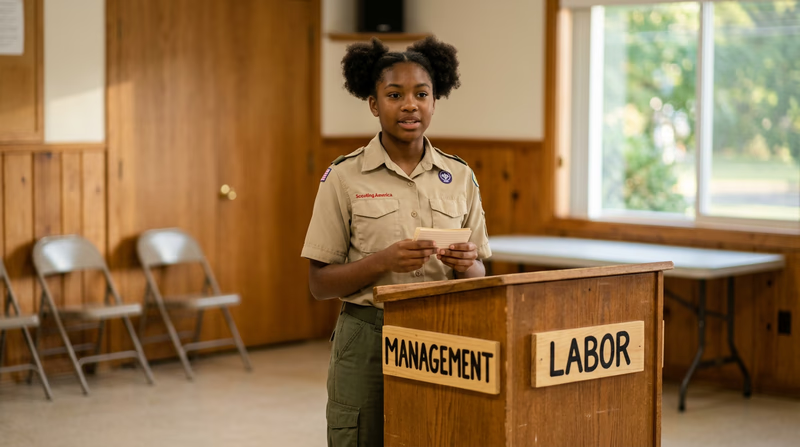
This is one of the most challenging — and rewarding — requirements in the merit badge. You are not just picking a side and defending it. You are arguing both sides of the same issue: first as management, then as labor. This skill — understanding perspectives that differ from your own — is valuable far beyond this merit badge.
Choosing Your Issue
Pick a labor issue that is currently in the news or that you learned about while working on this merit badge. The best choice is something you find genuinely interesting, because you will need to research it thoroughly enough to argue both sides convincingly.
Here are some issues that are frequently debated:
- Minimum wage increases — Should the minimum wage be raised significantly?
- Gig worker classification — Should rideshare drivers and delivery workers be classified as employees or independent contractors?
- Right-to-work laws — Should workers be required to pay union dues as a condition of employment?
- Automation in the workplace — How should companies and workers handle jobs being replaced by technology?
- Remote work policies — Should employees have the right to work from home, or should employers decide?
- Paid family leave — Should the federal government require employers to provide paid family and medical leave?
Building Your Arguments
Step 1: Research Both Perspectives
Before you start writing or practicing, gather information from both sides. Look for:
- News articles that present different viewpoints
- Statements from employer groups (like the U.S. Chamber of Commerce) and labor organizations (like the AFL-CIO)
- Statistics and data that each side uses to support its position
- Real-world examples of how the issue has played out
Step 2: Argue Management’s Side First
The requirement says to start with management’s perspective. When you take this role, think about:
- Business sustainability — What does the company need to survive and grow?
- Costs — How would the labor side’s demands affect the business’s bottom line?
- Competitiveness — How does this issue affect the company’s ability to compete with other businesses?
- Flexibility — Why might management need the freedom to make certain decisions without negotiation?
- Responsibilities — What are the employer’s obligations to shareholders, customers, and the community?
Step 3: Argue Labor’s Side
Then switch to the worker’s perspective. Think about:
- Fairness — Are workers being treated and compensated fairly for their contributions?
- Safety and dignity — Does the current situation protect workers’ wellbeing?
- Economic security — How does this issue affect workers’ ability to support themselves and their families?
- Voice — Do workers have meaningful input in decisions that affect them?
- Rights — What legal protections exist, and are they sufficient?
Rights and Responsibilities
The requirement specifically asks you to summarize the basic rights and responsibilities of employers and employees. Here is a framework:
Employer Rights and Responsibilities
Rights:
- Hire, promote, and manage employees
- Set reasonable workplace rules and expectations
- Make business decisions about products, services, and operations
- Discipline or terminate employees for legitimate cause
Responsibilities:
- Provide a safe workplace (OSHA requirements)
- Pay at least the minimum wage and required overtime
- Follow anti-discrimination laws
- Bargain in good faith with recognized unions
- Provide legally required benefits (workers’ compensation, unemployment insurance, Social Security contributions)
Employee Rights and Responsibilities
Rights:
- A safe and healthy workplace
- Fair wages and overtime pay as required by law
- Freedom from discrimination and harassment
- The right to organize and join a union (NLRA)
- The right to report violations without retaliation
Responsibilities:
- Perform the duties of the job competently
- Follow reasonable workplace rules and policies
- Work safely and report hazards
- Honor the terms of any employment contract or collective bargaining agreement
Union Members — Additional Considerations
Union members have the right to participate in union elections, vote on contracts, and have union representation in disciplinary meetings. They also have the responsibility to pay dues (in union shop states) and to follow the terms of the collective bargaining agreement.
Nonunion Members
Nonunion employees have all the same federal workplace rights as union members. They negotiate individually with their employer rather than collectively. In workplaces where a union exists but they are not members, they still benefit from the union-negotiated contract but may not have voting rights within the union.
U.S. Department of Labor — Workers' Rights A summary of the major federal laws protecting workers' rights, from the Department of Labor. Link: U.S. Department of Labor — Workers' Rights — https://www.dol.gov/general/aboutdol/majorlawsThe Power of Perspective
Arguing both sides of an issue does not mean you have no opinion. It means you understand the full picture. People who can see multiple perspectives are better problem-solvers, better negotiators, and better leaders. This is a skill you will use for the rest of your life.
Req 8 — Stakeholder Goals
Everyone Has a Stake
When you think about a business, it is easy to imagine just two groups — workers and bosses. But the reality is much more complex. Every business exists within a web of people and groups, each with their own goals. Understanding these different perspectives is the key to understanding why labor negotiations involve so much compromise.
Who Are the Stakeholders?
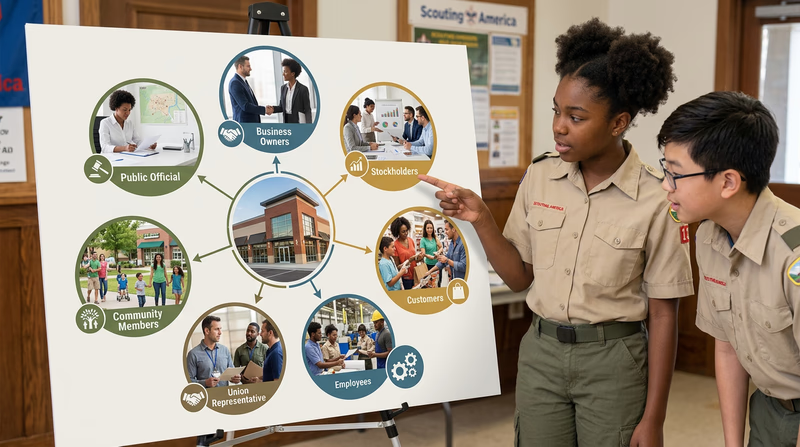
A stakeholder is anyone who has an interest in how a business operates. Let’s look at each group and what motivates them.
Business Owners
Owners want the business to succeed and grow. Their goals typically include:
- Profitability — Earning a return on the money, time, and risk they have invested
- Growth — Expanding the business to reach more customers and increase revenue
- Control — Making decisions about how the business is run
- Legacy — For family-owned businesses, passing the company to the next generation
Stockholders (Shareholders)
Stockholders are people who own shares of a company’s stock. They have invested money and want a return on that investment. Their goals include:
- Stock price growth — They want the value of their shares to go up
- Dividends — Regular payments from the company’s profits
- Long-term value — Some shareholders focus on short-term gains, while others care more about the company’s long-term health
Customers
Customers want quality products or services at a fair price. Their goals include:
- Value — Getting the best product for their money
- Reliability — Consistent quality and availability
- Ethics — Increasingly, customers care about how workers are treated and whether the company operates responsibly
Employees
Employees want fair compensation and good working conditions. Their goals include:
- Fair wages — Pay that reflects their skills, effort, and cost of living
- Benefits — Health insurance, retirement plans, paid leave
- Job security — Stability and protection from arbitrary firing
- Respect and dignity — Being treated fairly and having a voice in the workplace
- Advancement — Opportunities to grow, learn, and move up
Employees’ Representatives (Unions)
When workers are represented by a union, the union acts as their collective voice. Union goals include:
- Strong contracts — Negotiating the best possible wages, benefits, and protections
- Member growth — Organizing more workers to strengthen the union’s influence
- Workplace standards — Ensuring fair treatment and safe conditions
- Political influence — Advocating for laws and policies that benefit workers
The Community
The community surrounding a business — neighbors, local businesses, schools, civic groups — also has a stake. Community goals include:
- Jobs — Local employment and economic activity
- Tax revenue — Businesses contribute to the local tax base, funding schools, roads, and services
- Environmental protection — The community wants the business to operate without polluting or damaging the local environment
- Good neighbors — The business should contribute positively to the community’s quality of life
Public Officials
Elected officials and government regulators must balance the interests of all these groups. Their goals include:
- Economic growth — Policies that support job creation and business development
- Worker protection — Enforcing labor laws and workplace safety standards
- Public welfare — Ensuring that business activities benefit the broader public
- Reelection — Officials respond to the concerns of voters, which includes workers, business owners, and community members
Why Compromise Is Necessary
No single stakeholder group can get everything it wants. Their goals often conflict:
- Owners want lower costs; employees want higher wages. Both are legitimate goals, but they pull in opposite directions.
- Stockholders want maximum profits; the community wants environmental protection. Profit-maximizing decisions may conflict with community wellbeing.
- Customers want low prices; workers want good benefits. Higher labor costs can lead to higher prices.
This is why agreements and compromises are essential. A compromise is not a sign of weakness — it is a recognition that multiple legitimate interests must coexist.
How Compromises Affect Each Group
When a compromise is reached, each stakeholder group is affected differently:
| Stakeholder | Effect of a Wage-and-Benefits Compromise |
|---|---|
| Owners | Higher labor costs, but more stable workforce and fewer disruptions |
| Stockholders | Slightly lower short-term profits, but reduced risk of strikes |
| Customers | May see small price increases, but benefit from consistent service |
| Employees | Better pay and benefits, though not everything they asked for |
| Union | Demonstrates value to members, strengthens future bargaining position |
| Community | Workers with more spending power support local businesses |
| Public officials | Economic stability and fewer labor disputes in their jurisdiction |
The Bigger Picture
Understanding stakeholder goals is about more than this merit badge — it is about understanding how the economy works. Every business decision involves trade-offs between the interests of different groups. The best outcomes happen when all stakeholders are heard and when agreements reflect a genuine effort to balance competing needs.
This kind of thinking — weighing multiple perspectives and finding workable solutions — is exactly what leaders do. And it is exactly what the next requirement will ask you to apply to your own future.
U.S. Securities and Exchange Commission — Investing Basics Learn how stockholders and investors interact with businesses, from the SEC's educational resources. Link: U.S. Securities and Exchange Commission — Investing Basics — https://www.investor.gov/introduction-investingReq 9 — Careers in Labor Relations
Your Future in Labor Relations
Everything you have learned in this merit badge — worker concerns, union mechanics, bargaining styles, history, globalization, stakeholder interests — these are not just academic topics. They are the foundation of real careers. People who work in labor relations help shape the relationship between workers and employers, and their work affects millions of lives.
This requirement asks you to explore those career opportunities, pick one that interests you, and learn what it takes to get there.
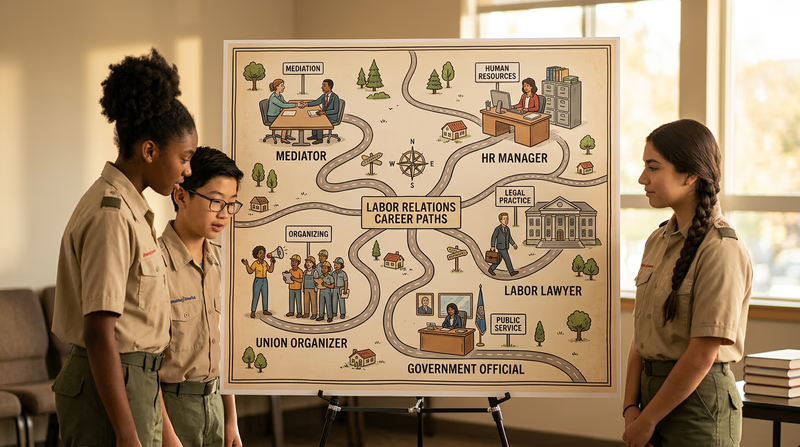
Careers in Labor Relations
The field of labor relations is broader than you might think. Here are some of the major career paths:
Labor Relations Specialist
Labor relations specialists work for companies, government agencies, or consulting firms. They are the people who manage the day-to-day relationship between management and unions, interpret contract language, and help resolve workplace disputes.
- Responsibilities: Negotiate collective bargaining agreements, handle grievances, advise management on labor law, ensure compliance with contracts
- Education: Bachelor’s degree in human resources, labor relations, business, or a related field; some positions require a master’s degree
- Skills: Negotiation, communication, conflict resolution, knowledge of labor law
Human Resources Manager
HR managers oversee all aspects of the employer-employee relationship, including hiring, training, benefits, and workplace policies. In unionized workplaces, they work closely with union representatives.
- Responsibilities: Recruit and hire employees, manage benefits programs, ensure compliance with employment laws, develop workplace policies
- Education: Bachelor’s degree in human resources, business administration, or psychology; many pursue professional certifications (like SHRM or PHR)
- Skills: Leadership, communication, organizational skills, knowledge of employment law
Union Organizer
Union organizers work for labor unions to recruit new members and help workers form unions at their workplaces. This is a frontline role that requires passion, persistence, and strong people skills.
- Responsibilities: Reach out to workers, educate them about union benefits, coordinate organizing campaigns, build support for union elections
- Education: No specific degree required, though many have backgrounds in labor studies, political science, or social work; experience in community organizing is highly valued
- Skills: Public speaking, persuasion, community building, resilience
Labor Lawyer
Labor lawyers specialize in the laws governing the relationship between employers, employees, and unions. Some represent workers; others represent management. Some work for government agencies like the National Labor Relations Board (NLRB).
- Responsibilities: Advise clients on labor law, represent parties in contract disputes or unfair labor practice cases, draft collective bargaining agreements, litigate labor disputes in court
- Education: Bachelor’s degree plus a law degree (Juris Doctor); passing the bar exam
- Skills: Legal research, writing, negotiation, public speaking, analytical thinking
Mediator or Arbitrator
Mediators and arbitrators are neutral third parties who help resolve disputes between labor and management. You learned about these roles in Requirement 3 — now consider them as careers.
- Responsibilities: Conduct hearings, facilitate negotiations, review evidence, issue decisions (arbitrators), help parties find common ground (mediators)
- Education: Bachelor’s degree plus specialized training in dispute resolution; many mediators and arbitrators have law degrees or advanced degrees in labor relations
- Skills: Impartiality, active listening, analytical thinking, patience, excellent communication
Government Labor Official
Federal and state agencies employ people to enforce labor laws, investigate complaints, and promote fair labor practices. Agencies like the Department of Labor, OSHA, and the NLRB all hire professionals with labor relations expertise.
- Responsibilities: Investigate workplace violations, enforce labor standards, conduct workplace inspections, educate employers and workers about their rights
- Education: Bachelor’s degree in labor relations, political science, public administration, or a related field; some positions require specialized training
- Skills: Investigation, public speaking, writing, knowledge of labor law and regulations
Choosing Your Career
The requirement asks you to pick one career and discuss it in depth with your counselor. Here is how to prepare:
Career Research Steps
Preparing for your counselor discussion- Choose a career: Pick the one that genuinely interests you — not just the easiest one to research.
- Find a job description: Search for real job postings for that career on sites like the Bureau of Labor Statistics Occupational Outlook Handbook.
- Note the responsibilities: What would you actually do on a typical day?
- Check education requirements: What degree(s) or certifications do you need?
- Look at salary range: What can you expect to earn?
- Find a path: What steps would you take from where you are now to get to that career?
Related Fields Worth Exploring
Labor relations overlaps with many other career fields:
- Public policy — Designing and implementing laws that affect workers
- Social work — Advocating for vulnerable workers and communities
- Economics — Studying labor markets, wages, and employment trends
- Journalism — Covering labor issues and giving workers a voice in public conversation
- Education — Teaching labor history and workplace skills
Where Work Meets Purpose
A career in labor relations means working at the intersection of business, law, and human dignity. Whether you end up negotiating contracts, enforcing safety standards, or helping resolve disputes, you will be doing work that matters to real people every day.
Congratulations — you have now covered all nine requirements of the American Labor merit badge. But there is still more to explore.
Extended Learning
A. Introduction
You have completed all nine requirements of the American Labor merit badge — congratulations! You now understand worker concerns, union mechanics, bargaining models, labor history, globalization, and the complex web of stakeholders that shape the world of work. But the story of American labor is still being written, and there is so much more to explore.
B. Deep Dive: How a Union Contract Gets Made
You learned the basics of collective bargaining in Requirement 3, but the actual process of negotiating a union contract is a fascinating, months-long endeavor. Understanding it in detail gives you a much richer picture of how labor relations work in practice.
It starts long before anyone sits down at the table. Months before the current contract expires, the union surveys its members: What matters most to you? What needs to change? What are you willing to fight for? Meanwhile, management analyzes the company’s finances, studies industry trends, and develops its own priorities.
Each side assembles a bargaining team. The union team typically includes elected officers, shop stewards from different departments, and sometimes a professional negotiator from the national union. Management’s team often includes human resources executives, financial analysts, and labor lawyers.
The first sessions involve each side presenting its proposals. Union proposals might include higher wages, better health insurance, more paid leave, or improved safety measures. Management might propose changes to work rules, scheduling flexibility, or modifications to overtime policies. Initial proposals are usually ambitious — each side asks for more than it expects to get.
Then the real negotiation begins. Both sides trade counter-proposals, discuss data and financials, and work through each issue one by one. Sticking points are set aside and revisited later. Side conversations happen in hallways and over coffee. Deadlines create pressure — if the current contract expires without a new one, a strike or lockout becomes possible.
When an agreement is reached on all issues, the union presents the tentative agreement to its membership for a ratification vote. If a majority of members approve, the new contract takes effect. If they reject it, the bargaining team goes back to the table.
A typical contract covers wages, benefits, hours, overtime rules, seniority systems, grievance procedures, safety standards, and dozens of other specific workplace rules. Contracts usually last two to five years, and then the entire process starts again.
C. Deep Dive: Labor and the Law
American labor law is built on a handful of landmark federal laws that you should know about if you want to go deeper:
The National Labor Relations Act (1935) — Also called the Wagner Act, this is the foundation of modern labor law. It guarantees most private-sector workers the right to organize, form unions, and bargain collectively. It also created the National Labor Relations Board (NLRB) to enforce these rights and investigate unfair labor practices.
The Fair Labor Standards Act (1938) — This law established the federal minimum wage, required overtime pay for hours worked beyond 40 per week, and banned most child labor. It has been amended many times since 1938, but its core protections remain.
The Taft-Hartley Act (1947) — Passed over President Truman’s veto, this law restricted some union activities. It banned closed shops (where you must be a union member before being hired), allowed states to pass right-to-work laws, and gave the president the power to intervene in strikes that threaten national safety. Unions criticized it as anti-labor; business groups praised it as restoring balance.
The Civil Rights Act (1964) — Title VII of this landmark law prohibits employment discrimination based on race, color, religion, sex, or national origin. It created the Equal Employment Opportunity Commission (EEOC) to enforce these protections. Later amendments added protections based on age, disability, and other characteristics.
The Occupational Safety and Health Act (1970) — This law created OSHA and established the principle that every worker has the right to a workplace free from recognized hazards. OSHA sets and enforces safety standards and investigates workplace accidents.
Understanding these laws gives you a framework for analyzing almost any labor issue you encounter. When you read a news article about a labor dispute, ask yourself: which of these laws is relevant, and how does it shape what each side can and cannot do?
D. Deep Dive: The Changing Face of Worker Organizing
The traditional image of a labor union — factory workers on a picket line — is just one piece of a much larger picture. Worker organizing in the 21st century looks very different from what it looked like even 20 years ago.
Tech and retail organizing — In recent years, workers at major technology and retail companies have launched high-profile organizing campaigns. Warehouse workers, baristas, and software testers have all voted to form unions at companies that were previously entirely nonunion. These campaigns have brought labor issues back into the national spotlight and attracted a new generation of workers to the labor movement.
Gig worker coalitions — Rideshare drivers, food delivery couriers, and freelance workers face unique challenges because they are often classified as independent contractors rather than employees. This classification means they typically do not have the right to form a union under current labor law. In response, gig workers have formed coalitions and advocacy groups to push for better pay, transparency in how they are compensated, and basic protections.
Worker centers — In communities where traditional union organizing is difficult — particularly among immigrant workers, domestic workers, and low-wage service workers — worker centers have emerged as an alternative. These nonprofit organizations provide services, education, and advocacy for workers who may not have access to union representation.
Social media and public pressure — Today’s worker organizers use social media to share stories, build solidarity, and put public pressure on employers. A single viral post about working conditions can generate more attention than months of traditional organizing. This has changed the power dynamics of labor-management relations in ways that are still unfolding.
The core principle remains the same as it was in the 1800s: workers are stronger together than alone. But the tools, the tactics, and the industries involved are evolving rapidly.
E. Real-World Experiences
Visit a Labor History Museum
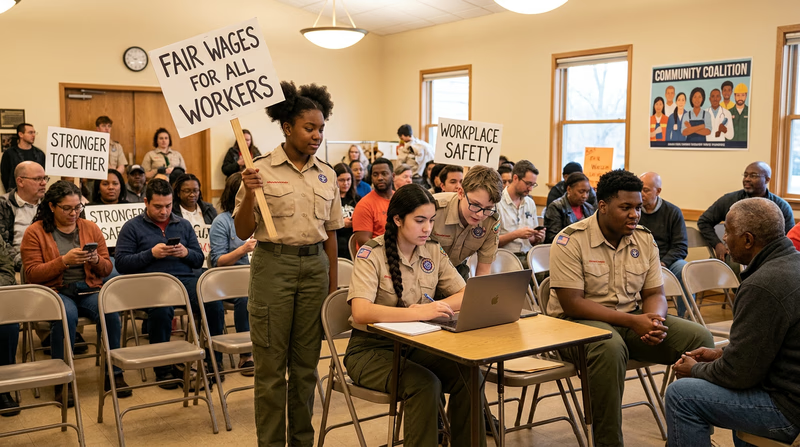
Attend a City Council or County Board Meeting
Interview a Worker from a Different Generation
Explore a Historic Labor Site
Participate in a Mock Negotiation
F. Organizations
The largest federation of unions in the United States, representing over 60 national and international unions and more than 12 million workers.
Organization: AFL-CIO — https://aflcio.org/
The federal agency responsible for occupational safety, wage and hour standards, unemployment insurance, and other worker protections.
Organization: U.S. Department of Labor — https://www.dol.gov/
An independent federal agency that enforces the National Labor Relations Act, protecting workers’ rights to organize and bargain collectively.
Organization: National Labor Relations Board (NLRB) — https://www.nlrb.gov/
A professional association for people who study and work in labor and employment relations, with resources for students.
Organization: Labor and Employment Relations Association (LERA) — https://www.leraweb.org/
A nonprofit think tank that focuses on the economic conditions of low- and middle-income workers, providing research and data on wages, benefits, and working conditions.
Organization: Economic Policy Institute (EPI) — https://www.epi.org/
The federal agency that sets and enforces workplace safety standards, providing education and resources for both employers and workers.
Organization: Occupational Safety and Health Administration (OSHA) — https://www.osha.gov/