Req 6 — Globalization
A World Without Walls
Pick up your phone and look at where it was made. Check the label on your shirt. Think about the last time you called a customer service number and spoke with someone in another country. These everyday experiences are all products of globalization — and they have a profound effect on American workers.
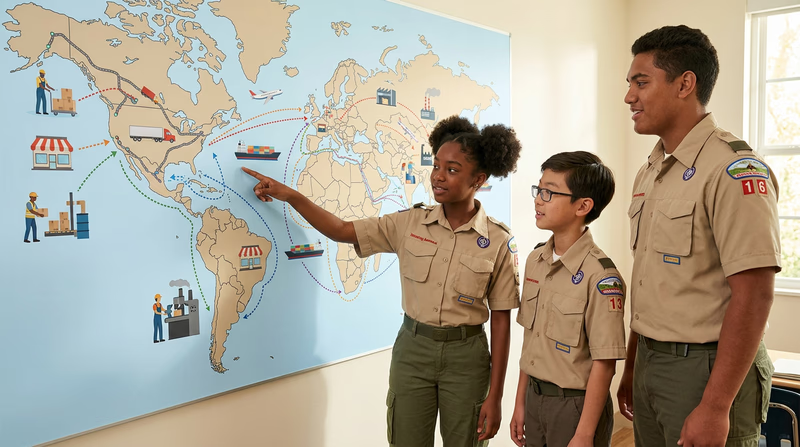
What Is Globalization?
Globalization is the process by which economies, cultures, and populations around the world become increasingly connected and interdependent. In the context of labor, globalization means that goods, services, money, and workers flow across national borders more freely than ever before.
A hundred years ago, most products Americans used were made in America, by American workers. Today, a single product might be designed in California, manufactured in China, assembled in Mexico, and sold by a company headquartered in Ireland. The global economy is a web of connections that touches nearly every job and every industry.
How Globalization Affects American Workers
Globalization is not simply good or bad — it creates both opportunities and challenges. Here are some of the major effects:
Jobs Moving Overseas (Offshoring)
When companies move manufacturing or service operations to countries where labor costs are lower, American workers in those industries can lose their jobs. This has hit manufacturing especially hard. Cities that once thrived on factory work — in the Midwest and Northeast especially — have seen significant job losses over the past few decades.
Lower Prices for Consumers
When goods are produced in countries with lower labor costs, the prices of those goods tend to drop. This benefits American consumers who can buy electronics, clothing, and other products more affordably. However, those lower prices come at the cost of the jobs that used to make those products domestically.
New Types of Jobs
Globalization does not just eliminate jobs — it creates them too. International trade, logistics, technology, finance, and consulting have all grown as the global economy has expanded. Many of these new jobs require higher levels of education and specialized skills.
Competition for Wages
When American workers compete with workers in countries where wages are much lower, it can put downward pressure on wages in certain industries. Employers may argue that they cannot pay more because their competitors use cheaper labor overseas.
Guest Workers and Immigration
Globalization includes the movement of people, not just goods. Guest worker programs (like the H-1B visa for technology workers or the H-2A visa for agricultural workers) bring workers from other countries to fill specific roles in the American economy. This can fill real shortages in certain fields, but it can also create tension with domestic workers who feel their wages or opportunities are being affected.
The Global Workforce and the American Economy
The United States has the world’s largest economy, and it is deeply interconnected with the global workforce. Here is how the pieces fit together:
Imports and Exports
The U.S. both imports goods made by workers in other countries and exports goods made by American workers. Trade agreements — like the United States-Mexico-Canada Agreement (USMCA) — set the rules for how these exchanges work, including labor standards and tariffs.
Multinational Corporations
Many of the largest companies in America operate in dozens of countries. They hire workers globally, which means decisions made in a corporate headquarters in New York can affect workers in factories in Vietnam or call centers in India — and vice versa.
Supply Chains
Modern supply chains are global. Raw materials are sourced from one continent, components are manufactured on another, and final assembly happens somewhere else. Disruptions anywhere in the chain — a natural disaster, a pandemic, a labor dispute — can ripple across the world.
What Are Workers and Leaders Doing About It?
Globalization is not something that just happens — people make choices about how to respond:
- Trade agreements attempt to balance free trade with labor protections
- Training and education programs help workers develop new skills when their old jobs disappear
- Trade Adjustment Assistance (TAA) is a federal program that provides support to workers who lose their jobs specifically because of foreign trade
- Unions advocate for fair trade policies that protect workers’ rights both at home and abroad
- Some companies adopt fair trade practices that guarantee minimum working conditions and wages for workers in developing countries
Connecting Global and Local
Globalization can feel like a massive, abstract concept. But it connects directly to the worker concerns you explored in Requirement 1 and the organizations you learned about in Requirement 2. The next time you hear about a factory closing, a trade deal being negotiated, or a debate about immigration policy, you will understand the labor story behind the headlines.