Req 8 — Stakeholder Goals
Everyone Has a Stake
When you think about a business, it is easy to imagine just two groups — workers and bosses. But the reality is much more complex. Every business exists within a web of people and groups, each with their own goals. Understanding these different perspectives is the key to understanding why labor negotiations involve so much compromise.
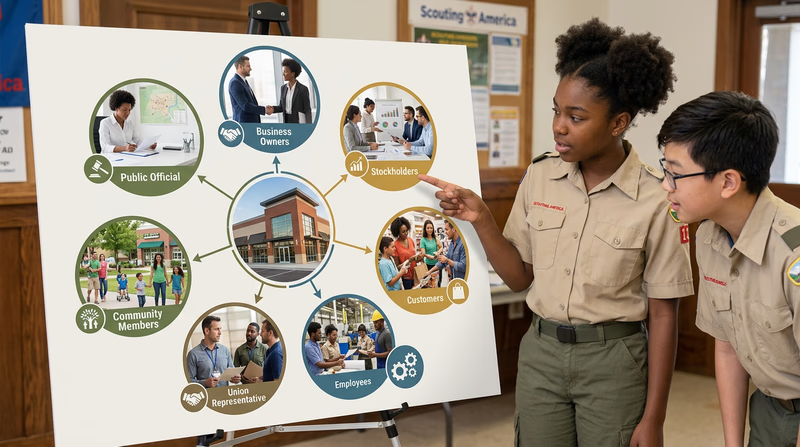
Who Are the Stakeholders?
A stakeholder is anyone who has an interest in how a business operates. Let’s look at each group and what motivates them.
Business Owners
Owners want the business to succeed and grow. Their goals typically include:
- Profitability — Earning a return on the money, time, and risk they have invested
- Growth — Expanding the business to reach more customers and increase revenue
- Control — Making decisions about how the business is run
- Legacy — For family-owned businesses, passing the company to the next generation
Stockholders (Shareholders)
Stockholders are people who own shares of a company’s stock. They have invested money and want a return on that investment. Their goals include:
- Stock price growth — They want the value of their shares to go up
- Dividends — Regular payments from the company’s profits
- Long-term value — Some shareholders focus on short-term gains, while others care more about the company’s long-term health
Customers
Customers want quality products or services at a fair price. Their goals include:
- Value — Getting the best product for their money
- Reliability — Consistent quality and availability
- Ethics — Increasingly, customers care about how workers are treated and whether the company operates responsibly
Employees
Employees want fair compensation and good working conditions. Their goals include:
- Fair wages — Pay that reflects their skills, effort, and cost of living
- Benefits — Health insurance, retirement plans, paid leave
- Job security — Stability and protection from arbitrary firing
- Respect and dignity — Being treated fairly and having a voice in the workplace
- Advancement — Opportunities to grow, learn, and move up
Employees’ Representatives (Unions)
When workers are represented by a union, the union acts as their collective voice. Union goals include:
- Strong contracts — Negotiating the best possible wages, benefits, and protections
- Member growth — Organizing more workers to strengthen the union’s influence
- Workplace standards — Ensuring fair treatment and safe conditions
- Political influence — Advocating for laws and policies that benefit workers
The Community
The community surrounding a business — neighbors, local businesses, schools, civic groups — also has a stake. Community goals include:
- Jobs — Local employment and economic activity
- Tax revenue — Businesses contribute to the local tax base, funding schools, roads, and services
- Environmental protection — The community wants the business to operate without polluting or damaging the local environment
- Good neighbors — The business should contribute positively to the community’s quality of life
Public Officials
Elected officials and government regulators must balance the interests of all these groups. Their goals include:
- Economic growth — Policies that support job creation and business development
- Worker protection — Enforcing labor laws and workplace safety standards
- Public welfare — Ensuring that business activities benefit the broader public
- Reelection — Officials respond to the concerns of voters, which includes workers, business owners, and community members
Why Compromise Is Necessary
No single stakeholder group can get everything it wants. Their goals often conflict:
- Owners want lower costs; employees want higher wages. Both are legitimate goals, but they pull in opposite directions.
- Stockholders want maximum profits; the community wants environmental protection. Profit-maximizing decisions may conflict with community wellbeing.
- Customers want low prices; workers want good benefits. Higher labor costs can lead to higher prices.
This is why agreements and compromises are essential. A compromise is not a sign of weakness — it is a recognition that multiple legitimate interests must coexist.
How Compromises Affect Each Group
When a compromise is reached, each stakeholder group is affected differently:
| Stakeholder | Effect of a Wage-and-Benefits Compromise |
|---|---|
| Owners | Higher labor costs, but more stable workforce and fewer disruptions |
| Stockholders | Slightly lower short-term profits, but reduced risk of strikes |
| Customers | May see small price increases, but benefit from consistent service |
| Employees | Better pay and benefits, though not everything they asked for |
| Union | Demonstrates value to members, strengthens future bargaining position |
| Community | Workers with more spending power support local businesses |
| Public officials | Economic stability and fewer labor disputes in their jurisdiction |
The Bigger Picture
Understanding stakeholder goals is about more than this merit badge — it is about understanding how the economy works. Every business decision involves trade-offs between the interests of different groups. The best outcomes happen when all stakeholders are heard and when agreements reflect a genuine effort to balance competing needs.
This kind of thinking — weighing multiple perspectives and finding workable solutions — is exactly what leaders do. And it is exactly what the next requirement will ask you to apply to your own future.
U.S. Securities and Exchange Commission — Investing Basics Learn how stockholders and investors interact with businesses, from the SEC's educational resources.