Req 9 — Careers in Labor Relations
Your Future in Labor Relations
Everything you have learned in this merit badge — worker concerns, union mechanics, bargaining styles, history, globalization, stakeholder interests — these are not just academic topics. They are the foundation of real careers. People who work in labor relations help shape the relationship between workers and employers, and their work affects millions of lives.
This requirement asks you to explore those career opportunities, pick one that interests you, and learn what it takes to get there.
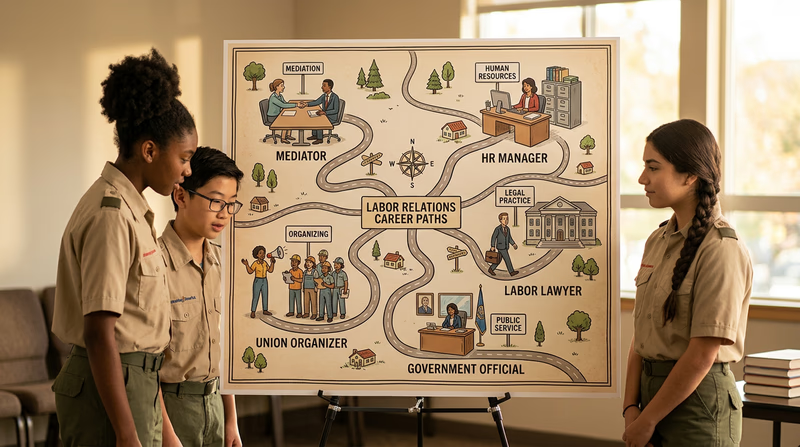
Careers in Labor Relations
The field of labor relations is broader than you might think. Here are some of the major career paths:
Labor Relations Specialist
Labor relations specialists work for companies, government agencies, or consulting firms. They are the people who manage the day-to-day relationship between management and unions, interpret contract language, and help resolve workplace disputes.
- Responsibilities: Negotiate collective bargaining agreements, handle grievances, advise management on labor law, ensure compliance with contracts
- Education: Bachelor’s degree in human resources, labor relations, business, or a related field; some positions require a master’s degree
- Skills: Negotiation, communication, conflict resolution, knowledge of labor law
Human Resources Manager
HR managers oversee all aspects of the employer-employee relationship, including hiring, training, benefits, and workplace policies. In unionized workplaces, they work closely with union representatives.
- Responsibilities: Recruit and hire employees, manage benefits programs, ensure compliance with employment laws, develop workplace policies
- Education: Bachelor’s degree in human resources, business administration, or psychology; many pursue professional certifications (like SHRM or PHR)
- Skills: Leadership, communication, organizational skills, knowledge of employment law
Union Organizer
Union organizers work for labor unions to recruit new members and help workers form unions at their workplaces. This is a frontline role that requires passion, persistence, and strong people skills.
- Responsibilities: Reach out to workers, educate them about union benefits, coordinate organizing campaigns, build support for union elections
- Education: No specific degree required, though many have backgrounds in labor studies, political science, or social work; experience in community organizing is highly valued
- Skills: Public speaking, persuasion, community building, resilience
Labor Lawyer
Labor lawyers specialize in the laws governing the relationship between employers, employees, and unions. Some represent workers; others represent management. Some work for government agencies like the National Labor Relations Board (NLRB).
- Responsibilities: Advise clients on labor law, represent parties in contract disputes or unfair labor practice cases, draft collective bargaining agreements, litigate labor disputes in court
- Education: Bachelor’s degree plus a law degree (Juris Doctor); passing the bar exam
- Skills: Legal research, writing, negotiation, public speaking, analytical thinking
Mediator or Arbitrator
Mediators and arbitrators are neutral third parties who help resolve disputes between labor and management. You learned about these roles in Requirement 3 — now consider them as careers.
- Responsibilities: Conduct hearings, facilitate negotiations, review evidence, issue decisions (arbitrators), help parties find common ground (mediators)
- Education: Bachelor’s degree plus specialized training in dispute resolution; many mediators and arbitrators have law degrees or advanced degrees in labor relations
- Skills: Impartiality, active listening, analytical thinking, patience, excellent communication
Government Labor Official
Federal and state agencies employ people to enforce labor laws, investigate complaints, and promote fair labor practices. Agencies like the Department of Labor, OSHA, and the NLRB all hire professionals with labor relations expertise.
- Responsibilities: Investigate workplace violations, enforce labor standards, conduct workplace inspections, educate employers and workers about their rights
- Education: Bachelor’s degree in labor relations, political science, public administration, or a related field; some positions require specialized training
- Skills: Investigation, public speaking, writing, knowledge of labor law and regulations
Choosing Your Career
The requirement asks you to pick one career and discuss it in depth with your counselor. Here is how to prepare:
Career Research Steps
Preparing for your counselor discussion
- Choose a career: Pick the one that genuinely interests you — not just the easiest one to research.
- Find a job description: Search for real job postings for that career on sites like the Bureau of Labor Statistics Occupational Outlook Handbook.
- Note the responsibilities: What would you actually do on a typical day?
- Check education requirements: What degree(s) or certifications do you need?
- Look at salary range: What can you expect to earn?
- Find a path: What steps would you take from where you are now to get to that career?
Related Fields Worth Exploring
Labor relations overlaps with many other career fields:
- Public policy — Designing and implementing laws that affect workers
- Social work — Advocating for vulnerable workers and communities
- Economics — Studying labor markets, wages, and employment trends
- Journalism — Covering labor issues and giving workers a voice in public conversation
- Education — Teaching labor history and workplace skills
Where Work Meets Purpose
A career in labor relations means working at the intersection of business, law, and human dignity. Whether you end up negotiating contracts, enforcing safety standards, or helping resolve disputes, you will be doing work that matters to real people every day.
Congratulations — you have now covered all nine requirements of the American Labor merit badge. But there is still more to explore.