 Getting Started
Introduction & Overview
From the barnyard to the research lab, animals have been part of the human story for thousands of years. The Animal Science merit badge takes you inside the world of livestock — the breeds, the biology, and the people who care for them. Whether you dream of running a ranch, becoming a veterinarian, or simply want to understand where your food comes from, this badge has something for you.
Animal science is about more than just knowing one end of a cow from the other. It covers genetics, nutrition, disease prevention, and the technology that drives modern agriculture. You will explore seven major livestock categories, learn how their bodies work, and discover what it takes to raise healthy animals responsibly.
Then and Now
Then — Partners in Survival
Humans began domesticating animals roughly 10,000 years ago in the Fertile Crescent of the Middle East. Goats and sheep were among the first, followed by cattle and pigs. Horses came later, transforming transportation, agriculture, and warfare. For most of history, farmers improved their herds through careful observation — picking the biggest, healthiest, and most productive animals to breed the next generation. There was no genetic testing, no ultrasound technology, and no artificial insemination. Just a keen eye and generations of hard-won experience.
- Purpose: Food, fiber, labor, transportation
- Methods: Observation-based selective breeding over centuries
- Scale: Family farms with small, mixed herds
Now — Science Meets the Farm
Today, animal science is a high-tech field. Researchers use DNA analysis to predict which animals will produce the best offspring. Sensors monitor an animal’s health in real time. Nutritionists design precise feeding programs based on an animal’s age, weight, and purpose. The United States alone produces over 27 billion pounds of beef, 226 billion pounds of milk, and 9 billion broiler chickens each year — and the science behind that production is constantly evolving.
- Purpose: Efficient, humane food and fiber production; companionship; research
- Methods: Genomic selection, precision nutrition, biosecurity protocols
- Scale: Operations range from small family farms to large commercial enterprises
Get Ready! You are about to explore one of the oldest and most important partnerships in human history — the relationship between people and animals. From tiny chicks to towering draft horses, the diversity of livestock is incredible.
Kinds of Animal Science
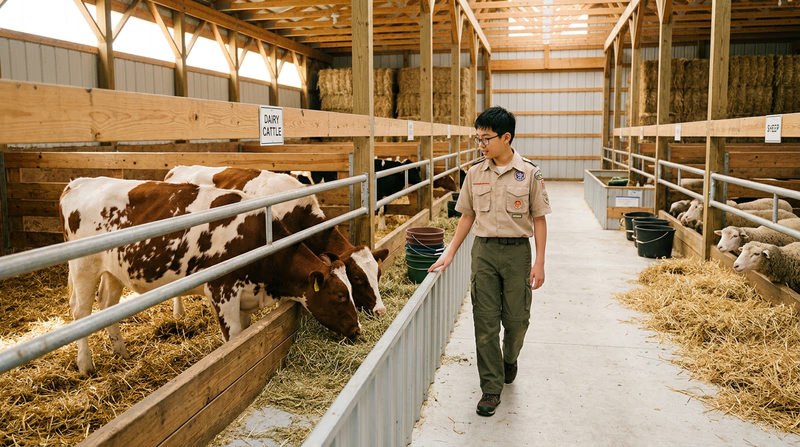
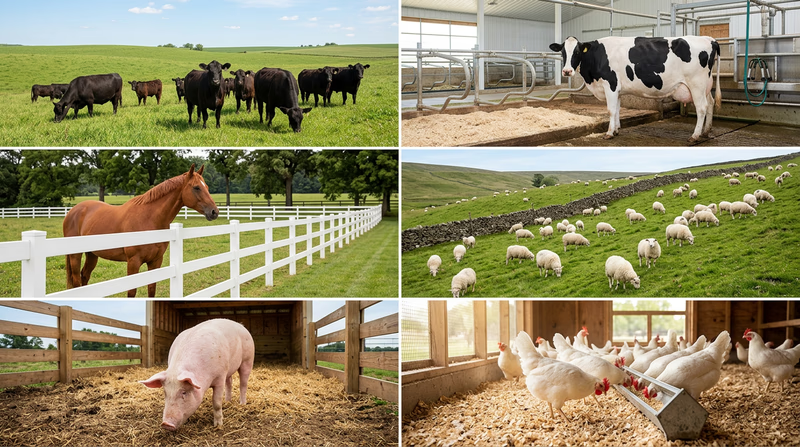
Animal science covers many species and production systems. Here is a look at the major categories you will explore in this badge.
Beef Cattle
Beef cattle are raised primarily for meat production. The United States is one of the world’s largest beef producers, with operations ranging from vast Western ranches to smaller Midwestern feedlots. Breeds like Angus, Hereford, and Charolais have been developed for specific traits like marbling, hardiness, and growth rate.
Dairy Cattle
Dairy cattle are bred and managed for milk production. A single high-producing Holstein cow can give over 23,000 pounds of milk per year — that is nearly 2,700 gallons. Dairy farming requires strict sanitation, precise nutrition, and careful health monitoring.
Horses
Horses serve many roles — from working ranch stock to competitive show animals, from therapeutic riding partners to beloved companions. Different breeds excel at different jobs. A Quarter Horse can sprint short distances faster than any other breed, while a Clydesdale can pull loads that weigh thousands of pounds.
Sheep
Sheep provide wool, meat (lamb and mutton), and milk. They are raised on every continent except Antarctica. Sheep are especially well-suited to rugged terrain where cattle cannot easily graze, making them valuable in mountainous and arid regions.
Goats
Goats are one of the most versatile livestock species. They produce milk, meat, and fiber (such as mohair and cashmere). Goats are browsers rather than grazers — they prefer to eat shrubs, weeds, and brush, which makes them useful for land management and clearing overgrown areas.
Hogs
Pork is the most widely consumed meat in the world. Modern hog production focuses on efficient growth, lean meat quality, and animal welfare. Breeds like the Yorkshire, Duroc, and Hampshire have been refined over generations to produce high-quality pork.
Poultry
Poultry includes chickens, turkeys, ducks, and geese raised for meat and eggs. Chicken is the most popular meat in the United States. Poultry science covers everything from egg production and incubation to nutrition and flock health management.
Now let’s dive into the first requirement and explore the many breeds of livestock!