Req 3 — Digestive Systems
This requirement asks you to draw four different digestive systems and explain why their differences matter for feeding. Understanding how an animal’s gut works is the key to understanding what it should eat.
Four Digestive Systems, Four Strategies
Every animal must break down food into nutrients it can absorb. But different species have evolved very different solutions to this problem. Here is a look at each system and what makes it unique.
Ruminants (Cattle, Sheep, Goats)
Ruminants are the champion fiber digesters of the livestock world. Their digestive system includes four stomach compartments: the rumen, reticulum, omasum, and abomasum.
- Rumen — The largest compartment (up to 50 gallons in cattle). It acts as a giant fermentation vat where billions of microorganisms break down cellulose — the tough fiber in grass and hay that most animals cannot digest.
- Reticulum — Works with the rumen to mix food. It also traps foreign objects the animal may have swallowed (hardware disease in cattle is caused by swallowed metal objects lodging here).
- Omasum — Absorbs water and some nutrients. Think of it as a dehydrator that squeezes moisture from the partially digested food.
- Abomasum — The “true stomach,” similar to a human stomach. It produces acid and enzymes for chemical digestion.
Ruminants chew their cud — they regurgitate partially digested food from the rumen, chew it again to break it down further, and swallow it back. This process is called rumination, and a healthy cow spends about 8 hours per day doing it.
Nutritional impact: Because ruminants can ferment fiber, they thrive on forages like grass, hay, and silage. They can convert plants that humans cannot eat into high-quality protein (milk and meat). Grain can supplement their diet but must be introduced gradually — too much grain too fast can cause acidosis, a dangerous drop in rumen pH.
Horses (Hindgut Fermenters)
Horses have a simple stomach (one compartment) followed by a large cecum and colon where fermentation occurs. This makes them hindgut fermenters — the microbial breakdown of fiber happens after the stomach, not before.
- Stomach — Relatively small for the horse’s size (only 2–4 gallons). It secretes acid and enzymes but cannot handle large volumes at once.
- Small intestine — Where most sugars, starches, proteins, and fats are absorbed.
- Cecum — A large, pouch-like organ (about 8 gallons) where bacteria ferment fiber, similar to the rumen but less efficient.
- Large colon — Continues the fermentation process and absorbs water.
Nutritional impact: Because the horse’s stomach is small, horses must eat small, frequent meals — not large, infrequent ones. Overloading the stomach with grain can cause colic or laminitis (a painful inflammation of the hoof). Horses should eat primarily forage (hay and pasture) with limited grain, and they should always have access to clean water.
Pigs (Monogastric / Simple Stomach)
Pigs have a digestive system most similar to humans — a single-compartment stomach and a relatively short intestinal tract. They are true omnivores.
- Stomach — One compartment that uses acid and enzymes to break down food.
- Small intestine — The primary site for nutrient absorption. Most digestion of proteins, fats, and carbohydrates happens here.
- Large intestine — Absorbs water and some nutrients. Pigs have a small cecum, but it plays a minor role compared to ruminants or horses.
Nutritional impact: Because pigs cannot ferment fiber efficiently, they need concentrated, energy-dense feeds — primarily grains like corn and soybean meal. Pigs compete directly with humans for the same types of food (grains and oilseeds), which is one reason their feed costs are higher per pound of gain than cattle on pasture. Pigs are very efficient at converting feed to muscle, though — they gain about one pound of body weight for every three pounds of feed consumed.
Poultry (Avian Digestive System)
Birds have a completely unique digestive system adapted for flight — lightweight, efficient, and fast-processing.
- Beak — No teeth. Birds swallow food whole or in large pieces.
- Crop — A storage pouch in the esophagus where food is softened before moving on.
- Proventriculus — The glandular stomach that adds acid and enzymes.
- Gizzard (ventriculus) — A thick, muscular organ that grinds food using small stones or grit the bird has swallowed. This replaces the chewing that mammals do with their teeth.
- Small intestine — Where most nutrient absorption occurs.
- Ceca — Two small pouches where some fermentation of fiber takes place.
- Cloaca — The common exit for digestive, urinary, and reproductive systems.
Nutritional impact: Poultry need finely ground or pelleted feeds because they cannot chew. Their rapid metabolism means they need frequent access to feed and water. Laying hens require extra calcium — without it, eggshells become thin and fragile. Grit (small stones) must be provided to help the gizzard grind food, especially if birds are eating whole grains.
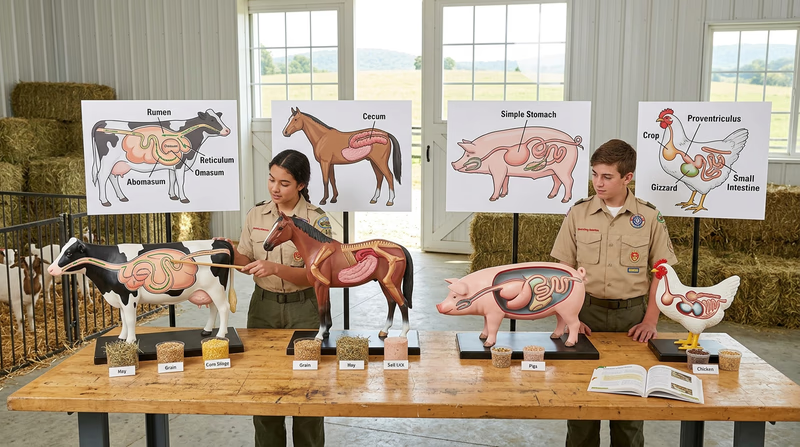
Why Structure Determines Diet
The table below summarizes how digestive tract differences affect feeding:
| Animal | Fiber Digestion | Primary Feed | Feeding Frequency | Key Concern |
|---|---|---|---|---|
| Ruminant | Excellent (rumen) | Forages, some grain | Continuous grazing | Acidosis from too much grain |
| Horse | Moderate (cecum) | Mostly forage, limited grain | Small, frequent meals | Colic from large meals or sudden changes |
| Pig | Poor | Grain-based concentrates | 2–3 meals/day | High feed costs; cannot use forage efficiently |
| Poultry | Minimal | Ground or pelleted feed | Continuous access | Need grit and extra calcium for layers |
Next, you will use what you have learned about nutrition and health to plan how you would manage a specific type of animal.