Req 5c — Modern Technology
Technology is changing animal agriculture at an incredible pace. From the genetics lab to the barn, modern tools help producers raise healthier animals, make smarter decisions, and use resources more efficiently. You need to identify two technologies — here is a look at some of the most important ones to choose from.
Reproductive Technologies
Artificial Insemination (AI)
Artificial insemination allows a producer to breed a female animal using collected and stored semen from a superior sire — even one that may be thousands of miles away or no longer living. The semen is frozen in liquid nitrogen and can be stored indefinitely.
Advantages:
- Access to top genetics without owning the bull, stallion, or boar
- One outstanding sire can produce thousands of offspring per year, accelerating genetic improvement
- Reduces the cost and risk of keeping a live breeding male on the farm
- Eliminates disease transmission that can occur during natural mating
Embryo Transfer (ET)
Embryo transfer allows a superior female to produce far more offspring than she could naturally. The donor cow is given hormones to produce multiple eggs (superovulation), then bred. The resulting embryos are collected and implanted into recipient females who carry the pregnancies to term.
Advantages:
- A single superior female can produce 20–30 or more calves per year instead of one
- Accelerates genetic progress by multiplying the best genetics
- Allows producers to import genetics from other countries without transporting live animals
Genomic Testing
A DNA sample — often from a hair or blood sample — can be analyzed to predict an animal’s genetic potential for dozens of traits. Genomic testing gives producers information about an animal’s genetics at birth, long before the animal can demonstrate those traits through performance.
Advantages:
- Make breeding decisions earlier — no need to wait years for performance data
- Identify carriers of genetic defects before they are bred
- Improve accuracy of EPDs (see Requirement 5a)
- Works in all species — cattle, sheep, hogs, horses, and poultry
Precision Agriculture Technologies
Electronic Identification (EID) and RFID
Radio-frequency identification (RFID) ear tags or microchips give each animal a unique electronic identity. When an animal passes a reader (at a feed bunk, milking parlor, or handling chute), the system automatically records its identity and links it to health, feeding, and production data.
Advantages:
- Accurate, automatic record keeping — no more misread ear tags or handwritten notes
- Enables individual animal management in large herds
- Required for disease traceability programs (tracking where an animal has been if a disease outbreak occurs)
Precision Feeding Systems
Computer-controlled feeding systems deliver customized rations to individual animals based on their weight, production stage, and nutritional needs. In dairy barns, robotic feeders push feed closer to the cows at regular intervals. In hog barns, electronic sow feeders (ESFs) dispense a precise amount of feed to each sow based on her individual needs.
Advantages:
- Reduces feed waste — animals get exactly what they need, no more, no less
- Improves feed efficiency and animal performance
- Lowers feed costs, which are the largest expense in most operations
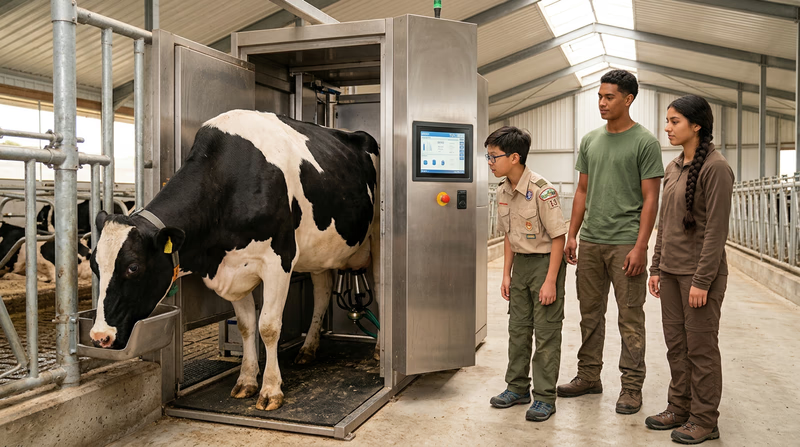
Robotic Milking Systems
Robotic milking systems allow dairy cows to be milked whenever they choose — typically 2–4 times per day — without a human operator. The cow enters the robotic milking stall voluntarily, and the system automatically attaches the milking unit, monitors milk quality, and records production data.
Advantages:
- Reduces labor requirements for milking
- Cows can be milked more frequently, which can increase production by 10–15%
- Real-time milk quality monitoring detects mastitis and other issues early
- Improved cow comfort — cows choose their own schedule
Health and Monitoring Technologies
Wearable Health Monitors
Sensors worn on collars, ear tags, or leg bands continuously track an animal’s activity, rumination (chewing), temperature, and location. The data is analyzed by software that alerts the producer when an animal’s behavior deviates from normal — often detecting illness 24–48 hours before visible symptoms appear.
Advantages:
- Early disease detection means faster treatment and better outcomes
- Reduces the need for constant visual monitoring of large herds
- Detects heat (estrus) in breeding females, improving reproductive efficiency
Ultrasound Technology
Ultrasound is used in two major ways: for pregnancy checking and for carcass evaluation. Reproductive ultrasound can confirm pregnancy as early as 28 days after breeding. Carcass ultrasound measures backfat thickness, ribeye area, and marbling in live animals, helping producers identify the most valuable animals.
Advantages:
- Non-invasive and painless for the animal
- Provides data that improves both breeding and marketing decisions
- Widely available through trained technicians
You have now covered the core requirements — breeds, diseases, digestion, management, and breeding. Next comes the most hands-on part of the badge: choosing your specialty option.