Req 7 — Careers in Animal Science
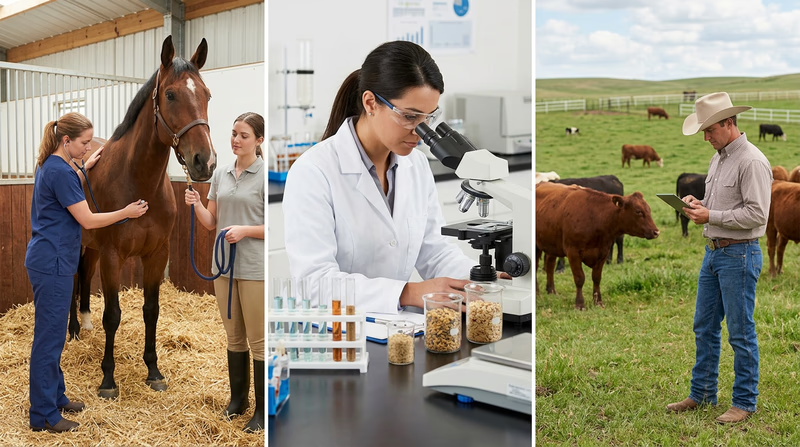
Animal science opens the door to a wide range of careers — far more than most people realize. You do not have to grow up on a farm to build a career in this field. Here is a look at some of the many career paths available, organized by area of focus.
Career Categories in Animal Science
Veterinary Medicine
Veterinarian (DVM) — Diagnoses and treats animal diseases, performs surgery, and advises producers on herd health. Large-animal veterinarians work with livestock on farms and ranches. Small-animal veterinarians work primarily with pets.
- Education: 4-year college degree + 4 years of veterinary school (Doctor of Veterinary Medicine)
- Training: Clinical rotations in vet school, followed by optional residency in a specialty
- Outlook: High demand, especially for large-animal and rural veterinarians
Veterinary technician — Assists veterinarians with examinations, lab work, anesthesia, and surgical procedures. Similar to a nurse in human medicine.
- Education: 2-year associate degree in veterinary technology (or 4-year bachelor’s)
- Certification: Must pass the Veterinary Technician National Examination (VTNE)
Animal Nutrition
Animal nutritionist — Designs feeding programs for livestock operations to maximize health and production while controlling costs. Works for feed companies, universities, or as an independent consultant.
- Education: Bachelor’s degree in animal science, with a master’s or PhD for research or consulting positions
- Skills: Chemistry, biology, data analysis, communication
Genetics and Breeding
Livestock geneticist — Uses DNA analysis, EPDs, and breeding program design to improve animal performance across generations. May work for breed associations, AI companies, or universities.
- Education: Bachelor’s degree minimum; master’s or PhD for advanced positions
- Skills: Genetics, statistics, molecular biology
Production and Management
Farm or ranch manager — Oversees daily operations of a livestock enterprise, making decisions about feeding, breeding, marketing, and labor. This is a hands-on leadership role.
- Education: Bachelor’s degree in animal science or agriculture (or equivalent experience)
- Training: Practical experience is essential — many managers start as hired hands or grow up in farming families
Livestock buyer or marketing specialist — Evaluates and purchases cattle, hogs, or sheep for feedlots, packers, or auction companies. Requires an excellent eye for animal quality and strong negotiation skills.
Meat Science and Food Safety
Meat scientist — Studies meat quality, food safety, and processing technology. May work in research, product development, or quality assurance for food companies.
- Education: Bachelor’s or master’s degree in meat science or food science
- Career paths: USDA meat grader, food safety inspector, product development scientist
USDA food inspector — Inspects slaughter and processing facilities to ensure compliance with food safety regulations.
- Education: Bachelor’s degree in a relevant science
- Training: USDA provides specialized training after hiring
Education and Extension
Extension agent — Works for a university’s cooperative extension service, helping farmers and ranchers apply the latest research to their operations. Extension agents are problem-solvers who bridge the gap between science and practice.
- Education: Bachelor’s or master’s degree in animal science or a related field
- Skills: Communication, teaching, community engagement
Preparing for Your Discussion
For Your Counselor Meeting
Research one career in depth
- What does a typical day look like in this career?
- What education is required (degree type, major, years)?
- What training or certifications are needed beyond the degree?
- What experience helps prepare for this career (internships, 4-H, FFA)?
- What is the salary range?
- Why does this career interest you personally?
Getting Started Now
You do not have to wait until college to build experience in animal science. Here are ways to start today:
- 4-H and FFA — Both organizations offer livestock projects where you can raise and show animals, learn judging skills, and compete at local, state, and national levels.
- Volunteer at a farm or stable — Many operations welcome help in exchange for hands-on learning.
- Job shadow — Spend a day with a veterinarian, extension agent, or farm manager to see what the work is really like.
- Attend livestock shows and sales — Watch, listen, and ask questions. The people at these events are a wealth of knowledge.
Congratulations — you have worked through all seven requirements! Now head to the Extended Learning section for deeper dives and resources that go beyond the badge.