Req 4a — Studio Tour
What to Look For
Whether you visit a studio in person, watch a virtual tour video, or explore a studio’s website, you want to come away understanding how animation actually gets made in a professional setting. Here are the key things to pay attention to:
The Animation Pipeline
Every studio follows a pipeline — a sequence of steps that takes a project from idea to finished product. While the details vary, most pipelines include these stages:
- Story and Script: Writers and directors develop the story, dialogue, and overall vision.
- Storyboarding: Artists draw rough sequences (like a comic book version of the film) to plan every shot.
- Design: Character designers, background artists, and color stylists create the visual look.
- Layout: Artists plan camera angles, character positions, and scene composition.
- Animation: Animators create the movement — this is where the 12 principles come to life.
- Effects: Specialists add rain, fire, magic, explosions, and other visual effects.
- Lighting and Rendering: (For 3D) Digital lighting artists set up lights in the virtual scene, and powerful computers render the final images.
- Compositing: All the layers — characters, backgrounds, effects, lighting — are combined into the final frames.
- Sound and Music: Voice actors, musicians, and sound designers add the audio that brings the visuals to life.
The People
Animation is deeply collaborative. During your tour, notice how many different roles exist:
- Director — guides the creative vision
- Storyboard artist — plans the visual storytelling
- Character animator — brings characters to life
- Rigger — builds the digital “skeleton” that allows 3D models to move
- Technical director — solves engineering problems (how to simulate fur, water, cloth)
- Compositor — assembles all the visual layers
- Producer — keeps the project on schedule and on budget
The Workspace
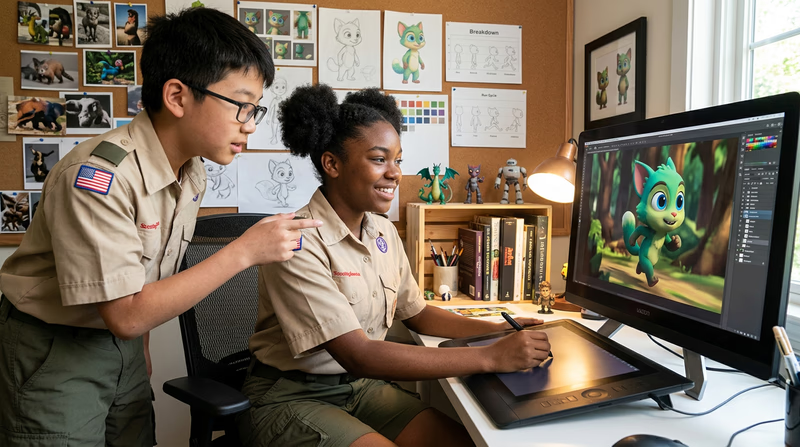
Pay attention to the physical (or virtual) workspace. You might notice:
- Reference materials everywhere — photos, toys, drawings pinned to walls
- Dual monitors showing animation software
- Drawing tablets for digital sketching
- Review rooms where teams watch work-in-progress together
Virtual Tour Options
If you cannot visit a studio in person, these video tours will give you an inside look:
Beyond Film Studios
Animation is not just used in movies and TV. Many businesses use animation every day:
- Advertising agencies create animated commercials, social media ads, and product demos.
- Video game studios animate characters, environments, and user interfaces.
- Medical companies produce animated training materials and 3D models of the human body.
- Architecture firms create animated walkthroughs of buildings before they are constructed.
- News organizations use animated graphics to explain weather, data, and breaking stories.
If there is a business near you that uses animation in any of these ways, that counts for this requirement too.
Studio Tour Discussion Prep
Be ready to share with your counselor
- What type of animation does the studio create? (Film, TV, games, ads, medical, etc.)
- What steps are in their pipeline? Name at least three.
- What surprised you the most about how animation is made?
- What roles or jobs did you learn about?
- How does their work compare to the animations you created for Requirement 3?
You have seen how animation works in the real world today. Now let’s think about where it is headed.