Req 5 — Careers in Animation
Career Paths in Animation
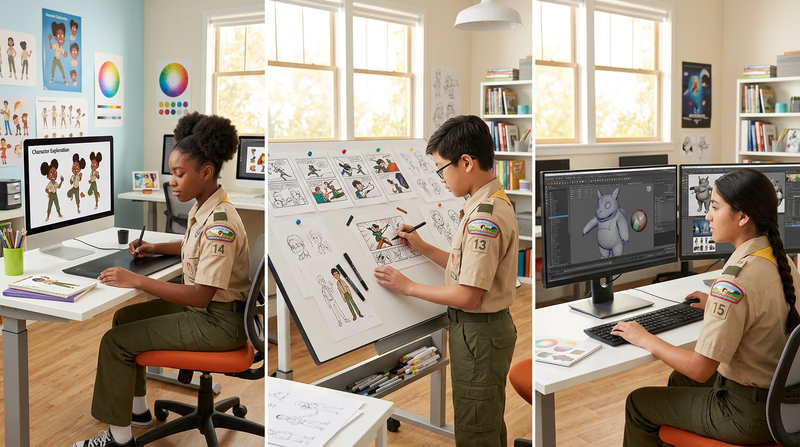
Animation is a massive industry with roles for artists, technicians, storytellers, and everything in between. Below are several career paths to explore. You need to learn about three and go deep on one.
Character Animator
Character animators are the people who make characters move, emote, and feel alive. They are the actors of the animation world — they decide how a character walks, reacts, and expresses emotion through movement.
- Day-to-day: Receive a scene from the director, study the storyboard and voice recording, then create the character’s performance frame by frame.
- Skills needed: Strong understanding of the 12 principles, acting ability, observation of human and animal movement, drawing or 3D software skills.
- Education: A bachelor’s degree in animation, fine arts, or a related field is common. Many animators also attend specialized animation schools like CalArts, Ringling College, or Sheridan College. A strong portfolio matters more than the degree itself.
- Salary range: $50,000–$100,000+ depending on experience and studio.
Storyboard Artist
Storyboard artists translate scripts into visual sequences — they draw the “comic book version” of a film before any animation begins. Their work determines the camera angles, pacing, and visual storytelling of every scene.
- Day-to-day: Read the script, sketch rough sequences (boards), pitch them to the director in review sessions, and revise based on feedback.
- Skills needed: Strong drawing skills, storytelling instincts, understanding of cinematography and composition, ability to work fast.
- Education: A degree in animation, illustration, or film. Some storyboard artists come from comic book or graphic novel backgrounds. A portfolio of sequential art is essential.
- Salary range: $55,000–$95,000+.
3D Modeler
3D modelers build the digital objects, characters, and environments that populate animated films and video games. They sculpt virtual forms using specialized software, creating everything from a hero’s face to an entire alien cityscape.
- Day-to-day: Receive concept art from designers, build the 3D model in software like Maya, ZBrush, or Blender, refine surface details, and hand off to riggers and texture artists.
- Skills needed: Strong understanding of form, anatomy, and proportion. Proficiency in 3D modeling software. Attention to detail.
- Education: A degree in 3D animation, computer graphics, or game design. Self-taught modelers with strong portfolios can also enter the field. Online courses and tutorials are widely available.
- Salary range: $50,000–$90,000+.
Motion Graphics Designer
Motion graphics designers animate text, logos, shapes, and data for commercials, title sequences, apps, and social media. If you have ever watched a slick opening title for a TV show or an animated infographic on the news, a motion graphics designer made it.
- Day-to-day: Design and animate graphics using software like After Effects, Cinema 4D, or Figma. Work with clients to communicate messages visually.
- Skills needed: Graphic design fundamentals, typography, color theory, animation principles, software proficiency.
- Education: A degree in graphic design, visual communication, or animation. This field is especially open to self-taught professionals with strong demo reels.
- Salary range: $45,000–$85,000+.
Technical Director (TD)
Technical directors solve the hard engineering problems in animation. How do you make digital hair blow in the wind? How do you simulate an ocean wave? How do you make cloth drape realistically on a moving character? TDs write code and build tools that make all of that possible.
- Day-to-day: Write scripts and tools for animators, troubleshoot rendering problems, develop custom effects (water, fire, fur, cloth), and optimize pipelines.
- Skills needed: Programming (Python, C++, MEL), understanding of physics and mathematics, problem-solving mindset, familiarity with animation software.
- Education: A degree in computer science, computer graphics, or technical animation. Strong programming skills are essential.
- Salary range: $70,000–$120,000+.
Game Animator
Game animators create the movement for characters and objects in video games. Unlike film animation, game animation must be interactive — characters react in real time to player input, so animations need to blend seamlessly and loop smoothly.
- Day-to-day: Create walk cycles, attack animations, idle poses, and transition animations. Work closely with game designers and programmers to ensure animations feel responsive.
- Skills needed: Understanding of game engines (Unity, Unreal Engine), animation principles, rigging basics, ability to create animations that work in a real-time interactive environment.
- Education: A degree in game design, animation, or computer science. Many game animators build skills through game jams (short game-building competitions) and personal projects.
- Salary range: $50,000–$95,000+.
How to Research Your Chosen Career
Career Research Checklist
For the career you choose to go deep on
- What is the typical education path? (Degree type, schools known for this specialty)
- What software or tools does this role use?
- What does a typical day look like?
- What is the job outlook? Is demand growing?
- What entry-level positions lead into this career?
- What does a strong portfolio for this role include?
- Why does this career interest you personally?
You have explored careers in animation and researched one in depth. Now let’s go beyond the badge and discover ways to keep growing as an animator.