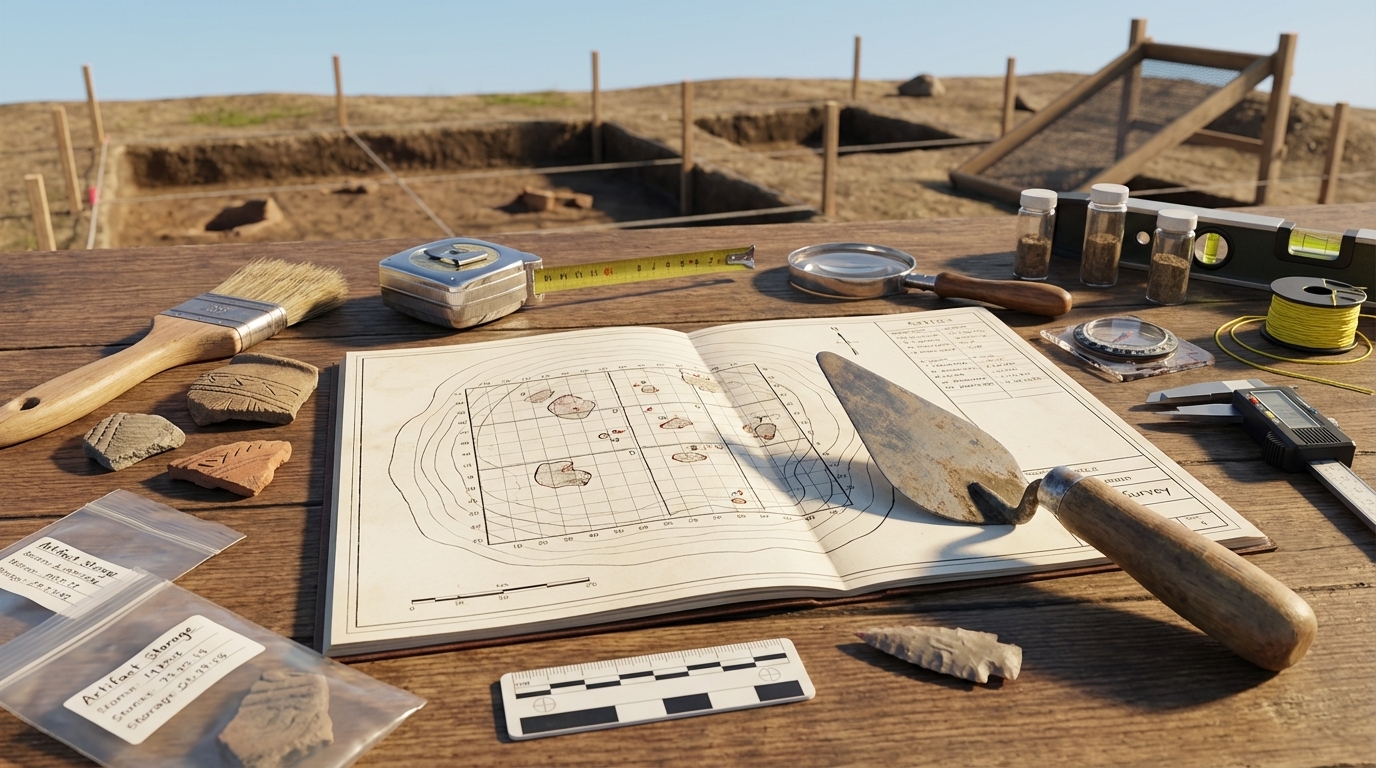
 Getting Started
Introduction & Overview
Imagine finding a 2,000-year-old cooking pot buried in the dirt — and being able to figure out what people ate, how they lived, and what mattered to them, all from that single object. That is the power of archaeology. It turns ordinary things — broken pottery, stone tools, crumbling walls — into windows on the past.
The Archaeology merit badge will introduce you to the science of uncovering human history through the things people left behind. You will learn how archaeologists find and study sites, how they figure out how old things are, and why protecting these places matters for everyone.
Then and Now
Then — Digging for Treasure
For centuries, people dug up ancient objects for glory and profit. In the 1800s, wealthy adventurers like Heinrich Schliemann blasted through layers of ancient Troy searching for gold. Howard Carter’s discovery of King Tutankhamun’s tomb in 1922 made headlines around the world. These early excavations were thrilling, but they often destroyed the very evidence that makes archaeology valuable. Context — where an object was found, what was next to it, what layer of soil it came from — was lost forever.
- Purpose: Find spectacular objects for personal collections or museums
- Mindset: The artifact is the prize; the dirt is in the way
Now — Reading the Story in the Soil
Modern archaeology is a careful, methodical science. Today’s archaeologists use tools like ground-penetrating radar, LiDAR (laser scanning from aircraft), and even ancient DNA analysis to study the past without destroying it. Every speck of soil is recorded. Every artifact is mapped in three dimensions. The goal is not to find treasure — it is to answer questions about how people lived, what they believed, and how cultures changed over time.
- Purpose: Understand past human behavior and cultures
- Mindset: Every detail matters; the context tells the story
Get Ready! You are about to become a detective of the past. Grab your trowel, your notebook, and your curiosity — the story of humanity is waiting to be uncovered.
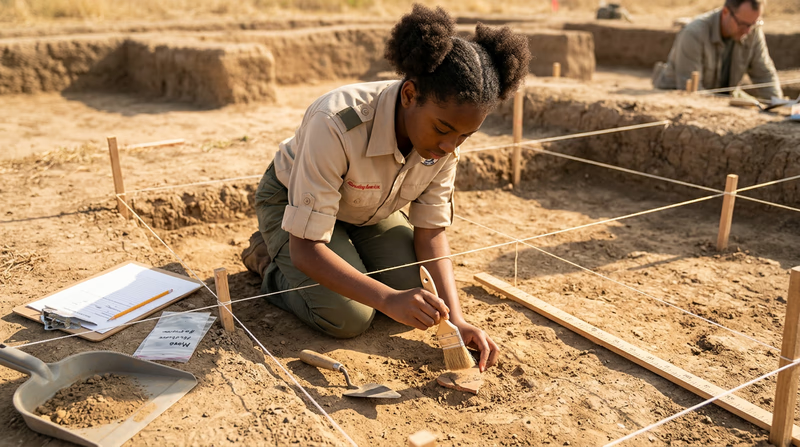
Kinds of Archaeology
Archaeology is not just one thing. Different branches focus on different time periods, places, and methods. Here is a look at the major types you might encounter.
Prehistoric Archaeology
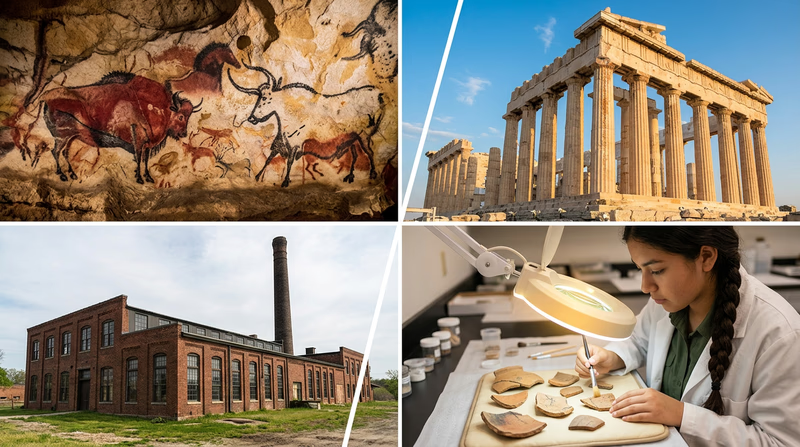
Prehistoric archaeology studies people who lived before the invention of writing. Since there are no written records, everything we know about these cultures comes from physical evidence — stone tools, cave paintings, animal bones, and the remains of shelters. This branch covers the vast majority of human history, stretching back millions of years.
Historical Archaeology
Historical archaeology studies periods and places where written records exist. Archaeologists compare what documents say happened with what the physical evidence actually shows. Sometimes the two tell very different stories. This branch often reveals the lives of ordinary people — enslaved workers, immigrants, laborers — whose experiences were rarely recorded in official documents.
Classical Archaeology
Classical archaeology focuses on the ancient civilizations of Greece and Rome. It studies temples, amphitheaters, sculptures, and everyday objects to understand these influential cultures. Many of the world’s most famous archaeological sites — the Parthenon, Pompeii, the Roman Forum — fall under this branch.
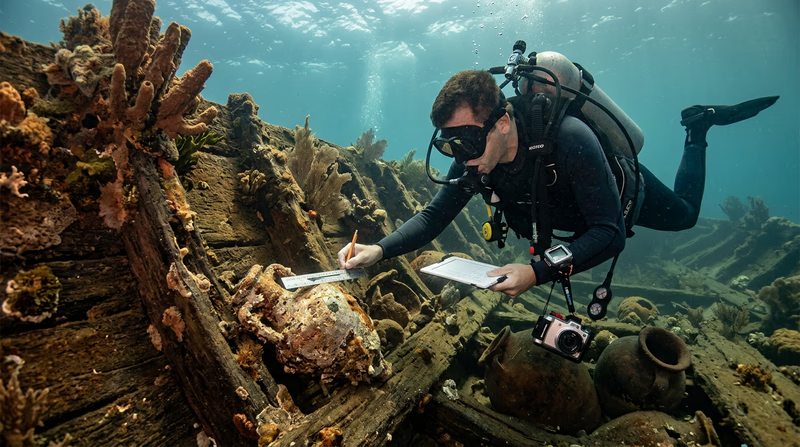
Underwater and Maritime Archaeology
When ships sank, entire snapshots of life went to the bottom with them. Underwater archaeologists use scuba gear, remotely operated vehicles, and sonar to study shipwrecks, submerged cities, and ancient harbors. The cold, dark water often preserves materials that would have rotted away on land.
Industrial Archaeology
Not all archaeology is ancient. Industrial archaeology studies the buildings, machines, and landscapes of the Industrial Revolution and beyond — factories, mines, railroads, and canals. It helps us understand how technology changed the way people worked and lived in the last few centuries.
Forensic Archaeology
Forensic archaeologists use excavation and analysis techniques to help solve crimes. They work alongside law enforcement to recover evidence from buried scenes, identify human remains, and reconstruct events. Their careful methods — the same ones used at ancient sites — ensure that evidence is properly documented and preserved for court.
Now let’s dig into the requirements for the Archaeology merit badge!