Archaeology Merit Badge — Complete Digital Resource Guide
https://merit-badge.university/merit-badges/archaeology/guide/
Introduction & Overview
Imagine finding a 2,000-year-old cooking pot buried in the dirt — and being able to figure out what people ate, how they lived, and what mattered to them, all from that single object. That is the power of archaeology. It turns ordinary things — broken pottery, stone tools, crumbling walls — into windows on the past.
The Archaeology merit badge will introduce you to the science of uncovering human history through the things people left behind. You will learn how archaeologists find and study sites, how they figure out how old things are, and why protecting these places matters for everyone.
Then and Now
Then — Digging for Treasure
For centuries, people dug up ancient objects for glory and profit. In the 1800s, wealthy adventurers like Heinrich Schliemann blasted through layers of ancient Troy searching for gold. Howard Carter’s discovery of King Tutankhamun’s tomb in 1922 made headlines around the world. These early excavations were thrilling, but they often destroyed the very evidence that makes archaeology valuable. Context — where an object was found, what was next to it, what layer of soil it came from — was lost forever.
- Purpose: Find spectacular objects for personal collections or museums
- Mindset: The artifact is the prize; the dirt is in the way
Now — Reading the Story in the Soil
Modern archaeology is a careful, methodical science. Today’s archaeologists use tools like ground-penetrating radar, LiDAR (laser scanning from aircraft), and even ancient DNA analysis to study the past without destroying it. Every speck of soil is recorded. Every artifact is mapped in three dimensions. The goal is not to find treasure — it is to answer questions about how people lived, what they believed, and how cultures changed over time.
- Purpose: Understand past human behavior and cultures
- Mindset: Every detail matters; the context tells the story
Get Ready! You are about to become a detective of the past. Grab your trowel, your notebook, and your curiosity — the story of humanity is waiting to be uncovered.
Kinds of Archaeology
Archaeology is not just one thing. Different branches focus on different time periods, places, and methods. Here is a look at the major types you might encounter.
Prehistoric Archaeology
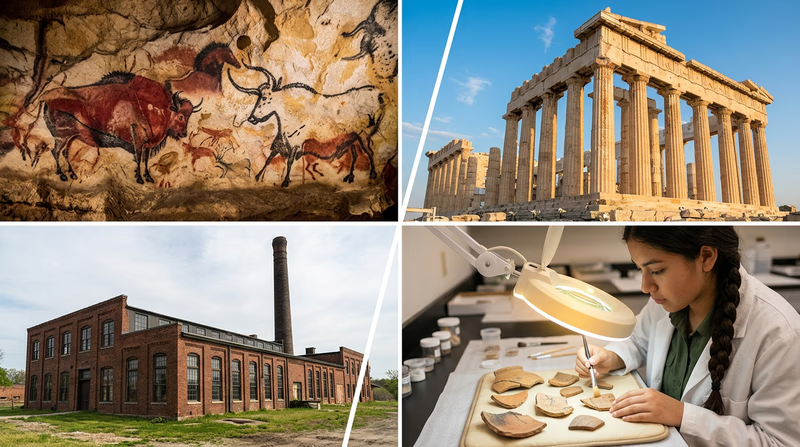
Prehistoric archaeology studies people who lived before the invention of writing. Since there are no written records, everything we know about these cultures comes from physical evidence — stone tools, cave paintings, animal bones, and the remains of shelters. This branch covers the vast majority of human history, stretching back millions of years.
Historical Archaeology
Historical archaeology studies periods and places where written records exist. Archaeologists compare what documents say happened with what the physical evidence actually shows. Sometimes the two tell very different stories. This branch often reveals the lives of ordinary people — enslaved workers, immigrants, laborers — whose experiences were rarely recorded in official documents.
Classical Archaeology
Classical archaeology focuses on the ancient civilizations of Greece and Rome. It studies temples, amphitheaters, sculptures, and everyday objects to understand these influential cultures. Many of the world’s most famous archaeological sites — the Parthenon, Pompeii, the Roman Forum — fall under this branch.
Underwater and Maritime Archaeology
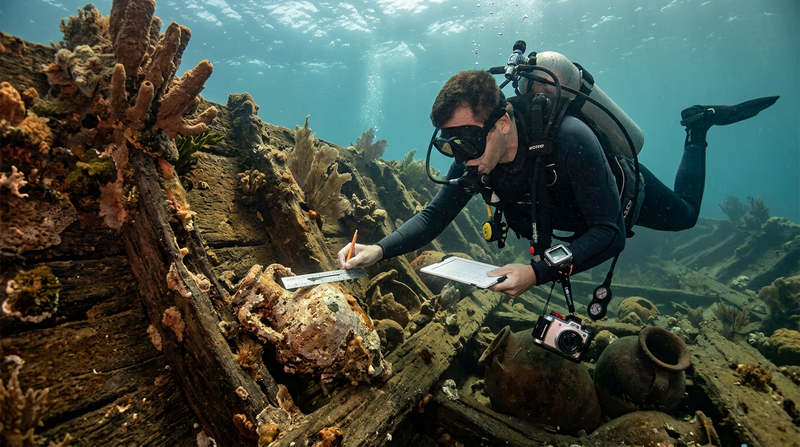
When ships sank, entire snapshots of life went to the bottom with them. Underwater archaeologists use scuba gear, remotely operated vehicles, and sonar to study shipwrecks, submerged cities, and ancient harbors. The cold, dark water often preserves materials that would have rotted away on land.
Industrial Archaeology
Not all archaeology is ancient. Industrial archaeology studies the buildings, machines, and landscapes of the Industrial Revolution and beyond — factories, mines, railroads, and canals. It helps us understand how technology changed the way people worked and lived in the last few centuries.
Forensic Archaeology
Forensic archaeologists use excavation and analysis techniques to help solve crimes. They work alongside law enforcement to recover evidence from buried scenes, identify human remains, and reconstruct events. Their careful methods — the same ones used at ancient sites — ensure that evidence is properly documented and preserved for court.
Now let’s dig into the requirements for the Archaeology merit badge!
Req 1 — What Is Archaeology?
Archaeology is the study of past human life and cultures through physical evidence — the things people made, used, and left behind. Archaeologists dig up objects like pottery, tools, bones, and building foundations, but they are not just collecting cool stuff. They are piecing together the story of how people lived, what they believed, and how their world changed over time.
The key word is context. An arrowhead sitting in a display case is interesting. But an arrowhead found next to a fire pit, three feet underground, alongside deer bones and charcoal from a specific century — that tells a real story. Archaeologists care as much about where something was found as what it is.
How Archaeology Relates to Other Fields
Archaeology does not work alone. It overlaps with several other fields, and understanding those connections will help you see the bigger picture.
Anthropology is the broad study of human cultures and societies — past and present. Archaeology is actually a branch of anthropology in the United States. While a cultural anthropologist might live with a community today to study their traditions, an archaeologist studies communities that may have existed thousands of years ago by examining what they left in the ground.
History studies the past through written records — letters, books, government documents, newspapers. Archaeology picks up where history leaves off. For periods and places with no written records (most of human existence), archaeology is the only way to learn about the past. Even when written records exist, archaeology often reveals truths that documents missed or deliberately left out.
Geology is the study of the Earth — its rocks, minerals, and physical processes. Archaeologists rely heavily on geology. The layers of soil (called stratigraphy) at a dig site work like the pages of a book: deeper layers are older. Geologists also help archaeologists understand ancient landscapes, climate changes, and where people might have found raw materials for their tools.
Paleontology studies ancient life through fossils — mostly animals and plants that lived millions of years ago, long before modern humans existed. This is where many people get confused. If it is a dinosaur bone, that is paleontology. If it is a human-made tool found near an ancient campfire, that is archaeology. The simple dividing line: paleontology studies life forms; archaeology studies human-made things and human behavior.
Archaeology vs. Artifact Collecting and Treasure Hunting
This distinction is critical, and your counselor will want you to understand it clearly.
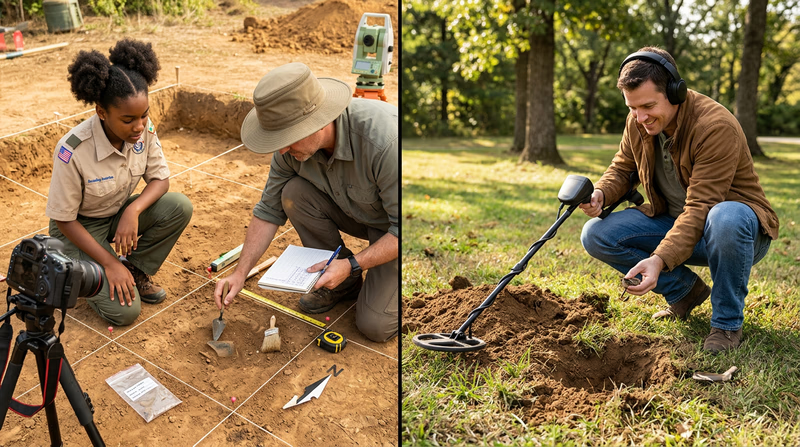
Artifact collectors and treasure hunters remove objects from the ground for personal enjoyment or profit. They might use metal detectors to find coins, dig up arrowheads to display on a shelf, or search for gold in old shipwrecks to sell. The object itself is all that matters to them.
Archaeologists study objects in place — recording exactly where each item was found, what surrounded it, and what layer of soil it came from. When an artifact is ripped out of the ground without this documentation, its story is lost forever. It becomes just a pretty object with no scientific value.
Here is a quick comparison:
| Archaeologist | Artifact Collector / Treasure Hunter | |
|---|---|---|
| Goal | Answer questions about past human life | Find and keep interesting objects |
| Method | Systematic excavation with detailed records | Digging or detecting without documentation |
| Context | Records every detail about where and how objects were found | Often ignores context |
| Legal | Works under permits and follows laws | May violate federal and state laws |
| Result | Knowledge shared with the public | Objects go into private collections |
Req 2 — The Archaeological Process
Archaeology is not just digging holes and hoping to find something cool. It is a structured, step-by-step scientific process. Every archaeological project follows the same basic sequence, and each step builds on the one before it. Let’s walk through each stage.
Step 1: Site Location
Before archaeologists can study a site, they have to find one. Sometimes sites are discovered by accident — a farmer plowing a field might turn up pottery, or a construction crew might uncover old foundations. But archaeologists also actively search for sites using several methods:
- Pedestrian survey — Walking across the landscape, scanning the ground for artifacts or features like mounds, depressions, or old walls.
- Aerial photography and satellite imagery — Patterns invisible from the ground often show up from above. Crop marks, soil discoloration, and shadow lines can reveal buried structures.
- LiDAR — Laser scanning from aircraft can “see through” forest cover and reveal ancient earthworks, roads, and building foundations hidden for centuries.
- Oral history and historical records — Local stories, old maps, and written accounts often point archaeologists to promising locations.
Step 2: Background Research and Research Design
Once a site is located, archaeologists do their homework before they ever touch a shovel. This step involves:
- Reviewing existing records — Has anyone studied this area before? What did they find? Are there historical documents, old photos, or previous archaeological reports?
- Studying the environment — What is the local geology? What plants and animals live in the area? What was the climate like in the past?
- Forming research questions — Good archaeology starts with a question. “Who lived here?” “What did they eat?” “How did they interact with neighboring groups?” These questions guide every decision that follows.
- Writing a research design — This is the project’s game plan. It spells out what the team wants to learn, how they plan to find out, what methods they will use, and how long the project will take.
Step 3: Site Survey and Fieldwork
This is the part most people picture when they think of archaeology — the actual digging. But fieldwork is far more methodical than it looks on TV.
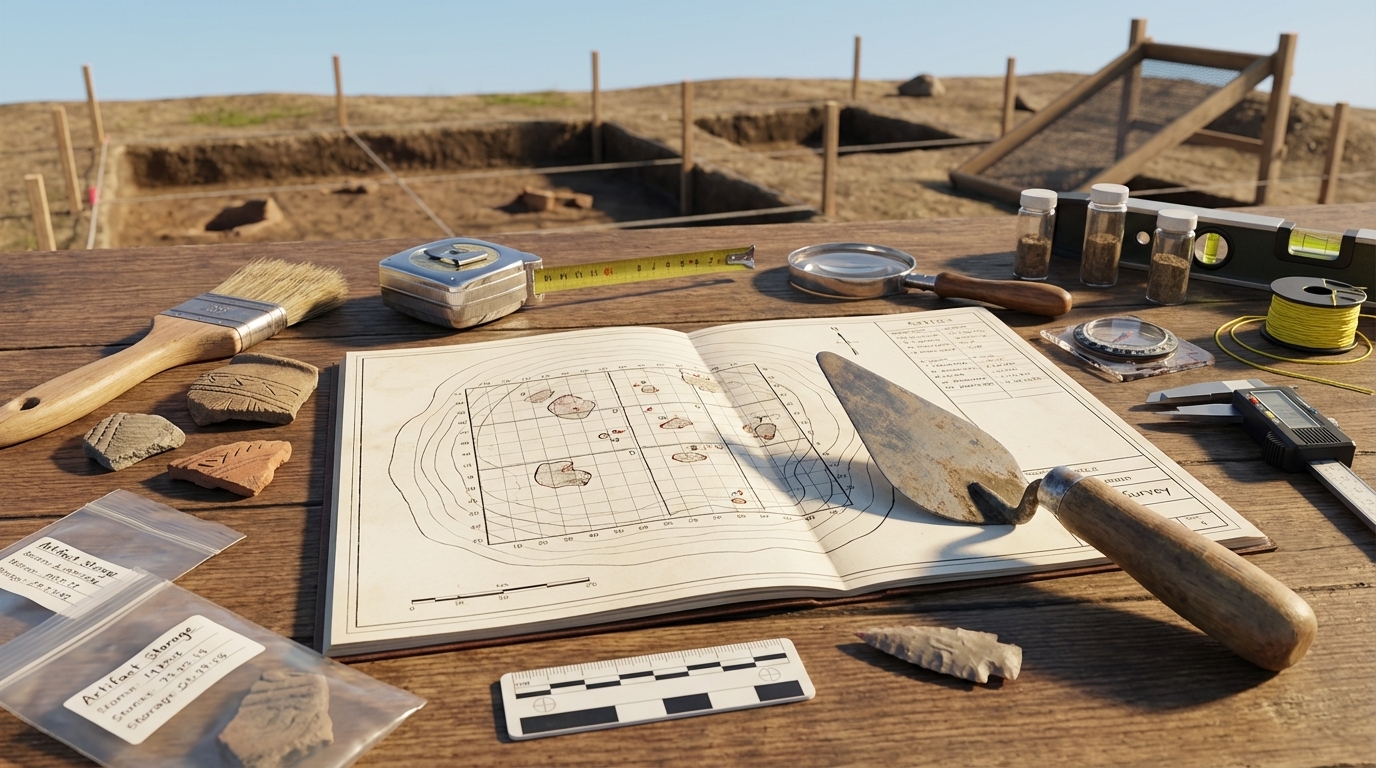
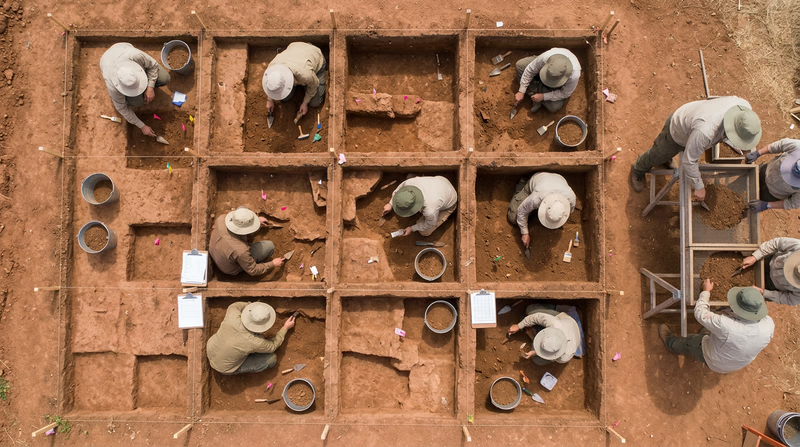
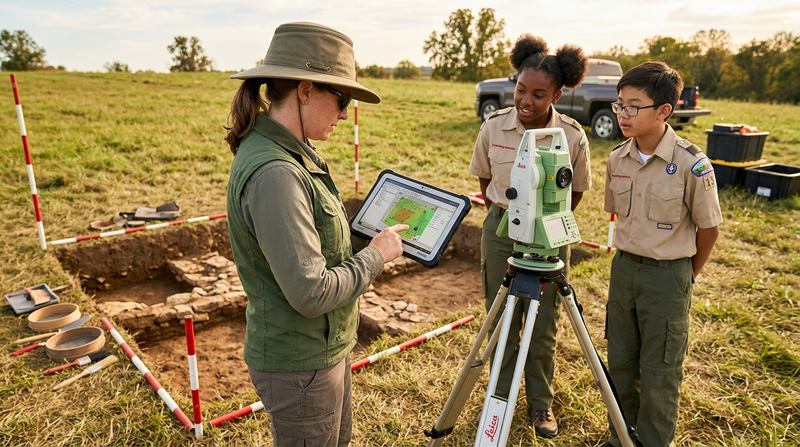
Survey comes first. The team maps the entire site, often using GPS and total stations (precision measuring instruments). They lay out a grid system — usually in one-meter squares — so every find can be pinpointed to an exact location.
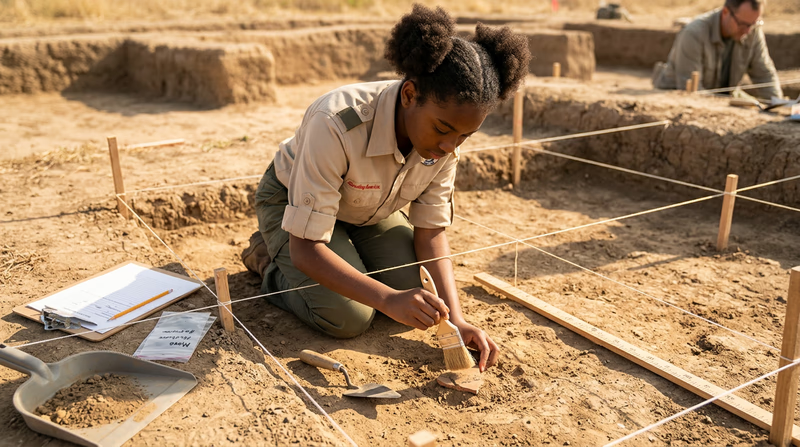
Excavation follows. Archaeologists remove soil one thin layer at a time, using trowels, brushes, and even dental picks for delicate work. Every layer (called a stratum) is documented with photographs, drawings, and detailed notes. Soil samples are collected and screened through mesh to catch tiny artifacts like beads, seeds, or bone fragments.
Step 4: Artifact Identification and Examination
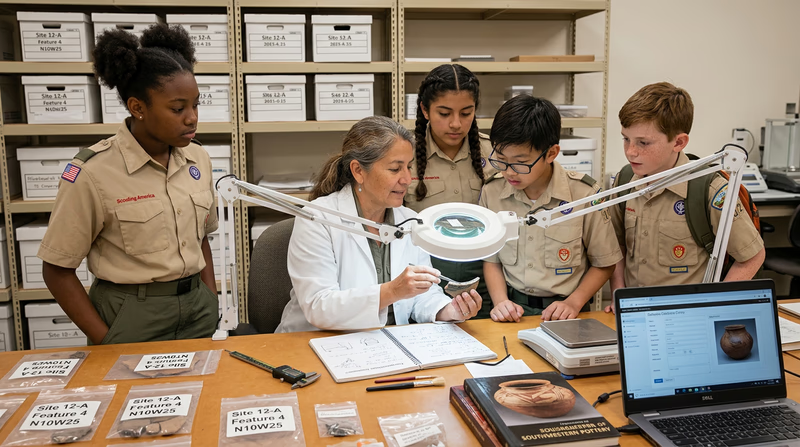
After artifacts are removed from the ground, the real detective work begins in the laboratory. Each object is:
- Cleaned — Carefully washed or dry-brushed, depending on the material.
- Cataloged — Assigned a unique number and entered into a database with its exact location, depth, and associated features.
- Identified — What is it? A piece of pottery? A stone tool? An animal bone? What material is it made from?
- Analyzed — Specialists examine artifacts using microscopes, chemical tests, X-rays, and other technologies. A ceramics expert might identify which clay source was used. A lithics specialist might determine how a stone tool was made.
Step 5: Interpretation
Interpretation is where all the data comes together into a story. Archaeologists look at all their evidence — artifacts, soil layers, site layout, laboratory results, dating information — and ask: What does this all mean?
This step requires creative thinking and careful reasoning. A cluster of burned stones, charcoal, and animal bones might be interpreted as a cooking area. Dozens of arrowheads near a river crossing might suggest a hunting camp. But interpretations must always be supported by evidence, and archaeologists often propose multiple possible explanations.
Step 6: Preservation
Archaeology is inherently destructive — once a site is excavated, it can never be put back the way it was. That makes preservation essential at every stage.
- In-situ preservation — Sometimes the best decision is to not dig. Leaving a site undisturbed for future archaeologists with better technology is a responsible choice.
- Artifact conservation — Recovered objects must be stabilized and stored properly. Metal artifacts might need chemical treatment to stop rust. Organic materials like wood or textiles need controlled temperature and humidity.
- Record keeping — Detailed notes, photographs, maps, and databases ensure the information survives even if the artifacts eventually deteriorate.
Step 7: Information Sharing
Archaeology belongs to everyone. The final step in the process is sharing what was learned with both the scientific community and the public.
- Academic publications — Research papers and reports are published in journals so other scholars can review and build on the findings.
- Public outreach — Museum exhibits, public lectures, school programs, websites, and documentaries bring archaeology to life for non-specialists.
- Descendant communities — When sites are connected to living communities (especially Indigenous peoples), archaeologists have a responsibility to share findings and collaborate respectfully.
Req 3 — Dating the Past
One of the first questions anyone asks about an archaeological discovery is: “How old is it?” Figuring out the age of a site, a structure, or an artifact is one of the most important — and most fascinating — parts of archaeology. Archaeologists use two broad categories of dating methods: relative dating and absolute dating.
Relative Dating — Older or Younger?
Relative dating tells you which things are older or younger than other things, but it does not give you an exact date. Think of it like sorting a stack of family photos by who looks youngest — you can put them in order without knowing the exact year each photo was taken.
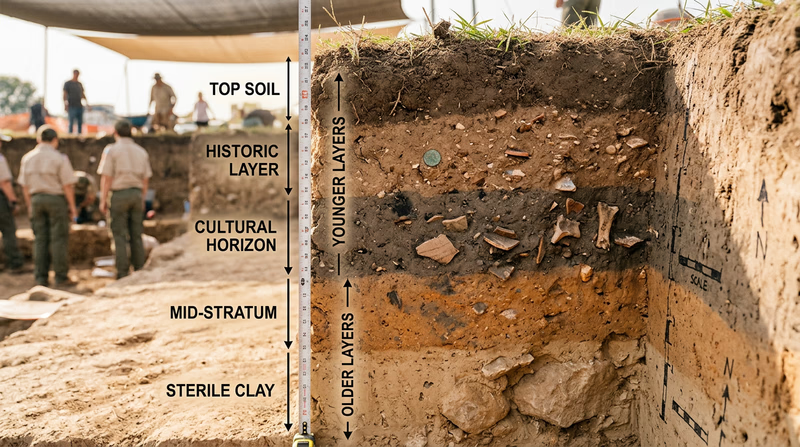
Stratigraphy is the most fundamental relative dating method. It is based on a simple principle: in undisturbed soil, deeper layers are older than layers above them. Imagine stacking pancakes on a plate — the first pancake you put down is on the bottom. When archaeologists dig through layers of soil (called strata), they know that artifacts found in deeper layers are generally older than those found closer to the surface.
Seriation is another relative dating technique. It tracks how the style of an artifact changes over time. For example, if you lined up cell phones from the last 20 years, you could put them in order based on size, shape, and features — even without knowing the exact year each model was released. Archaeologists do the same thing with pottery styles, tool shapes, and other artifacts.
Absolute Dating — How Old Exactly?
Absolute dating gives you an actual age — a number in years (or a range of years). This is much more precise than relative dating, but it usually requires special technology and laboratory analysis.
Radiocarbon dating (Carbon-14 dating) is the most well-known absolute dating method. Here is how it works: all living things absorb a radioactive form of carbon called Carbon-14 (C-14) from the atmosphere while they are alive. When an organism dies, it stops absorbing C-14, and the C-14 it already has slowly decays at a known, steady rate. By measuring how much C-14 remains in an organic sample (wood, bone, charcoal, seeds), scientists can calculate how long ago the organism died.
Radiocarbon dating works on materials up to about 50,000 years old. For anything older, archaeologists need other methods.
Dendrochronology (tree-ring dating) uses the annual growth rings of trees to establish precise dates. In good growing years, trees produce wide rings. In drought years, the rings are narrow. By matching ring patterns from living trees to those in old wood (from ancient buildings, for example), scientists have built continuous tree-ring records stretching back thousands of years. If a piece of wood from an archaeological site matches a known ring pattern, it can be dated to the exact year the tree was cut down.
Other Dating Methods
While stratigraphy, radiocarbon dating, and dendrochronology are the methods you will encounter most often, archaeologists have several other tools in their toolkit:
- Thermoluminescence (TL) — Measures the last time certain minerals (in pottery or burned stone) were heated. Useful for dating ceramics and hearths.
- Potassium-Argon dating — Used on volcanic rocks and extremely old sites. This method helped date some of the earliest human ancestor sites in Africa to millions of years ago.
- Obsidian hydration — Measures the amount of water absorbed by the surface of obsidian (volcanic glass) tools since they were made. The thicker the hydration layer, the older the tool.
Putting It All Together
In practice, archaeologists rarely rely on a single dating method. They combine relative and absolute techniques to cross-check their results. Stratigraphy might tell them that Layer A is older than Layer B. Radiocarbon dating of charcoal from Layer A might confirm it dates to around 3000 BCE. Pottery seriation might further support the timeline. The more lines of evidence that agree, the more confident archaeologists can be about their dates.
Req 4a — Researching Archaeological Sites
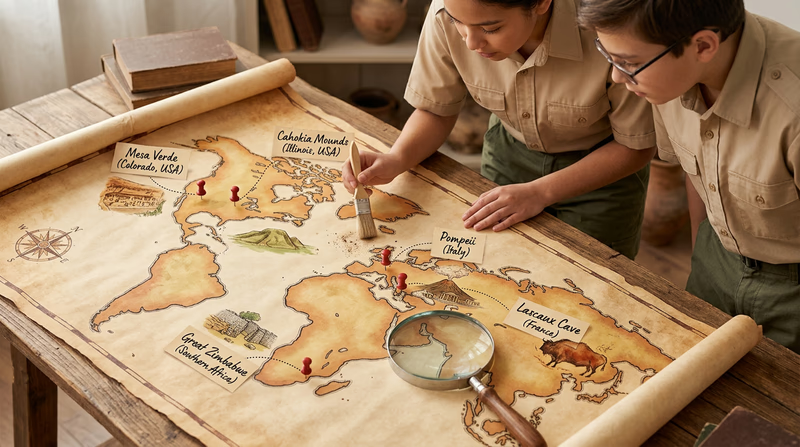
For this requirement, you need to research a combined total of five archaeological sites — some inside the United States and some outside. Below, you will find a selection of well-known sites to help you get started. You do not have to use these exact sites — they are examples to show you the kind of information you should look for. Pick sites that genuinely interest you.
What to Research for Each Site
For every site you choose, you should be able to answer these questions:
Site Research Guide
Cover these points for each of your five sites- Where is it? Find it on a map and note its country, region, and geographic setting.
- How was it discovered? Was it found by accident, through survey, or through historical records?
- What time period does it represent? How old is the site compared to your other choices?
- What have archaeologists found there? Describe key artifacts, structures, or features.
- What questions does it help answer? What have we learned about past people from this site?
- Why does it matter today? How does this knowledge affect modern communities, laws, or understanding?
Example Sites in the United States
Mesa Verde, Colorado — This cliff dwelling complex in southwestern Colorado was home to Ancestral Puebloan people from about 600 CE to 1300 CE. Cowboys and ranchers noticed the structures in the cliffs in the 1880s, and systematic archaeological study began soon after. The site preserves hundreds of stone dwellings built into natural rock alcoves, along with pottery, tools, and evidence of farming. Mesa Verde helps answer questions about how communities adapted to a challenging environment and why they eventually moved away — possibly due to prolonged drought.
Cahokia Mounds, Illinois — Located near present-day St. Louis, Cahokia was the largest pre-Columbian city north of Mexico. At its peak around 1100 CE, it may have had a population of 20,000 people. The site features massive earthen mounds (including Monks Mound, which is 100 feet tall), a wooden solar calendar called “Woodhenge,” and evidence of long-distance trade networks. Cahokia challenges the common assumption that pre-contact North America was sparsely populated and shows that complex urban societies thrived here.
Jamestown, Virginia — The first permanent English settlement in North America (1607). Archaeologists rediscovered the original fort site in 1994 after it had been considered lost for centuries. Excavations have uncovered over two million artifacts, revealing the harsh realities of early colonial life — including evidence of starvation, conflict, and adaptation.
Example Sites Outside the United States
Pompeii, Italy — In 79 CE, the eruption of Mount Vesuvius buried this Roman city under meters of volcanic ash, preserving it almost perfectly. Rediscovered in 1748, Pompeii provides an extraordinary snapshot of daily life in the ancient Roman world — complete with houses, shops, bakeries, baths, and even graffiti on the walls.
Great Zimbabwe, Southern Africa — A massive stone-walled complex built between the 11th and 15th centuries CE. European explorers in the 1800s refused to believe it was built by African people, but archaeological evidence clearly shows it was the capital of a thriving Shona civilization. Great Zimbabwe is an important example of how archaeology can correct historical prejudices.
Lascaux Cave, France — Discovered in 1940 by four teenagers and their dog, Lascaux contains some of the most spectacular prehistoric cave paintings in the world, dating to about 17,000 years ago. The paintings depict bulls, horses, deer, and abstract symbols, offering a window into the minds and lives of Ice Age people.
Comparing Ages
When you present your five sites to your counselor, arrange them from oldest to youngest. This comparison helps illustrate the enormous span of human history that archaeology covers. A conversation about Lascaux (17,000 years old), Mesa Verde (1,400 years old), and Jamestown (400 years old) shows how different the human story looks at different points in time.
Req 4b — Presenting Your Findings
You have done the research — now it is time to share what you learned. Giving a presentation is a skill that archaeologists use all the time. Whether they are speaking at a conference, leading a museum tour, or teaching a class, archaeologists need to communicate their discoveries in a way that gets people excited about the past.
Picking Your Site
Choose the site that excites you the most. Your enthusiasm will come through in your presentation and keep your audience engaged. If you found something surprising or fascinating during your research, that is probably the site to pick.
Structuring Your Presentation
A strong presentation follows a simple structure. Aim for 5–10 minutes — long enough to cover the essentials, short enough to keep your audience’s attention.
Presentation Outline
Follow this structure for a clear, organized talk- Hook: Start with a surprising fact, a dramatic moment from the site’s discovery, or a question to the audience.
- Introduction: Name the site, point it out on a map, and give a brief overview of what it is.
- Discovery story: How was this site found? Who found it? When?
- Key findings: What have archaeologists discovered there? Focus on 2–3 interesting artifacts or features.
- Why it matters: What questions does this site answer? Why should your audience care?
- Conclusion: Wrap up with a memorable takeaway — something your audience will remember.
Tips for a Great Presentation
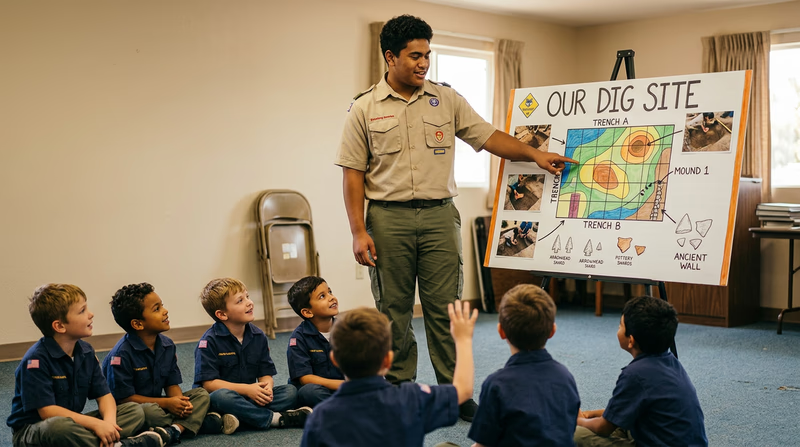
Use visuals. Show photos, maps, or drawings. A picture of the Cliff Palace at Mesa Verde or the cave paintings at Lascaux will capture attention better than words alone. You can print images, create a poster, or use a slideshow.
Tell a story. Archaeology is full of great stories — accidental discoveries, mysteries solved, surprising connections between past and present. Frame your presentation as a narrative, not a list of facts.
Practice out loud. Reading from a script sounds flat. Instead, know your material well enough to talk about it naturally. Use note cards with key points as reminders, not a full script.
Engage your audience. Ask a question at the beginning: “Who has heard of Pompeii?” or “What do you think people ate 1,000 years ago?” If presenting to Cub Scouts, keep your language simple and include hands-on elements if possible — maybe pass around a photo or a replica artifact.
Tailoring to Your Audience
| Audience | Tips |
|---|---|
| Cub Scouts | Keep it simple, use big visuals, include a hands-on activity or Q&A game |
| Scout Troop | Go a bit deeper, connect to outdoor skills (navigation, observation), relate to other merit badges |
| School Class | Connect to subjects they are studying (world history, geography, science) |
| Other Group | Focus on the “why it matters” angle — how archaeology connects to their community or interests |
Req 5 — Laws That Protect Sites
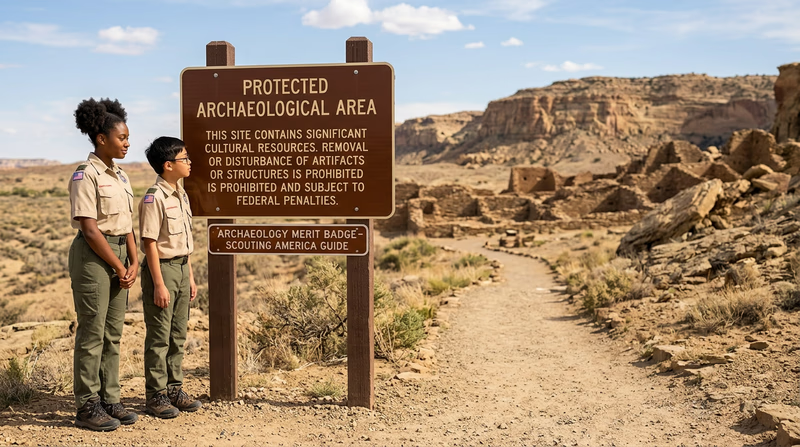
Archaeological sites are fragile and irreplaceable. Once a site is destroyed — whether by looters, construction, or neglect — the information it held is gone forever. That is why governments around the world have passed laws to protect these places, and why organizations exist to enforce and advocate for those protections.
Major Federal Laws
The United States has several important laws that protect archaeological resources on public lands:
Antiquities Act of 1906 — The first federal law to protect archaeological sites. It gives the president the power to designate national monuments to protect sites of scientific or historic interest on federal land. It also makes it a crime to excavate or destroy antiquities on federal land without a permit.
National Historic Preservation Act (NHPA) of 1966 — Established the National Register of Historic Places and requires federal agencies to consider the effects of their projects on historic and archaeological sites. If a highway or dam project would disturb a site, the government must study the site first and try to minimize the damage.
Archaeological Resources Protection Act (ARPA) of 1979 — Strengthened protections for archaeological resources on public and tribal lands. ARPA makes it a federal crime to excavate, remove, or damage archaeological resources without a permit. Penalties can include heavy fines and imprisonment.
Native American Graves Protection and Repatriation Act (NAGPRA) of 1990 — Requires federal agencies and museums to return certain cultural items — including human remains, funerary objects, and sacred objects — to their affiliated Native American tribes. NAGPRA recognizes the deep connection between Indigenous peoples and their ancestral heritage.
International Conventions
Archaeological protection extends beyond national borders. Several international agreements help protect sites worldwide:
UNESCO World Heritage Convention (1972) — Countries that sign this treaty agree to identify, protect, and preserve cultural and natural heritage sites of “outstanding universal value.” There are more than 1,100 World Heritage Sites around the world, including archaeological sites like Machu Picchu, the Pyramids of Giza, and Mesa Verde.
1970 UNESCO Convention — Addresses the illegal import, export, and transfer of cultural property. It aims to prevent the international trade in looted artifacts by requiring countries to return stolen cultural objects.
Hague Convention (1954) — Protects cultural property during armed conflict. It was created after World War II, when countless archaeological sites, museums, and monuments were damaged or destroyed during the war.
State and Local Laws
Many states have their own laws that add protections beyond federal regulations. These vary widely but may include:
- State burial laws that protect unmarked graves and cemeteries
- State-level registers of historic places
- Environmental review requirements that include archaeological assessments before construction
- Restrictions on metal detecting on state lands
- Permit requirements for archaeological surveys on state property
Organizations That Protect Sites
For Requirement 5b, you need to identify an organization that helps protect archaeological sites. Here are several strong options at different levels:
National organizations:
- Society for American Archaeology (SAA) — The largest professional organization for archaeologists in the Americas. Advocates for site preservation, ethical practices, and public education.
- Archaeological Conservancy — A national nonprofit that acquires and preserves archaeological sites across the United States. They have permanently protected more than 570 sites.
- National Trust for Historic Preservation — Works to save historic places, including archaeological sites, through advocacy, education, and direct action.
International organizations:
- UNESCO — Through the World Heritage program, identifies and helps protect the world’s most significant cultural and natural sites.
- World Monuments Fund — Works to preserve endangered cultural heritage sites around the globe.
Local organizations:
- Your state may have a state archaeological society made up of professional and avocational (amateur) archaeologists who work together to study and protect local sites.
- Local historical societies and tribal historic preservation offices also play important roles in protecting sites in your community.
Req 6 — Being a Steward
You have learned about the laws and organizations that protect archaeological sites. Now it is time to think about your own role. Every person — including you — has the power to either protect or destroy the past. This requirement is about making the right choice.
Why Protecting Sites Matters
Archaeological sites are non-renewable resources. Unlike a forest that can regrow or a river that can be cleaned up, a destroyed archaeological site is gone forever. There are no backups. Here is why that matters:
Knowledge is at stake. Every archaeological site contains information about how people lived, what they invented, what they believed, and how cultures changed over time. When a site is damaged, that knowledge vanishes. Future generations lose the chance to learn from it.
Sites belong to everyone. Archaeological resources on public land are part of our shared heritage — they belong to all Americans, not to any individual. Looting or vandalizing a site is not just illegal; it is stealing from the public.
Communities are connected. Many archaeological sites are sacred to descendant communities, especially Indigenous peoples. Disturbing these sites can cause deep harm to living people whose ancestors created them.
Science keeps improving. Technology that does not exist today may one day reveal things from an archaeological site that we cannot imagine right now. Preserving sites for the future means future archaeologists — perhaps even you — can study them with tools we have not invented yet.
What to Do If You Find an Artifact
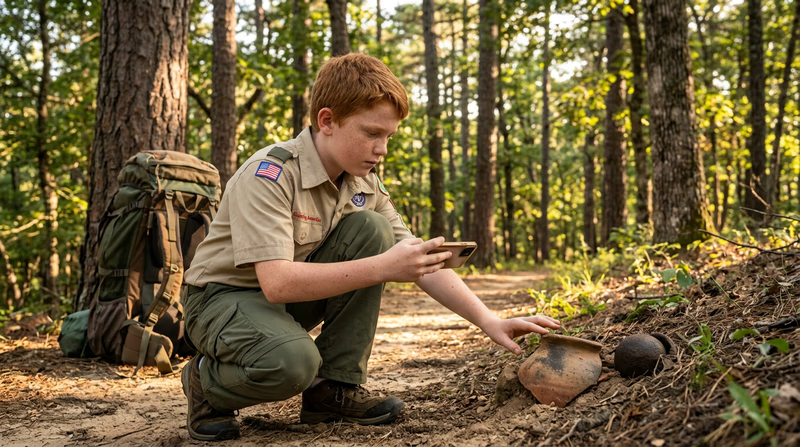
Imagine you are hiking and you spot something unusual in the dirt — a piece of old pottery, a stone that looks like a tool, or a coin with strange markings. What should you do?
If You Find an Artifact
Follow these steps — in this order- Stop and observe. Look carefully at what you found and the area around it. Are there other artifacts nearby? Note the location as precisely as you can.
- Do NOT pick it up. The moment you remove an artifact from its location, you destroy its context — the exact position, depth, and surrounding objects that give it meaning.
- Mark the location. Use a GPS device, phone, or landmark to record where you found it. Take photos from several angles, including wide shots showing the surrounding area.
- Report it. Contact your State Historic Preservation Office (SHPO), a local archaeological society, or the land management agency (NPS, BLM, Forest Service) responsible for the area.
- Leave it in place. Let the professionals decide what to do next. They may investigate the site, record it, or determine that it is already documented.
How You Can Be a Protector of the Past
You do not need a degree in archaeology to make a difference. Here are concrete ways you can protect archaeological heritage right now:
Respect the rules. When visiting parks, historic sites, and public lands, follow posted signs and regulations. Stay on trails. Do not climb on ruins or walls. Never take artifacts — even small ones — as souvenirs.
Spread the word. Teach your friends, family, and fellow Scouts why archaeological sites matter. Many people do not realize that picking up an arrowhead or digging at a site is both illegal and destructive. A simple conversation can change someone’s behavior.
Report vandalism and looting. If you see someone damaging a site, collecting artifacts without permission, or using metal detectors on protected land, report it to the land management agency or local law enforcement.
Volunteer. Many organizations offer opportunities to help with site monitoring, trail maintenance at historic sites, or public education programs. Contact your state archaeological society or local historical society to find opportunities near you.
Follow the Scout Outdoor Code. The principles of “Leave No Trace” and the Outdoor Code apply to cultural resources just as much as natural ones. Leave what you find, respect the past, and leave sites better than you found them.
Req 7 — Artifacts Tell Stories
This requirement gives you three ways to explore a core idea in archaeology: objects tell stories about the people who made and used them. Choose the option that works best for you, and read the guidance below to get the most out of the experience.
Option A: Visit a Museum
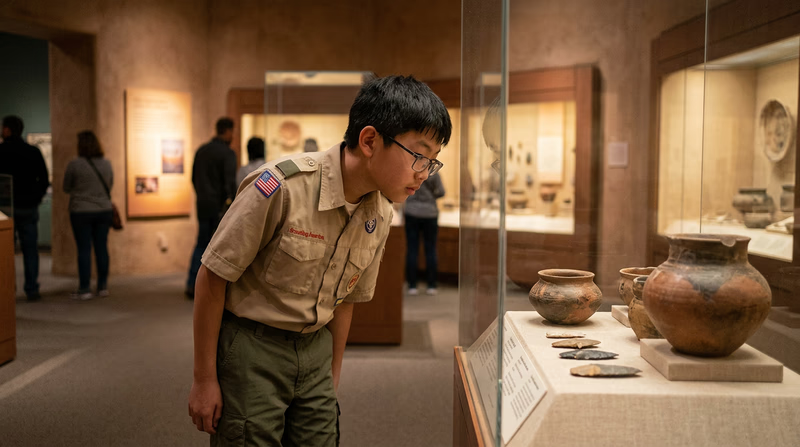
Museums are where archaeology meets the public. A well-designed exhibit does not just display objects behind glass — it uses those objects to tell a story about real people and their lives.
When you visit, pay attention to how the museum presents its artifacts:
Museum Visit Observation Guide
Look for these things during your visit- How are artifacts arranged? By time period, by theme, by culture, or by material?
- What context does the museum provide? Read the labels and panels — do they explain where the object was found and what it tells us?
- Are there reconstructions or models? These help visitors imagine what the original site or object looked like in its prime.
- How do artifacts support the story? Pick one exhibit and think about how removing the key artifacts would change the narrative.
- What is missing? Are there gaps in the story? Perspectives that aren’t represented?
Option B: Family Artifact / Heirloom
Every family has objects that carry history — a grandmother’s ring, a war medal, an old tool, a recipe book, a piece of furniture. These objects are artifacts in the truest sense. They connect you to your family’s past the same way archaeological artifacts connect us to ancient cultures.
When preparing to present your family artifact, think about these questions:
- What is it? Describe the object — its material, size, condition, and any markings or details.
- Who did it belong to? What do you know about the person who owned or made it?
- How old is it? Can you estimate when it was made or acquired?
- What story does it tell? What does this object reveal about your family’s history, values, or experiences?
- How has it been preserved? Has it been kept in a special place? Passed down through specific people?
- What would an archaeologist think? If someone found this object in 1,000 years with no other information, what could they figure out from the object alone?
Option C: Trash Analysis (Garbology)
This option might sound funny, but it is based on a real branch of archaeology. In the 1970s, archaeologist William Rathje launched the Tucson Garbage Project, systematically studying what people threw away to learn about modern consumption patterns. What he found often contradicted what people said they did. People reported eating healthy food but threw out junk food wrappers. People said they recycled, but recyclable materials filled their trash cans.
Your job for this option is simpler — but the idea is the same. For one week, keep a list of everything your family throws away (you do not need to dig through the trash; just keep a running log as items go into the bin).
Then think about what a future archaeologist would learn from your trash:
Trash Analysis Questions
Discuss these with your counselor- What materials are most common? (Plastic, paper, food waste, metal, glass?)
- What would survive 1,000 years? (Plastics and metals yes; food and paper mostly no.)
- What could an archaeologist conclude about your family’s diet from the food packaging?
- What technology do you use? (Broken electronics, batteries, charger cables?)
- How many people live in your household? Could an archaeologist figure that out from the trash?
- What would be completely invisible? (Digital purchases, streaming, online communication leaves no physical trace.)
Req 8 — Local History Research
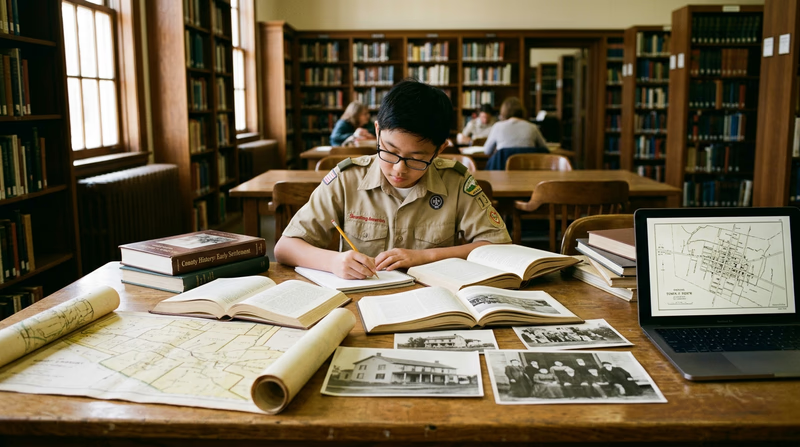
This requirement brings archaeology home — literally. Every place where people live today has a history that stretches back far longer than the current buildings, roads, and neighborhoods. Your job is to find and tell that story.
Who Lived in Your Area?
Start by thinking about who was in your region more than 100 years ago. Depending on where you live, this might include:
- Indigenous peoples who lived on the land for centuries or millennia before European contact
- Early colonial settlers — Spanish missionaries in the Southwest, English colonists on the East Coast, French fur traders in the Great Lakes region
- Immigrant communities — German, Irish, Chinese, Italian, African American, and many other groups who built communities across the country
- Enslaved peoples whose labor shaped the economy and landscape
- Mining, ranching, or farming communities that developed around natural resources
What to Research
The requirement lists specific topics. Here is a guide to help you think about each one:
Housing — What kind of homes did these people build? Were they permanent structures or temporary shelters? What materials did they use — wood, stone, adobe, animal hides? How were homes arranged — in villages, farms, or camps?
Clothing — What did they wear? Was their clothing made from local materials (animal skins, woven plant fibers) or traded goods (cloth, dyes)? How did clothing reflect social roles, seasons, or ceremonies?
Arts and crafts — What did they create? Look for pottery, beadwork, weaving, metalwork, woodcarving, or paintings. How do these items reflect their culture and values?
Tools — What tools did they use for daily life — cooking, farming, hunting, building? Were tools made from stone, bone, metal, or wood? How did their technology change over time?
Trade and markets — Did these people trade with neighboring groups? What goods were exchanged? Were there established trade routes? How far did trade networks extend?
Rituals and religions — What spiritual practices or ceremonies were part of their lives? Are there sacred sites in your area connected to these traditions?
Diets — What did they eat? Were they hunters, farmers, gatherers, or some combination? What plants and animals were available locally?
Relationships with neighbors — How did this group interact with other peoples in the area? Were relationships cooperative, competitive, or some mix of both?
What Would Archaeologists Find?
Once you have a picture of how these people lived, think like an archaeologist. If you could dig at a site where they lived, what would you expect to find in the ground?
Predicting Archaeological Evidence
Think about what survives underground- Stone, metal, and ceramic artifacts usually survive well.
- Organic materials (wood, cloth, food) may decay completely in most soils.
- Foundation stones, postholes, and fire pits leave permanent marks in the soil.
- Trash deposits (called “middens”) often contain the richest evidence of daily life.
- Burial sites may contain personal items, tools, and evidence of ritual practices.
- Trade goods from distant places indicate connections to other groups.
How They Influenced Your Community
The final part of this requirement asks you to connect past to present. Think about:
- Place names — Many cities, rivers, and landmarks carry names from Indigenous languages or early settlers. Do any names in your area have historical roots?
- Roads and routes — Modern highways sometimes follow ancient trails or historic trade routes.
- Foods — Are there local food traditions that originated with earlier inhabitants?
- Architecture — Do buildings in your area reflect historical styles or construction techniques?
- Cultural traditions — Festivals, ceremonies, or community practices that have roots in earlier cultures.
- Legal boundaries — Property lines, reservations, and municipal borders sometimes trace historical boundaries.
Req 9 — Careers in Archaeology
Archaeology is not just a fascinating hobby — it is a real career that people build their lives around. And it is not just one job. The field of archaeology includes a wide range of career paths, each with different settings, responsibilities, and opportunities.
Career Paths in Archaeology
Academic Archaeologist — Works at a university, teaching students and conducting research. Academic archaeologists typically lead field projects during summers and publish their findings in scientific journals. This path requires a Ph.D. (Doctor of Philosophy), which means many years of graduate school.
Cultural Resource Management (CRM) Archaeologist — This is where most archaeology jobs are. CRM archaeologists work for private consulting firms, government agencies, or construction companies. Before a new road, building, or pipeline can be built, federal law often requires an archaeological survey. CRM archaeologists do that survey work. A master’s degree is usually the minimum requirement.
Museum Curator or Collections Manager — Manages and interprets archaeological collections for the public. Curators design exhibits, write educational materials, and ensure artifacts are properly stored and preserved. Most curator positions require a master’s degree.
Government Archaeologist — Works for agencies like the National Park Service, the Bureau of Land Management, the Forest Service, or state historic preservation offices. Government archaeologists manage and protect archaeological sites on public lands, review construction permits, and conduct research.
Underwater Archaeologist — Specializes in studying shipwrecks, submerged settlements, and underwater cultural heritage. This career combines archaeological training with advanced dive certification. Opportunities exist with government agencies, universities, and private firms.
Forensic Archaeologist — Uses archaeological methods to help law enforcement investigate crimes. They may recover buried evidence, identify human remains, or reconstruct crime scenes. This career combines archaeology with forensic science.
Archaeological Technician / Field Technician — An entry-level position that involves hands-on fieldwork: digging, recording, screening soil, and assisting with surveys. A bachelor’s degree in archaeology or anthropology is typically required. This is how many archaeologists start their careers.
Education and Training
| Career Level | Typical Education | Time After High School |
|---|---|---|
| Field Technician | Bachelor’s degree (B.A. or B.S.) | 4 years |
| CRM Archaeologist / Project Manager | Master’s degree (M.A.) | 6–7 years |
| Museum Curator | Master’s degree (M.A.) or Ph.D. | 6–10 years |
| University Professor | Ph.D. | 8–12 years |
Most archaeologists study anthropology, archaeology, or classical studies in college. Fieldwork experience is essential at every level — many college programs include field schools where students learn excavation techniques hands-on.
Job Prospects and Salary
According to the Bureau of Labor Statistics, the median annual salary for archaeologists and anthropologists in the United States is approximately $61,000. Entry-level positions (field technicians) typically start lower, while senior researchers, project managers, and professors can earn significantly more.
Job growth in archaeology is expected to be steady, driven by:
- Federal and state laws requiring archaeological surveys before construction
- Growing public interest in heritage preservation
- Advances in technology creating new specialties (GIS mapping, remote sensing, digital archaeology)
What to Research
For this requirement, pick one career from the list above (or another archaeology-related career you discover) and find out:
Career Research Guide
Cover these topics in your research- What education and training is needed? How many years of school?
- What does the work look like day-to-day? What are the main duties?
- What is the salary range? (Entry-level to experienced)
- What are the job prospects? Is the field growing or shrinking?
- What does career advancement look like? How do people move up?
- What skills are most important? (Writing, technology, physical fitness, teamwork?)
- What do you find interesting or appealing about this career?
How to Research
The requirement suggests several methods — use at least one:
- Internet search — The Bureau of Labor Statistics Occupational Outlook Handbook is an excellent starting point.
- Library search — Books about archaeology careers and biographies of famous archaeologists.
- Interview — If you can arrange a conversation with a professional archaeologist (in person, by phone, or by email), that is the most valuable research you can do. Ask your counselor, local museum, or university archaeology department for contacts.
- Site visit — Museums, university archaeology labs, and government agency offices are all places where archaeologists work.
Req 10 — Fieldwork Experience
This is the hands-on heart of the Archaeology merit badge. You have learned the theory — now you put it into practice by participating in real or simulated archaeological work.
Option A: Assist a Qualified Archaeologist
This option gets you into the field alongside a working professional. You need at least eight hours of participation, which might be spread across several days or completed in one or two long sessions.
Finding an Opportunity
Start looking early — archaeological projects have limited volunteer spots and often fill up months in advance. Here are places to look:
- Your merit badge counselor — They may already have connections to local archaeologists.
- State archaeological societies — Most states have societies that organize volunteer dig days and public archaeology events.
- Universities — College archaeology departments sometimes run summer field schools or community projects that welcome volunteers.
- National and state parks — Many parks have ongoing archaeological programs that accept volunteers.
- Museums — Natural history and anthropology museums often need help with laboratory work, collections management, or public programs.
What to Expect on Site
Tasks you might be assigned include:
- Excavation — Carefully removing soil with trowels and brushes, one layer at a time.
- Screening — Sifting removed soil through mesh screens to catch small artifacts.
- Recording — Taking photos, making drawings, filling out forms, and logging artifact locations.
- Surveying — Walking across a landscape looking for surface artifacts or features.
- Lab work — Washing, sorting, labeling, and cataloging artifacts.
What to Document
Keep a field journal during your experience. After your eight hours, be ready to discuss:
Fieldwork Reflection
Prepare to discuss these with your counselor- What was the project about? What questions were the archaeologists trying to answer?
- What specific tasks did you do? Describe your hands-on involvement.
- Which steps of archaeological inquiry did you observe? (Site location, survey, excavation, analysis, interpretation, preservation, information sharing)
- What surprised you about the work?
- What did you learn that you could not have learned from a book or classroom?
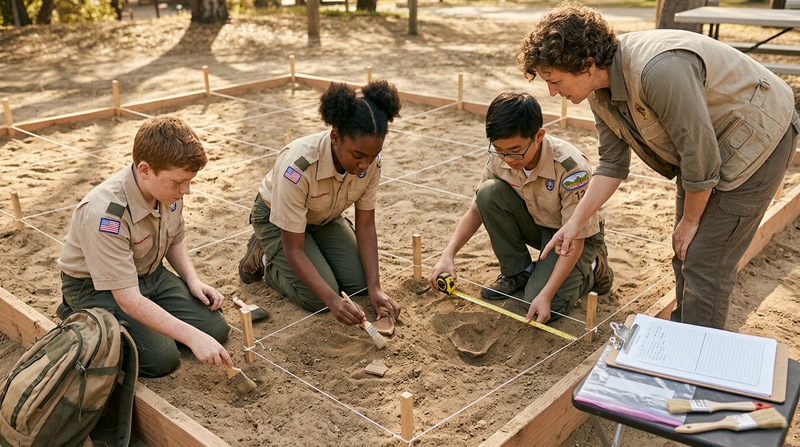
Option B: Simulated Archaeological Project
If a live dig is not available, a simulated site provides the same learning experience in a controlled setting. A qualified instructor sets up a mock excavation with planted artifacts and features, and you work through the archaeological process from start to finish.
What the Simulation Should Include
The simulation should mimic a real excavation as closely as possible:
- A prepared site with buried artifacts and features (fire pits, wall foundations, trash deposits) placed in realistic patterns.
- A grid system for mapping artifact locations.
- Recording materials — graph paper, measurement tools, cameras, and artifact bags.
- Multiple artifact types — pottery, stone tools, bones, charcoal, trade goods — chosen to tell a story when analyzed together.
Key Concepts to Demonstrate
During the simulation, focus on these ideas:
Spatial relationships — Where artifacts are found relative to each other matters enormously. A grinding stone found next to a fire pit tells a different story than one found next to a burial. Record the exact position of everything.
Environmental effects — Temperature, moisture, soil acidity, and biological activity all affect how artifacts survive (or don’t). Metal rusts. Wood rots. Pottery breaks but the pieces survive for millennia. Discuss with your counselor how these factors change what you would expect to find at a real site.
Time effects — Later activities can disturb earlier ones. A farmer plowing a field might scatter artifacts from an ancient village across the surface. Tree roots can push objects out of their original positions. Animals burrowing through the soil can mix layers together.
Sharing results — Think about how you would present your findings. Would you write a report? Create a museum display? Give a public talk? Post online? Archaeologists have a responsibility to share their work, and the format depends on the audience.
Req 11 — Sharing Archaeology
Archaeology does not end when artifacts are pulled from the ground. The final step — and one of the most important — is sharing what was learned. This requirement gives you two ways to do that: creating an exhibit for the public or using experimental archaeology to understand the past by doing.
Option A: Prepare an Archaeological Exhibit
Museum exhibits are how most people encounter archaeology. A well-designed exhibit does not just display objects — it tells a story, teaches a concept, and sparks curiosity. Helping prepare one gives you insight into how archaeologists communicate with the public.
What an Exhibit Needs
Exhibit Planning Checklist
Key elements of a good archaeological exhibit- A clear theme or story. What is the exhibit about? What should visitors learn?
- Selected artifacts or replicas that support the story.
- Labels and panels that explain each object — what it is, where it was found, what it tells us.
- Visual context — maps, photographs, reconstructions, or diagrams that help visitors understand the site.
- A logical flow that guides visitors through the exhibit in a meaningful order.
- Accessibility — text should be readable, displays should be at a reasonable height, and information should be understandable by a general audience.
Your exhibit does not have to be in a major museum. It could be a display case at your school, a table at a Scout event, a poster presentation at a library, or a small exhibit at a local visitor center. What matters is the thought and planning behind it.
Where to Find Opportunities
- Local museums — Many small museums welcome volunteer help with exhibit design, artifact labeling, and display setup.
- Your school — Create a display for a hallway case or classroom.
- Scout events — Set up an exhibit at a camporee, troop meeting, or merit badge fair.
- Libraries and community centers — These often have display spaces available for educational exhibits.
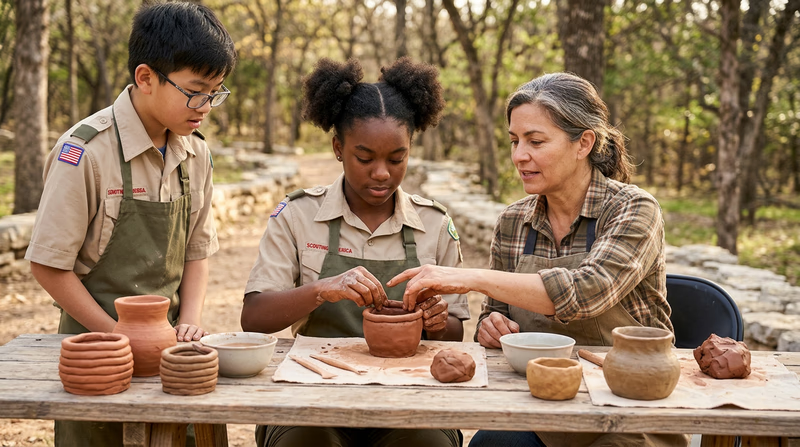
Option B: Experimental Archaeology
Experimental archaeology is one of the most exciting branches of the field. Instead of just studying artifacts, you actually try to make them — or practice the skills that ancient people used — to understand how they were produced and what they reveal about past technology and knowledge.
What Is Experimental Archaeology?
The basic idea is simple: if you want to understand how ancient people made a stone tool, try making one yourself. If you want to know how long it took to build a structure, build a small-scale version. The hands-on experience often reveals things that studying finished artifacts alone cannot.
Project Ideas
Here are examples of experimental archaeology projects appropriate for Scouts (always work under the supervision of a qualified instructor):
Pottery making — Use traditional methods (coil building or pinch pots with natural clay) to create a vessel without a potter’s wheel. Compare your results to ancient pottery.
Cordage and weaving — Twist plant fibers (like dogbane, milkweed, or yucca) into cord or rope using techniques that predate written history. This skill was essential for everything from fishing nets to baskets.
Fire starting — Use a bow drill, hand drill, or flint-and-steel to create fire the way people did for thousands of years. (This connects to your Scouting skills too.)
Flintknapping — Under careful supervision, learn to shape stone into tools by striking flakes off a core, just as people did for millions of years. This requires protective gear and expert guidance.
Natural dyes — Experiment with plants, minerals, and other natural materials to dye fabric or cordage, recreating ancient coloring techniques.
Cooking with ancient methods — Prepare food using techniques from the past — pit roasting, stone boiling (heating rocks and dropping them into water in a container), or grinding grain with a mano and metate.
Writing Your Report
After your experiment, write a brief report covering:
Experiment Report Outline
Include these sections in your writeup- What skill or item did you attempt to re-create?
- What historical or archaeological evidence guided your experiment?
- What materials and methods did you use?
- What happened? Describe the process and your results.
- What worked well? What was harder than you expected?
- What did you learn about the past from this hands-on experience?
- How does this experiment change your understanding of the people who used this technology?
Extended Learning
A. Introduction
You have worked through every requirement of the Archaeology merit badge — congratulations! You have learned to think like an archaeologist: asking questions, reading the evidence, and understanding why context matters more than any single artifact. But this is just the beginning. The world is full of sites to explore, stories to uncover, and skills to sharpen. Here is where to go next.
B. Deep Dive: How Technology Is Changing Archaeology
Modern archaeology looks nothing like it did even 20 years ago. New technologies are transforming how archaeologists find, study, and share sites — often without digging at all.
LiDAR (Light Detection and Ranging) fires millions of laser pulses from an aircraft or drone toward the ground. The reflected light creates an incredibly detailed 3D map of the terrain, even under dense forest canopy. LiDAR has revealed entire lost cities in Central America, Southeast Asia, and Africa that were completely invisible from the ground. In 2018, a LiDAR survey of northern Guatemala revealed more than 60,000 previously unknown Maya structures — pyramids, causeways, irrigation canals, and defensive walls — hidden beneath jungle for over a thousand years.
Ground-Penetrating Radar (GPR) sends radio waves into the soil and measures the reflections. Different materials (stone, metal, empty space, packed earth) reflect signals differently, creating a subsurface map without any digging. GPR has been used to locate buried walls, graves, storage pits, and even old roads. In 2020, archaeologists used GPR to discover an entire Roman town — Falerii Novi, near Rome — without excavating a single square meter.
Photogrammetry and 3D Scanning create precise digital models of artifacts and sites. An archaeologist can photograph an object from dozens of angles, and software stitches those photos into a 3D model that can be rotated, measured, and shared online. Museums are using this technology to make their collections accessible to anyone with an internet connection.
Ancient DNA (aDNA) Analysis extracts and sequences DNA from bones, teeth, and even ancient soil. This has revolutionized our understanding of human migration, family structures, and disease. DNA from a 40,000-year-old finger bone discovered in Denisova Cave, Siberia, revealed an entirely unknown branch of the human family tree — the Denisovans — who had never been identified from bones alone.
Satellite Imagery allows archaeologists to search for sites across vast landscapes from their desks. Changes in vegetation, soil color, and terrain visible from space can indicate buried structures. The archaeologist Sarah Parcak, sometimes called a “space archaeologist,” has used satellite data to identify thousands of potential sites in Egypt, including lost pyramids.
C. Deep Dive: Ethical Debates in Modern Archaeology
Archaeology is not just about science — it also involves difficult ethical questions that the field continues to wrestle with. Understanding these debates will deepen your appreciation for the responsibilities that come with studying the past.
Repatriation is one of the most important issues. For over a century, museums and universities in the United States and Europe collected human remains, sacred objects, and cultural items from Indigenous communities — often without consent. NAGPRA (the Native American Graves Protection and Repatriation Act) requires the return of these items to affiliated tribes, but the process is ongoing and sometimes contentious. Archaeologists today work hard to build collaborative relationships with descendant communities, recognizing that the people connected to these objects have a fundamental right to decide what happens to them.
Who tells the story? Historically, archaeology was dominated by Western, predominantly white, male researchers who interpreted other cultures through their own cultural lens. This led to biases — like the refusal to believe that Great Zimbabwe was built by Africans, or the tendency to describe Indigenous technologies as “primitive.” Modern archaeology actively works to include diverse voices, train archaeologists from underrepresented communities, and ensure that the people whose ancestors created the sites have a say in how they are studied and presented.
Preservation vs. development is a constant tension. When a new hospital, highway, or housing development threatens an archaeological site, communities must weigh the benefits of construction against the irreplaceable value of the heritage that would be destroyed. There are no easy answers, and CRM archaeologists often find themselves at the center of these negotiations.
The antiquities market fuels looting worldwide. As long as collectors are willing to pay high prices for ancient objects, looters will destroy sites to supply that demand. Every artifact purchased without documentation of its legal origin potentially represents a destroyed archaeological site and a lost piece of human history.
D. Deep Dive: Archaeology You Can Do Right Now
You do not need to wait for a dig opportunity to practice archaeological thinking. Here are ways to sharpen your skills using the world around you.
Survey your neighborhood. Walk through your neighborhood with an archaeologist’s eye. Look at buildings and structures: how old are they? What materials were used? Can you identify different construction phases where additions or repairs were made in different styles? Old foundations, abandoned wells, stone walls, and even changes in vegetation can all be clues to past land use.
Read old maps. Historical maps of your area are often available at the library or online through the Library of Congress. Compare a map from 100 or 150 years ago to a current map of the same area. What has changed? Where did roads move? What buildings are gone? Where might archaeological evidence of those old structures still exist underground?
Interview older community members. Oral history is a valuable complement to archaeological evidence. Older residents may remember buildings, businesses, or events that left physical traces in your community. Their stories can guide you to interesting places and give context to what you might find.
Start a field journal. Archaeologists document everything. Start a notebook where you record observations — interesting old buildings, local landmarks, natural features, and anything else that catches your eye. Practice sketching, noting locations, and writing detailed descriptions. This discipline will serve you well if you pursue archaeology further.
E. Real-World Experiences
Crow Canyon Archaeological Center — Cortez, CO
Colonial Williamsburg — Williamsburg, VA
Cahokia Mounds State Historic Site — Collinsville, IL
Passport in Time (PIT) Program
Mesa Verde National Park — Cortez, CO
F. Organizations
The largest professional organization for archaeologists in the Americas. Offers educational resources, career guidance, and advocacy for site preservation.
Organization: Society for American Archaeology (SAA) — https://www.saa.org/
Promotes archaeological research and education worldwide. Publishes Archaeology magazine and maintains a database of fieldwork opportunities.
Organization: Archaeological Institute of America (AIA) — https://www.archaeological.org/
The only national nonprofit dedicated to acquiring and preserving significant archaeological sites across the United States.
Organization: The Archaeological Conservancy — https://www.archaeologicalconservancy.org/
Works to save America’s historic places through advocacy, education, and direct action, including archaeological sites.
Organization: National Trust for Historic Preservation — https://savingplaces.org/
An international organization working to preserve endangered cultural heritage sites around the globe.
Organization: World Monuments Fund — https://www.wmf.org/
An international organization connecting archaeological open-air museums and experimental archaeology projects worldwide.
Organization: EXARC — https://exarc.net/