Req 4b — Presenting Your Findings
You have done the research — now it is time to share what you learned. Giving a presentation is a skill that archaeologists use all the time. Whether they are speaking at a conference, leading a museum tour, or teaching a class, archaeologists need to communicate their discoveries in a way that gets people excited about the past.
Picking Your Site
Choose the site that excites you the most. Your enthusiasm will come through in your presentation and keep your audience engaged. If you found something surprising or fascinating during your research, that is probably the site to pick.
Structuring Your Presentation
A strong presentation follows a simple structure. Aim for 5–10 minutes — long enough to cover the essentials, short enough to keep your audience’s attention.
Presentation Outline
Follow this structure for a clear, organized talk
- Hook: Start with a surprising fact, a dramatic moment from the site’s discovery, or a question to the audience.
- Introduction: Name the site, point it out on a map, and give a brief overview of what it is.
- Discovery story: How was this site found? Who found it? When?
- Key findings: What have archaeologists discovered there? Focus on 2–3 interesting artifacts or features.
- Why it matters: What questions does this site answer? Why should your audience care?
- Conclusion: Wrap up with a memorable takeaway — something your audience will remember.
Tips for a Great Presentation
Use visuals. Show photos, maps, or drawings. A picture of the Cliff Palace at Mesa Verde or the cave paintings at Lascaux will capture attention better than words alone. You can print images, create a poster, or use a slideshow.
Tell a story. Archaeology is full of great stories — accidental discoveries, mysteries solved, surprising connections between past and present. Frame your presentation as a narrative, not a list of facts.
Practice out loud. Reading from a script sounds flat. Instead, know your material well enough to talk about it naturally. Use note cards with key points as reminders, not a full script.
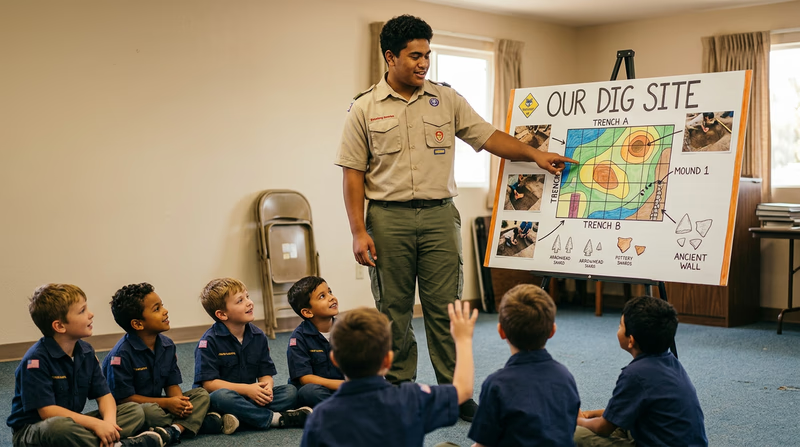
Engage your audience. Ask a question at the beginning: “Who has heard of Pompeii?” or “What do you think people ate 1,000 years ago?” If presenting to Cub Scouts, keep your language simple and include hands-on elements if possible — maybe pass around a photo or a replica artifact.
Tailoring to Your Audience
| Audience | Tips |
|---|---|
| Cub Scouts | Keep it simple, use big visuals, include a hands-on activity or Q&A game |
| Scout Troop | Go a bit deeper, connect to outdoor skills (navigation, observation), relate to other merit badges |
| School Class | Connect to subjects they are studying (world history, geography, science) |
| Other Group | Focus on the “why it matters” angle — how archaeology connects to their community or interests |