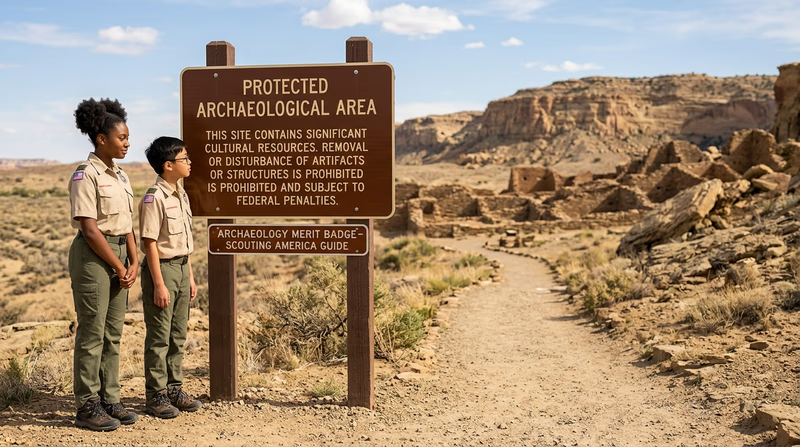
Req 5 — Laws That Protect Sites
Archaeological sites are fragile and irreplaceable. Once a site is destroyed — whether by looters, construction, or neglect — the information it held is gone forever. That is why governments around the world have passed laws to protect these places, and why organizations exist to enforce and advocate for those protections.
Major Federal Laws
The United States has several important laws that protect archaeological resources on public lands:
Antiquities Act of 1906 — The first federal law to protect archaeological sites. It gives the president the power to designate national monuments to protect sites of scientific or historic interest on federal land. It also makes it a crime to excavate or destroy antiquities on federal land without a permit.
National Historic Preservation Act (NHPA) of 1966 — Established the National Register of Historic Places and requires federal agencies to consider the effects of their projects on historic and archaeological sites. If a highway or dam project would disturb a site, the government must study the site first and try to minimize the damage.
Archaeological Resources Protection Act (ARPA) of 1979 — Strengthened protections for archaeological resources on public and tribal lands. ARPA makes it a federal crime to excavate, remove, or damage archaeological resources without a permit. Penalties can include heavy fines and imprisonment.
Native American Graves Protection and Repatriation Act (NAGPRA) of 1990 — Requires federal agencies and museums to return certain cultural items — including human remains, funerary objects, and sacred objects — to their affiliated Native American tribes. NAGPRA recognizes the deep connection between Indigenous peoples and their ancestral heritage.
International Conventions
Archaeological protection extends beyond national borders. Several international agreements help protect sites worldwide:
UNESCO World Heritage Convention (1972) — Countries that sign this treaty agree to identify, protect, and preserve cultural and natural heritage sites of “outstanding universal value.” There are more than 1,100 World Heritage Sites around the world, including archaeological sites like Machu Picchu, the Pyramids of Giza, and Mesa Verde.
1970 UNESCO Convention — Addresses the illegal import, export, and transfer of cultural property. It aims to prevent the international trade in looted artifacts by requiring countries to return stolen cultural objects.
Hague Convention (1954) — Protects cultural property during armed conflict. It was created after World War II, when countless archaeological sites, museums, and monuments were damaged or destroyed during the war.
State and Local Laws
Many states have their own laws that add protections beyond federal regulations. These vary widely but may include:
- State burial laws that protect unmarked graves and cemeteries
- State-level registers of historic places
- Environmental review requirements that include archaeological assessments before construction
- Restrictions on metal detecting on state lands
- Permit requirements for archaeological surveys on state property
Organizations That Protect Sites
For Requirement 5b, you need to identify an organization that helps protect archaeological sites. Here are several strong options at different levels:
National organizations:
- Society for American Archaeology (SAA) — The largest professional organization for archaeologists in the Americas. Advocates for site preservation, ethical practices, and public education.
- Archaeological Conservancy — A national nonprofit that acquires and preserves archaeological sites across the United States. They have permanently protected more than 570 sites.
- National Trust for Historic Preservation — Works to save historic places, including archaeological sites, through advocacy, education, and direct action.
International organizations:
- UNESCO — Through the World Heritage program, identifies and helps protect the world’s most significant cultural and natural sites.
- World Monuments Fund — Works to preserve endangered cultural heritage sites around the globe.
Local organizations:
- Your state may have a state archaeological society made up of professional and avocational (amateur) archaeologists who work together to study and protect local sites.
- Local historical societies and tribal historic preservation offices also play important roles in protecting sites in your community.