Req 6 — Being a Steward
You have learned about the laws and organizations that protect archaeological sites. Now it is time to think about your own role. Every person — including you — has the power to either protect or destroy the past. This requirement is about making the right choice.
Why Protecting Sites Matters
Archaeological sites are non-renewable resources. Unlike a forest that can regrow or a river that can be cleaned up, a destroyed archaeological site is gone forever. There are no backups. Here is why that matters:
Knowledge is at stake. Every archaeological site contains information about how people lived, what they invented, what they believed, and how cultures changed over time. When a site is damaged, that knowledge vanishes. Future generations lose the chance to learn from it.
Sites belong to everyone. Archaeological resources on public land are part of our shared heritage — they belong to all Americans, not to any individual. Looting or vandalizing a site is not just illegal; it is stealing from the public.
Communities are connected. Many archaeological sites are sacred to descendant communities, especially Indigenous peoples. Disturbing these sites can cause deep harm to living people whose ancestors created them.
Science keeps improving. Technology that does not exist today may one day reveal things from an archaeological site that we cannot imagine right now. Preserving sites for the future means future archaeologists — perhaps even you — can study them with tools we have not invented yet.
What to Do If You Find an Artifact
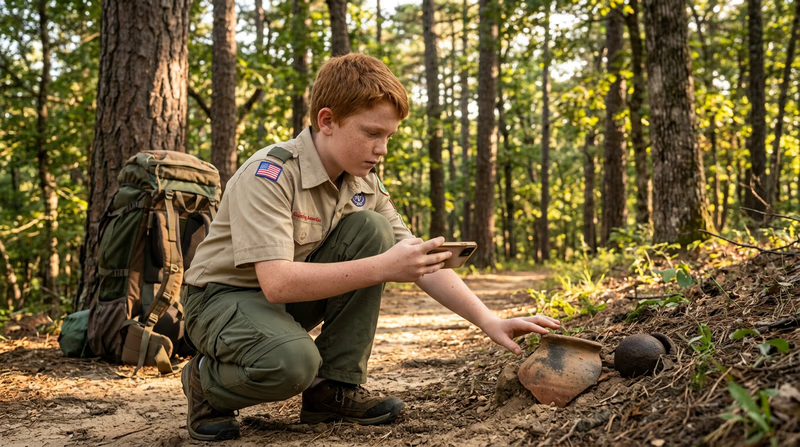
Imagine you are hiking and you spot something unusual in the dirt — a piece of old pottery, a stone that looks like a tool, or a coin with strange markings. What should you do?
If You Find an Artifact
Follow these steps — in this order
- Stop and observe. Look carefully at what you found and the area around it. Are there other artifacts nearby? Note the location as precisely as you can.
- Do NOT pick it up. The moment you remove an artifact from its location, you destroy its context — the exact position, depth, and surrounding objects that give it meaning.
- Mark the location. Use a GPS device, phone, or landmark to record where you found it. Take photos from several angles, including wide shots showing the surrounding area.
- Report it. Contact your State Historic Preservation Office (SHPO), a local archaeological society, or the land management agency (NPS, BLM, Forest Service) responsible for the area.
- Leave it in place. Let the professionals decide what to do next. They may investigate the site, record it, or determine that it is already documented.
How You Can Be a Protector of the Past
You do not need a degree in archaeology to make a difference. Here are concrete ways you can protect archaeological heritage right now:
Respect the rules. When visiting parks, historic sites, and public lands, follow posted signs and regulations. Stay on trails. Do not climb on ruins or walls. Never take artifacts — even small ones — as souvenirs.
Spread the word. Teach your friends, family, and fellow Scouts why archaeological sites matter. Many people do not realize that picking up an arrowhead or digging at a site is both illegal and destructive. A simple conversation can change someone’s behavior.
Report vandalism and looting. If you see someone damaging a site, collecting artifacts without permission, or using metal detectors on protected land, report it to the land management agency or local law enforcement.
Volunteer. Many organizations offer opportunities to help with site monitoring, trail maintenance at historic sites, or public education programs. Contact your state archaeological society or local historical society to find opportunities near you.
Follow the Scout Outdoor Code. The principles of “Leave No Trace” and the Outdoor Code apply to cultural resources just as much as natural ones. Leave what you find, respect the past, and leave sites better than you found them.