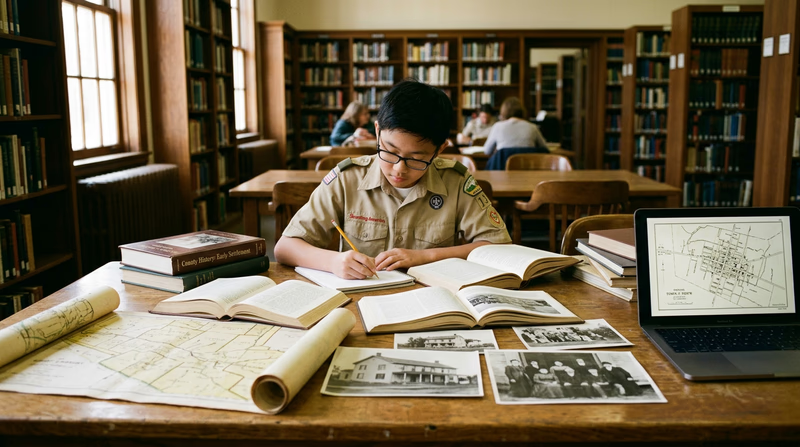
Req 8 — Local History Research
This requirement brings archaeology home — literally. Every place where people live today has a history that stretches back far longer than the current buildings, roads, and neighborhoods. Your job is to find and tell that story.
Who Lived in Your Area?
Start by thinking about who was in your region more than 100 years ago. Depending on where you live, this might include:
- Indigenous peoples who lived on the land for centuries or millennia before European contact
- Early colonial settlers — Spanish missionaries in the Southwest, English colonists on the East Coast, French fur traders in the Great Lakes region
- Immigrant communities — German, Irish, Chinese, Italian, African American, and many other groups who built communities across the country
- Enslaved peoples whose labor shaped the economy and landscape
- Mining, ranching, or farming communities that developed around natural resources
What to Research
The requirement lists specific topics. Here is a guide to help you think about each one:
Housing — What kind of homes did these people build? Were they permanent structures or temporary shelters? What materials did they use — wood, stone, adobe, animal hides? How were homes arranged — in villages, farms, or camps?
Clothing — What did they wear? Was their clothing made from local materials (animal skins, woven plant fibers) or traded goods (cloth, dyes)? How did clothing reflect social roles, seasons, or ceremonies?
Arts and crafts — What did they create? Look for pottery, beadwork, weaving, metalwork, woodcarving, or paintings. How do these items reflect their culture and values?
Tools — What tools did they use for daily life — cooking, farming, hunting, building? Were tools made from stone, bone, metal, or wood? How did their technology change over time?
Trade and markets — Did these people trade with neighboring groups? What goods were exchanged? Were there established trade routes? How far did trade networks extend?
Rituals and religions — What spiritual practices or ceremonies were part of their lives? Are there sacred sites in your area connected to these traditions?
Diets — What did they eat? Were they hunters, farmers, gatherers, or some combination? What plants and animals were available locally?
Relationships with neighbors — How did this group interact with other peoples in the area? Were relationships cooperative, competitive, or some mix of both?
What Would Archaeologists Find?
Once you have a picture of how these people lived, think like an archaeologist. If you could dig at a site where they lived, what would you expect to find in the ground?
Predicting Archaeological Evidence
Think about what survives underground
- Stone, metal, and ceramic artifacts usually survive well.
- Organic materials (wood, cloth, food) may decay completely in most soils.
- Foundation stones, postholes, and fire pits leave permanent marks in the soil.
- Trash deposits (called “middens”) often contain the richest evidence of daily life.
- Burial sites may contain personal items, tools, and evidence of ritual practices.
- Trade goods from distant places indicate connections to other groups.
How They Influenced Your Community
The final part of this requirement asks you to connect past to present. Think about:
- Place names — Many cities, rivers, and landmarks carry names from Indigenous languages or early settlers. Do any names in your area have historical roots?
- Roads and routes — Modern highways sometimes follow ancient trails or historic trade routes.
- Foods — Are there local food traditions that originated with earlier inhabitants?
- Architecture — Do buildings in your area reflect historical styles or construction techniques?
- Cultural traditions — Festivals, ceremonies, or community practices that have roots in earlier cultures.
- Legal boundaries — Property lines, reservations, and municipal borders sometimes trace historical boundaries.