Req 9 — Careers in Archaeology
Archaeology is not just a fascinating hobby — it is a real career that people build their lives around. And it is not just one job. The field of archaeology includes a wide range of career paths, each with different settings, responsibilities, and opportunities.
Career Paths in Archaeology
Academic Archaeologist — Works at a university, teaching students and conducting research. Academic archaeologists typically lead field projects during summers and publish their findings in scientific journals. This path requires a Ph.D. (Doctor of Philosophy), which means many years of graduate school.
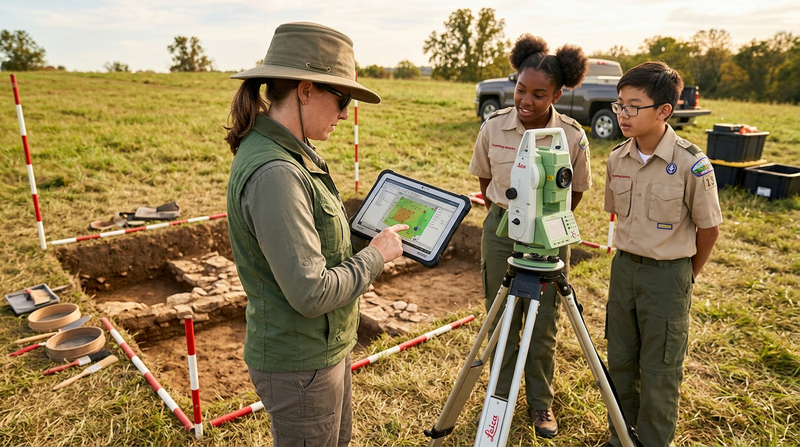
Cultural Resource Management (CRM) Archaeologist — This is where most archaeology jobs are. CRM archaeologists work for private consulting firms, government agencies, or construction companies. Before a new road, building, or pipeline can be built, federal law often requires an archaeological survey. CRM archaeologists do that survey work. A master’s degree is usually the minimum requirement.
Museum Curator or Collections Manager — Manages and interprets archaeological collections for the public. Curators design exhibits, write educational materials, and ensure artifacts are properly stored and preserved. Most curator positions require a master’s degree.
Government Archaeologist — Works for agencies like the National Park Service, the Bureau of Land Management, the Forest Service, or state historic preservation offices. Government archaeologists manage and protect archaeological sites on public lands, review construction permits, and conduct research.
Underwater Archaeologist — Specializes in studying shipwrecks, submerged settlements, and underwater cultural heritage. This career combines archaeological training with advanced dive certification. Opportunities exist with government agencies, universities, and private firms.
Forensic Archaeologist — Uses archaeological methods to help law enforcement investigate crimes. They may recover buried evidence, identify human remains, or reconstruct crime scenes. This career combines archaeology with forensic science.
Archaeological Technician / Field Technician — An entry-level position that involves hands-on fieldwork: digging, recording, screening soil, and assisting with surveys. A bachelor’s degree in archaeology or anthropology is typically required. This is how many archaeologists start their careers.
Education and Training
| Career Level | Typical Education | Time After High School |
|---|---|---|
| Field Technician | Bachelor’s degree (B.A. or B.S.) | 4 years |
| CRM Archaeologist / Project Manager | Master’s degree (M.A.) | 6–7 years |
| Museum Curator | Master’s degree (M.A.) or Ph.D. | 6–10 years |
| University Professor | Ph.D. | 8–12 years |
Most archaeologists study anthropology, archaeology, or classical studies in college. Fieldwork experience is essential at every level — many college programs include field schools where students learn excavation techniques hands-on.
Job Prospects and Salary
According to the Bureau of Labor Statistics, the median annual salary for archaeologists and anthropologists in the United States is approximately $61,000. Entry-level positions (field technicians) typically start lower, while senior researchers, project managers, and professors can earn significantly more.
Job growth in archaeology is expected to be steady, driven by:
- Federal and state laws requiring archaeological surveys before construction
- Growing public interest in heritage preservation
- Advances in technology creating new specialties (GIS mapping, remote sensing, digital archaeology)
What to Research
For this requirement, pick one career from the list above (or another archaeology-related career you discover) and find out:
Career Research Guide
Cover these topics in your research
- What education and training is needed? How many years of school?
- What does the work look like day-to-day? What are the main duties?
- What is the salary range? (Entry-level to experienced)
- What are the job prospects? Is the field growing or shrinking?
- What does career advancement look like? How do people move up?
- What skills are most important? (Writing, technology, physical fitness, teamwork?)
- What do you find interesting or appealing about this career?
How to Research
The requirement suggests several methods — use at least one:
- Internet search — The Bureau of Labor Statistics Occupational Outlook Handbook is an excellent starting point.
- Library search — Books about archaeology careers and biographies of famous archaeologists.
- Interview — If you can arrange a conversation with a professional archaeologist (in person, by phone, or by email), that is the most valuable research you can do. Ask your counselor, local museum, or university archaeology department for contacts.
- Site visit — Museums, university archaeology labs, and government agency offices are all places where archaeologists work.