Req 1c — Whistle Commands
Why Whistles?
On a busy archery range, voice commands can get lost in the wind or drowned out by conversation. A whistle cuts through all of that. Every archer on the range can hear it clearly, no matter where they are standing. The whistle system gives the range officer a fast, unmistakable way to control the flow of shooting.
There are four standard whistle commands. Each one means something specific, and every archer must respond immediately.
The Four Whistle Commands
Two Blasts — “Archers to the Shooting Line”
Two short whistle blasts mean it is time to step up to the shooting line. Pick up your equipment, move to your assigned position on the line, and get ready. You may straddle the line or stand just behind it, depending on range rules — but you do not nock an arrow yet.
One Blast — “Begin Shooting”
One whistle blast means the range is live. You may now nock an arrow and begin shooting. This is the only time you should have an arrow on the string.
Three Blasts — “Walk Forward and Get Your Arrows”
Three whistle blasts mean shooting has ended and it is safe to walk downrange to retrieve your arrows. Before walking forward, place your bow on the bow rack or set it down safely. You should never carry a bow downrange while retrieving arrows.
Five or More Blasts — “STOP! Emergency!”
Five or more rapid whistle blasts mean there is an emergency. Stop what you are doing immediately:
- If you are at full draw, let down carefully — do not release the arrow.
- Place your arrow back in your quiver.
- Set your bow down.
- Wait for instructions from the range officer.
This signal is used when someone has entered the range unexpectedly, an injury has occurred, or any other dangerous situation develops.
The Flow of a Shooting Session
Understanding the whistles makes more sense when you see how they fit into the rhythm of a shooting session:
- Two blasts → Archers walk to the shooting line and prepare.
- One blast → Archers begin shooting their arrows (an “end”).
- When all archers have finished, three blasts → Everyone walks forward to pull arrows from the targets.
- Once arrows are retrieved and everyone is back behind the line, the cycle repeats.
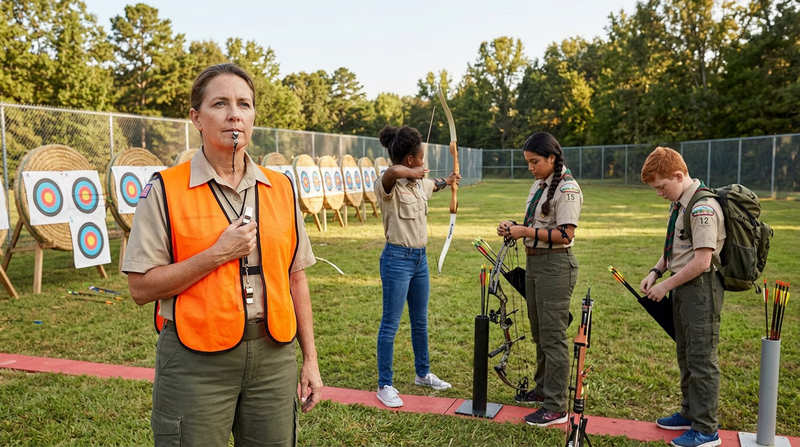
This cycle of shoot–retrieve–shoot continues throughout a practice session or competition. If at any point something goes wrong, five or more blasts stops everything.
USA Archery — Getting Started Learn more about range procedures and how to get involved in organized archery through USA Archery.