Req 2 — Know Your Arrows
This requirement covers everything about arrows — their parts, types, shaft materials, and how to build, repair, and care for them.
Req 2a — Parts of an Arrow
Every arrow, regardless of its type or material, has the same basic components. Learning to name and identify each part is your first step toward understanding how arrows work.
The Parts
Point (or Tip): The front end of the arrow that strikes the target. Points come in many styles — field points for target shooting, broadheads for hunting, and blunt tips for small game. The point screws or glues into the shaft.
Shaft: The long, straight body of the arrow. This is the main structural component. Shafts are made from wood, aluminum, fiberglass, or carbon fiber (more on materials in Req 2c).
Fletching (or Vanes): The feathers or plastic fins near the back of the arrow. Most arrows have three fletchings spaced evenly around the shaft. They stabilize the arrow in flight by creating drag and causing the arrow to spin slightly, similar to how a football spiral keeps a pass on target.
Nock: The small plastic or horn piece at the very back of the arrow with a slit that clips onto the bowstring. The nock keeps the arrow in place on the string until you release.
Index Fletching (or Cock Feather): One of the three fletchings is a different color than the other two. This is the index fletching, and it faces away from the bow when the arrow is nocked. Proper orientation prevents the fletchings from hitting the bow as the arrow passes.
Crest: An optional painted band or pattern on the shaft near the fletchings. Crests help you identify your arrows from other archers’ arrows on the range.
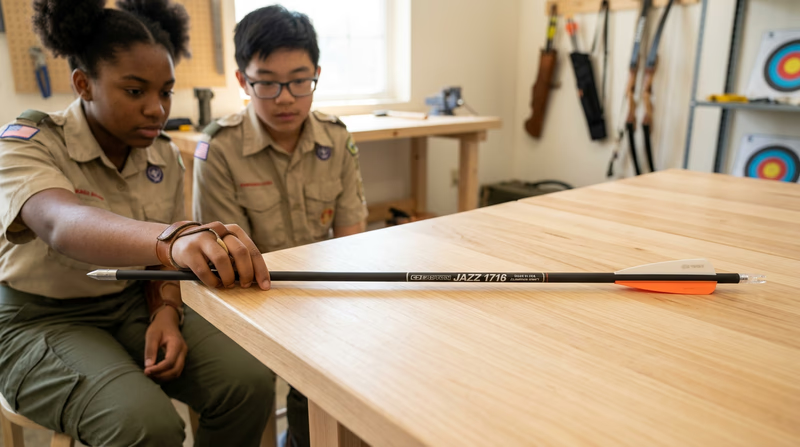
Req 2b — Types of Arrows
Arrows are designed for specific purposes. The type of arrow you use depends on what you are shooting at and what kind of bow you are using. Here are some of the most common types:
Target Arrows
Target arrows are designed for accuracy on the range. They typically have field points (bullet-shaped tips) and are built for consistency — every arrow in a set should weigh the same and fly the same way. They are the most common arrows used in the Archery merit badge.
Field Arrows
Field arrows are similar to target arrows but are built slightly heavier and tougher to handle the varied conditions of a field archery course — uphill shots, downhill shots, and varying distances through the woods.
Hunting Arrows
Hunting arrows carry broadheads — wide, razor-sharp tips designed to harvest game humanely. They are heavier than target arrows and built to penetrate deeply. Hunting arrows must be matched carefully to the bow’s draw weight.
Flu-Flu Arrows
Flu-flu arrows have oversized, untrimmed feather fletchings that create a lot of air resistance. This causes the arrow to slow down quickly and travel a much shorter distance — usually no more than 30 yards. They are used for aerial targets or situations where you do not want the arrow to travel far.
Blunt-Tipped Arrows
These arrows have flat or rounded rubber or plastic tips instead of pointed ones. They are used for small game hunting (like rabbits) and for stump shooting — a casual practice where archers walk through the woods shooting at stumps, dirt mounds, and other natural targets.
Req 2c — Arrow Shaft Materials
The shaft is the backbone of the arrow, and the material it is made from affects weight, stiffness, durability, and cost. The four principal materials are:
Wood
Wood was the original shaft material and is still used in traditional archery. Cedar is the most popular choice because it is straight-grained, lightweight, and has a pleasant scent. Wood shafts must be carefully selected for straightness and spine (stiffness), and they require more maintenance than modern materials. They are required for use with traditional longbows.
Aluminum
Aluminum arrows are manufactured to very precise specifications and come in a wide range of sizes and spine weights. They are durable, consistent, and relatively affordable. Aluminum is a popular choice for beginners and is widely used in indoor target archery.
Fiberglass
Fiberglass shafts are extremely durable and virtually indestructible, which makes them a common choice for camp archery programs and beginners. They are heavier than aluminum or carbon and not as precise, but they hold up well to the abuse of young archers learning the sport.
Carbon (or Carbon Fiber)
Carbon arrows are lightweight, very stiff, and extremely fast. They are the top choice for competitive archers and bowhunters because of their consistency and speed. Carbon shafts are more expensive than other materials, and they require careful inspection — a cracked carbon arrow can shatter on release.
Req 2d — Make or Repair Arrows
For this requirement, you choose one option:
Option 1: Make a Complete Arrow
Building an arrow from a bare shaft teaches you how all the parts come together. You will need a bare shaft, a point, a nock, fletching material (feathers or vanes), and fletching glue or cement. The basic steps are:
- Cut the shaft to length based on your draw length (plus about an inch for safety).
- Install the point by gluing or screwing it into the front of the shaft.
- Install the nock on the back end of the shaft.
- Fletch the arrow by gluing three vanes or feathers evenly spaced around the shaft using a fletching jig.
- Inspect the finished arrow for straightness, proper alignment, and secure components.
Option 2: Demonstrate Arrow Repair
Arrow repair involves inspecting arrows for damage and replacing worn or broken components. You will need to:
- Inspect shafts for bends, cracks, or splinters
- Remove and replace at least three vanes (fletchings)
- Remove and replace one point
- Remove and replace one nock
You can spread these repairs across multiple arrows. The repairs can be done on wood, fiberglass, or aluminum arrows.
Req 2e — Arrow Care and Storage
Arrows are precision instruments. Treating them well means they will fly straight, last longer, and keep you safe.
Care
- Inspect arrows before every shooting session. Check for bent shafts, loose points, cracked nocks, and damaged fletchings.
- Flex-test carbon arrows every time you shoot. Bend them gently and listen for cracks.
- Replace damaged components promptly. A loose nock or torn vane affects accuracy and can cause an arrow to fly unpredictably.
- Clean arrows after use by wiping down the shafts with a damp cloth to remove dirt and target material.
Storage
- Store arrows in a quiver or arrow tube to protect them from bending, warping, and physical damage.
- Store arrows horizontally or vertically in a rack — never leaning against a wall at an angle, which can cause warping over time.
- Keep arrows away from extreme heat. Do not leave them in a hot car, which can soften glue and loosen components.
- Keep wooden arrows away from moisture. Wood shafts can absorb water, swell, and warp. Store them in a dry location.
Pre-Shoot Arrow Inspection
Check every arrow before you shoot
- Shaft is straight with no visible cracks, dents, or bends.
- Point is securely attached and not loose or wobbly.
- Nock is intact and clips firmly onto the bowstring.
- All three fletchings are securely glued and not peeling or torn.
- Carbon arrows pass the flex test with no cracking sounds.