 Getting Started
Introduction & Overview
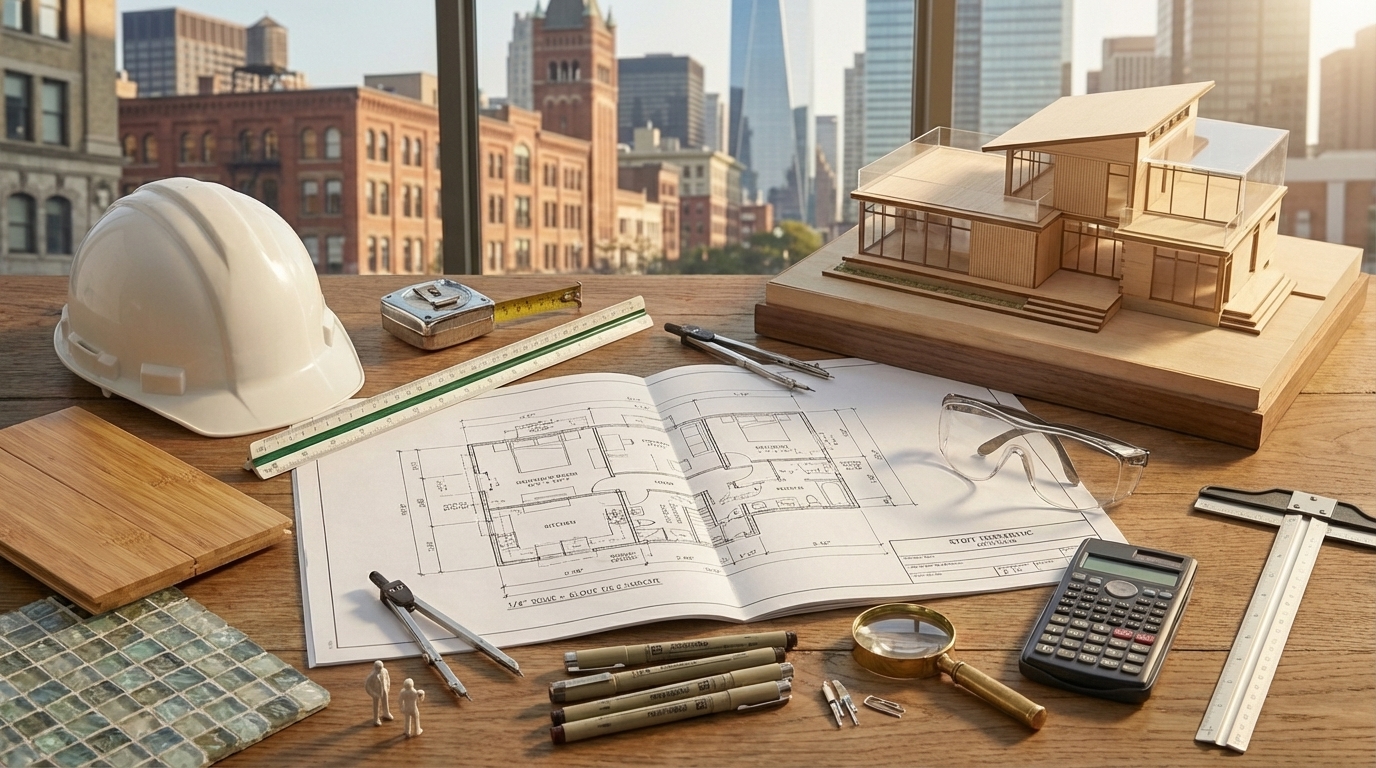
Look around you right now. Chances are, you are inside a building that someone designed. The walls, the roof, the windows, the way light enters the room — an architect made decisions about all of it. Architecture is the art and science of designing the spaces where people live, work, learn, and play.
The Architecture merit badge invites you to see buildings in a whole new way. You will learn to recognize different styles, understand how structures are built, and discover how architects balance beauty, function, and sustainability. By the end, you might even draw a floor plan of your own.
Then and Now
Then — Building for the Ages
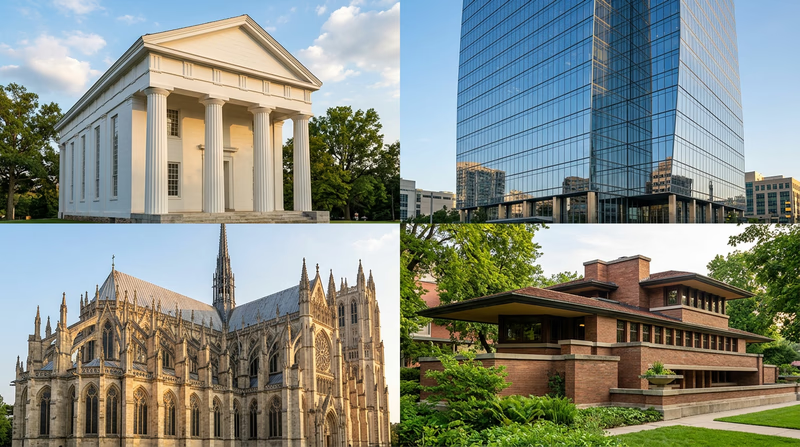
For thousands of years, architecture was one of humanity’s greatest achievements. The ancient Egyptians built the Great Pyramids — structures so precisely engineered that they still stand after 4,500 years. The Greeks created the Parthenon with its graceful columns, setting a standard for beauty that architects still study today. Roman engineers invented concrete and built the Colosseum and aqueducts that carried water across entire regions. In the Middle Ages, Gothic cathedrals like Notre-Dame soared toward the sky with pointed arches and stained glass windows that took generations to complete.
- Purpose: Shelter, worship, governance, defense, and displays of power
- Tools: Hand-drawn plans, stone, wood, brick, and human labor
- Mindset: Build to last centuries — every detail carved by hand
Now — Designing for Tomorrow
Today’s architects use computer-aided design (CAD) software to create buildings that would have been impossible to imagine a century ago. Skyscrapers twist and curve. Rooftops grow gardens. Buildings generate their own electricity from solar panels and collect rainwater for reuse. Some architects are even experimenting with 3D-printed structures and buildings made from recycled materials.
- Purpose: Living, working, learning, healing — and protecting the planet
- Tools: CAD software, Building Information Modeling (BIM), 3D printing, sustainable materials
- Mindset: Design for people, design for the environment, design for the future
Get Ready! Architecture is all around you — in your school, your home, your favorite park. Once you start looking at buildings as designed objects, you will never see your world the same way again. Let’s explore!

Kinds of Architecture
Architecture is a broad field with many specialties. Here are some of the major types you will encounter as you work through this merit badge.
Residential Architecture
This is the architecture of homes — houses, apartments, condominiums, and townhouses. Residential architects design spaces where people eat, sleep, and spend time with family. They think about how rooms connect, where natural light enters, and how a home fits into its neighborhood.
Commercial Architecture
Commercial architecture includes offices, shops, restaurants, hotels, and shopping centers. These buildings must attract visitors, move people efficiently through spaces, and create an atmosphere that supports the business inside.
Institutional Architecture
Schools, hospitals, courthouses, libraries, and government buildings fall under institutional architecture. These structures serve the public and often need to last for decades. Think about your own school — the layout of classrooms, hallways, and gathering spaces was all planned by an architect.

Industrial Architecture
Factories, warehouses, power plants, and water treatment facilities are industrial buildings. They prioritize function — moving materials, housing heavy equipment, and keeping workers safe. While they may not look glamorous, industrial buildings are essential to how our world works.
Landscape Architecture
Landscape architects design outdoor spaces: parks, playgrounds, plazas, trails, and gardens. They shape the land itself, choosing where to plant trees, place benches, and route pathways. If you have ever enjoyed a well-designed park, a landscape architect made that experience possible.
Interior Architecture
Interior architects focus on the spaces inside buildings. They decide room layouts, ceiling heights, lighting, and how people move through interior spaces. Interior architecture goes deeper than decorating — it involves structural changes like moving walls, adding windows, or redesigning how a floor is used.
Now that you have a sense of what architecture is and the many forms it takes, it is time to start exploring buildings in your own community.