Req 1a — Community Building Tour
Getting Started on Your Tour
This requirement is your chance to become an architectural detective. You are going to walk through your community — your town, your neighborhood, your downtown — and really look at the buildings around you. Not just glance at them, but study them. What shapes do you see? What materials were used? How old does the building look?
Before you head out, grab a notebook (or your phone for notes), a pencil, and a sketchbook. You will want to record what you find.
Common Architectural Styles in America
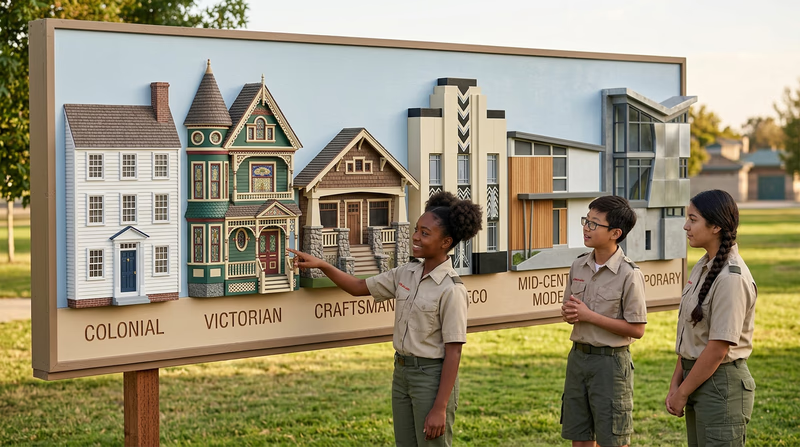
As you walk through your community, try to match buildings to these common architectural styles. You do not need to memorize every detail — just look for the key features that set each style apart.
Colonial (1600s–1700s)
Colonial buildings are symmetrical with a centered front door. They typically have evenly spaced windows, a simple rectangular shape, and a side-gabled roof. Many colonial homes are made of brick or wood clapboard. You will often find this style in the eastern United States.
Victorian (1860s–1900s)
Victorian buildings are hard to miss. They feature ornate decorations, colorful paint, steep roofs, towers or turrets, and wrap-around porches. The Queen Anne style — with its mix of textures, patterns, and asymmetric shapes — is one of the most recognizable Victorian styles.
Craftsman / Bungalow (1900s–1930s)
Craftsman homes are cozy and low to the ground. Look for wide front porches with thick, tapered columns, exposed rafters under the eaves, and natural materials like stone and wood. This style celebrates handcraftsmanship over factory-produced details.
Art Deco (1920s–1930s)
Art Deco buildings are bold and geometric. They feature sharp lines, zigzag patterns, sunburst motifs, and metallic accents. You will often find Art Deco in older downtown areas — think movie theaters, banks, and office buildings from the Jazz Age.
Mid-Century Modern (1940s–1960s)
Mid-Century Modern buildings embrace simplicity and connection to nature. Look for flat or low-sloped roofs, large glass windows, open floor plans, and clean lines. Many schools and public buildings from this era use this style.
Contemporary / Modern
Contemporary architecture uses the latest materials and technology. Glass curtain walls, unusual shapes, cantilevered sections, and green roofs are common features. If a building looks like nothing else around it, it may be contemporary.
What to Look For on Your Tour
When you stand in front of a building, ask yourself these questions:
Building Observation Checklist
Questions to answer for each building you study
- What shape is the building? Rectangular, L-shaped, circular, irregular?
- What materials do you see? Brick, wood, stone, glass, steel, concrete?
- How is the roof shaped? Flat, gabled, hipped, domed?
- What do the windows look like? Large or small? Arched or rectangular? Grouped or evenly spaced?
- Are there decorative elements? Columns, carvings, trim, patterns?
- What period does the building seem to come from?
- What is the building used for? Does the design match its purpose?
Making Your Sketch
For the sketch portion, pick the building you admire most. It does not have to be the biggest or oldest — choose one that catches your eye.
Your sketch does not need to be museum-quality. Focus on capturing the building’s overall shape, proportions, and key features. Here are some tips:
Architectural Styles Visual Guide — ThoughtCo An illustrated guide to major architectural styles throughout history, with photos and key features to help you identify buildings in your community.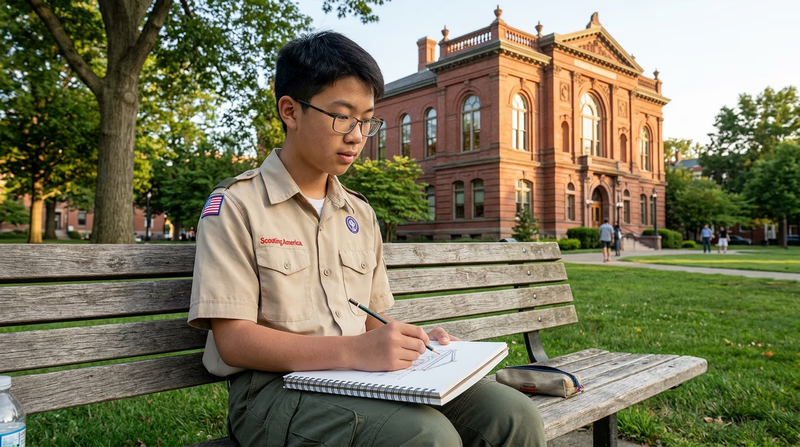
Beyond the Basics
As you explore, pay attention to how buildings relate to each other. Are there clusters of similar styles? That often means a neighborhood was built during the same time period. Do you see a very old building surrounded by newer ones? That building may have historical significance that saved it from demolition.
Now that you have explored your community’s buildings, it is time to zoom out and look at architecture on a grander scale.