Req 1b — Historical Achievement
What Makes an Architectural Achievement “Major”?
A historical architectural achievement is not just a pretty building — it is a structure or innovation that changed how people live, build, or think. The best examples pushed the boundaries of engineering, introduced new materials or techniques, or inspired generations of architects who came after.
When choosing your achievement, look for something that meets at least one of these criteria:
- It solved a problem no one had solved before
- It introduced a new building technique or material
- It changed how cities or communities were designed
- It still influences architecture today
Notable Achievements to Consider
You get to choose any historical architectural achievement that interests you. Here are several examples to spark your thinking — but do not feel limited to this list.
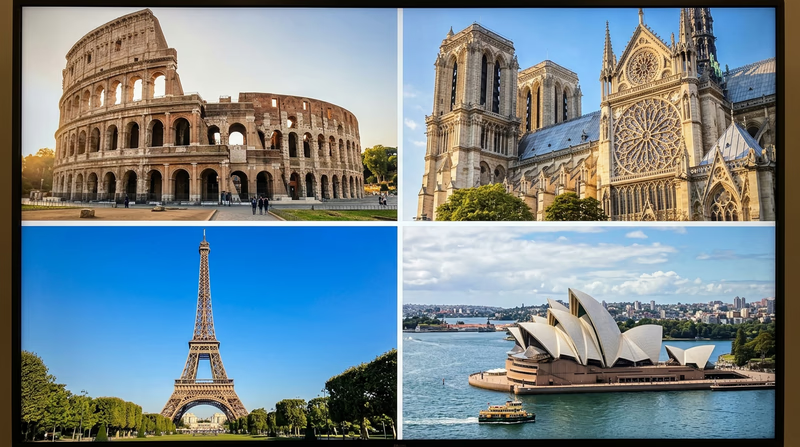
The Roman Colosseum (80 AD)
The Colosseum in Rome could seat 50,000 spectators and had a system of ramps, corridors, and numbered entrances that moved crowds efficiently — a design concept still used in every modern sports stadium. The Romans also pioneered the use of concrete, arches, and vaults to create massive enclosed spaces.
Gothic Cathedrals (1100s–1500s)
Gothic cathedrals like Chartres and Notre-Dame introduced flying buttresses — external supports that allowed walls to be thinner and filled with enormous stained glass windows. This innovation let architects build taller, lighter structures flooded with natural light. The engineering principles behind flying buttresses are still studied today.
The Crystal Palace (1851)
Built in London for the Great Exhibition, the Crystal Palace was one of the first large structures made almost entirely of glass and cast iron — prefabricated in sections and assembled on site. It proved that buildings could be constructed from factory-made parts, paving the way for modern construction methods.
The Eiffel Tower (1889)
When Gustave Eiffel built his 1,000-foot iron tower for the Paris World’s Fair, many people called it ugly and demanded it be torn down. Instead, it became the most recognizable structure in the world and demonstrated that iron (and later steel) could be used to build to extraordinary heights — opening the door to the skyscraper age.
The Empire State Building (1931)
Built in just 410 days during the Great Depression, the Empire State Building stood as the world’s tallest building for nearly 40 years. Its steel-frame construction and efficient design process set the standard for skyscraper construction and proved that extremely tall buildings were practical and economical.
Fallingwater (1935)
Designed by Frank Lloyd Wright, Fallingwater is a house built over a waterfall in Pennsylvania. Its cantilevered concrete terraces extend over the stream below, blending the building into the natural landscape. Fallingwater popularized the idea that architecture should work with nature, not against it.
The Sydney Opera House (1973)
Jørn Utzon’s design features a series of interlocking shell-shaped roof structures that were so complex, engineers spent years figuring out how to actually build them. The solution — prefabricated concrete ribs — advanced construction technology and proved that daring designs could become reality.
How to Research Your Achievement
Once you have picked your achievement, dig into the details. Here is a framework to guide your research:
Research Framework
Key questions to answer about your chosen achievement
- When and where was it built? What was happening in the world at that time?
- Who designed it? What was the architect or engineer trying to accomplish?
- What materials and techniques were used? Were any of them new at the time?
- What problems did the builders face, and how did they solve them?
- How did this achievement influence later buildings or construction methods?
- Can you find examples of modern buildings that were inspired by this achievement?
Talking to Your Counselor
When you share what you learned, focus on the impact — not just the facts. Your counselor wants to hear you explain why this achievement matters. How did it change architecture? How does it still affect the buildings we see today?
Try organizing your presentation around three main points:
- What made it groundbreaking at the time it was built
- What influence it had on architecture that came after
- Why it still matters today
With your community tour complete and your historical research done, it is time to look at how architecture is evolving to protect the environment.