Req 2 — Sustainable Architecture
This requirement connects the Scout values you already practice outdoors — Leave No Trace and the Outdoor Code — to the world of building design. Just as Scouts aim to leave the campsite better than they found it, architects are designing buildings that leave the planet better off too.
Req 2a: Sustainable Architecture and Green Buildings
Sustainable architecture means designing buildings that meet today’s needs without harming the environment or using up resources that future generations will need. A sustainable building uses less energy, wastes less water, produces less pollution, and creates healthier spaces for the people inside.
The term “green building” describes a structure designed with sustainability in mind from the ground up. Green buildings are evaluated and certified by programs like LEED (Leadership in Energy and Environmental Design), which scores buildings on categories like energy efficiency, water conservation, and indoor air quality.
Common Green Building Features
Here are features you will frequently find in green buildings. You need to identify three for your counselor — understanding more will give you a strong foundation for the discussion.
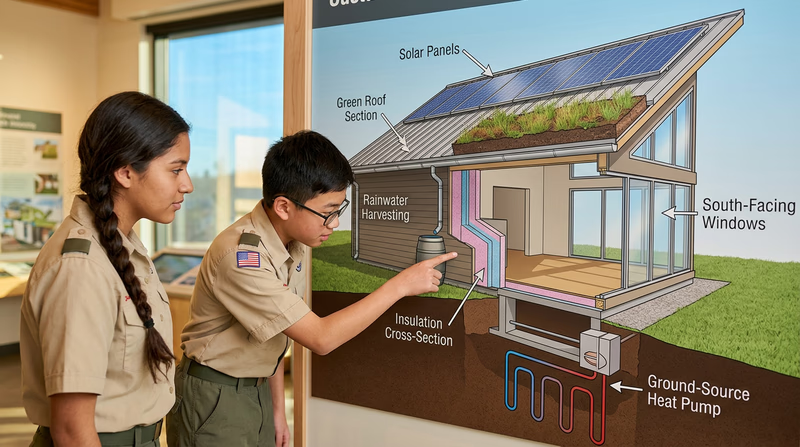
Solar panels and renewable energy systems. Many green buildings generate their own electricity using solar panels on the roof or walls. Some also use small wind turbines or geothermal systems that draw heat from underground.
High-performance insulation and windows. Green buildings use advanced insulation and double- or triple-pane windows to keep heat in during winter and out during summer. This dramatically reduces energy needed for heating and cooling.
Green roofs and living walls. A green roof is covered with plants and soil instead of traditional shingles or metal. Green roofs absorb rainwater, provide insulation, reduce urban heat, and create habitat for birds and insects. Living walls bring the same benefits to vertical surfaces.
Rainwater harvesting and water-efficient fixtures. Green buildings often collect rainwater for landscape irrigation or toilet flushing. Low-flow faucets, toilets, and showerheads reduce daily water use by 30–50% compared to standard fixtures.
Natural lighting and ventilation. Architects position windows, skylights, and open floor plans to maximize daylight and airflow. This reduces the need for electric lighting and mechanical air conditioning.
Recycled and locally sourced materials. Using materials that were recycled or sourced nearby reduces the energy spent on manufacturing and transportation.
Req 2b: Renewable vs. Recycled Building Materials
These two terms sound similar but mean very different things.
Renewable Building Materials
A renewable material comes from a source that can be regrown or replenished naturally within a human lifetime. The key word is replenishable — if you use it, nature can make more.
| Material | Source | Common Uses |
|---|---|---|
| Wood / Timber | Trees (sustainably harvested forests) | Framing, flooring, siding, furniture |
| Bamboo | Bamboo grass (grows up to 3 feet per day) | Flooring, scaffolding, wall panels |
| Cork | Cork oak bark (harvested without cutting the tree) | Flooring, insulation, wall tiles |
| Straw bales | Agricultural byproduct (regrown annually) | Insulation, wall construction |
| Wool | Sheep (sheared annually) | Insulation |
Recycled Building Materials
A recycled material is made from something that was already used for another purpose and has been processed into a new product. The key word is reused — it keeps waste out of landfills.
| Material | Original Source | Common Uses |
|---|---|---|
| Recycled steel | Old cars, appliances, buildings | Structural beams, rebar, roofing |
| Recycled concrete (aggregate) | Demolished buildings and roads | Foundations, road base, drainage fill |
| Recycled glass | Bottles and windows | Countertops, tiles, insulation |
| Reclaimed wood | Old barns, factories, warehouses | Flooring, accent walls, furniture |
| Recycled plastic lumber | Plastic bottles and containers | Decking, fencing, landscaping |
Req 2c: Architecture and Its Surroundings
A building never exists in isolation. It sits on a piece of land, in a neighborhood, in a community. Good architecture responds to its surroundings — the climate, the landscape, the culture, and the needs of the people who will use it.
Responding to the Environment
Architects consider the natural environment when designing a building. A home in the Arizona desert looks very different from a home in the forests of the Pacific Northwest — and it should. The desert home might have thick adobe walls to stay cool, small windows to block harsh sunlight, and a flat roof to collect the rare rainwater. The Pacific Northwest home might have a steep roof to shed rain and snow, large south-facing windows to capture limited winter sunlight, and deep eaves to protect from constant drizzle.
Fitting Into the Community
Buildings also respond to the human environment. An architect designing a new library in a historic downtown will consider the scale, materials, and style of the surrounding buildings. Dropping a massive glass-and-steel tower into a neighborhood of two-story brick buildings would feel jarring. Thoughtful architects find ways to be creative while still respecting what is already there.
Serving the Community
The best architecture makes a community stronger. A well-designed park gives people a place to gather. A thoughtfully planned school helps students learn. A welcoming community center brings neighbors together. Architecture shapes how people interact with each other and with the spaces around them.
U.S. Green Building Council — What Is Green Building? The organization behind LEED certification explains green building principles, benefits, and how sustainable design impacts communities.Req 2d: Adaptive Reuse
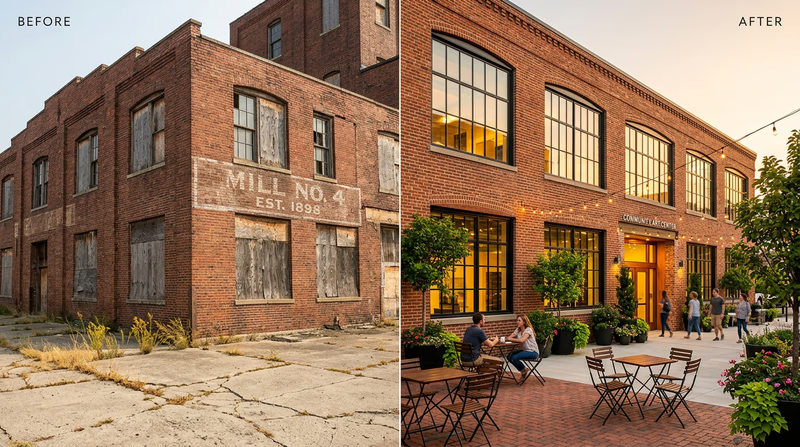
Adaptive reuse is the practice of taking an old building that no longer serves its original purpose and transforming it into something new — without tearing it down. This is one of the most sustainable things an architect can do, because the greenest building is often the one that already exists.
Why Reuse Instead of Demolish?
Demolishing a building sends tons of material to landfills and wastes all the energy that went into building it in the first place. That “embodied energy” — the energy used to manufacture, transport, and assemble every brick, beam, and window — is lost forever when a building is torn down. Adaptive reuse preserves that investment.
Famous Examples of Adaptive Reuse
- The High Line, New York City — An abandoned elevated railroad track was transformed into a 1.45-mile-long public park and walkway, attracting millions of visitors each year.
- Tate Modern, London — A decommissioned power station on the banks of the Thames became one of the world’s most visited modern art museums.
- Union Station, Denver — A historic train station was renovated into a mixed-use hub with restaurants, shops, a hotel, and a transit center — all while preserving its 1914 Beaux-Arts exterior.
- Local examples — Look around your own community. Old factories become loft apartments. Churches become community centers. Schools become office buildings. Fire stations become restaurants.
You have explored how architecture connects to the environment and sustainability. Next, you will step into the professional world of architecture.