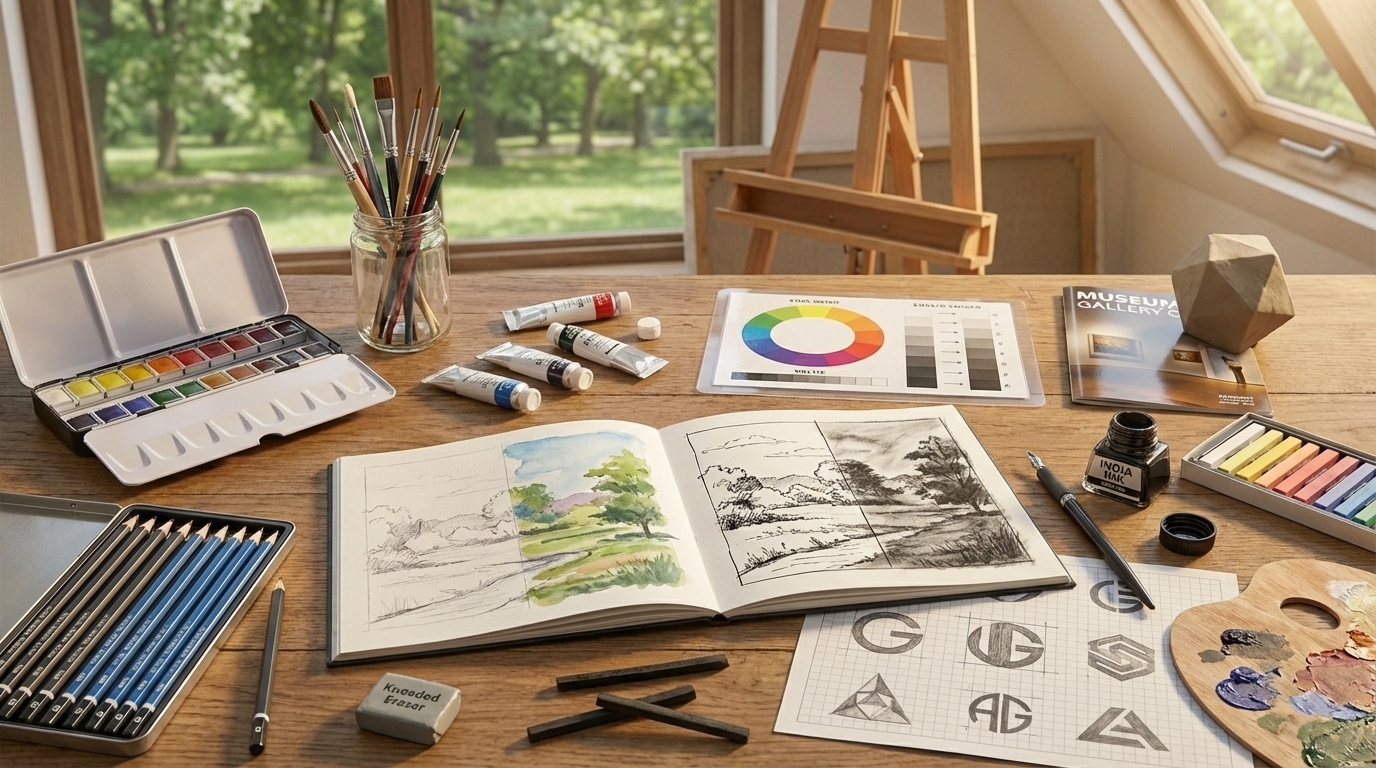
 Getting Started
Introduction & Overview
Art is everywhere. It is on the walls of museums, on the screens of your phone, on the side of a building downtown, and in the doodles you sketch in the margins of your notebook. The Art merit badge is your invitation to look at the world like an artist — to notice the colors, shapes, and patterns all around you and learn how to put them to work.
Whether you have been drawing since you could hold a crayon or you have never picked up a paintbrush, this badge will give you the tools and confidence to create. You will learn the language that artists use, try your hand at multiple media, and discover how art connects to almost every career and community you can imagine.
Then and Now
Then — The First Artists
Long before written language existed, humans were making art. The cave paintings at Lascaux, France — created roughly 17,000 years ago — show galloping horses, leaping bulls, and mysterious symbols. Nobody taught those ancient artists how to draw. They picked up natural pigments, mixed them with animal fat, and pressed their visions onto stone walls by firelight.
Throughout history, art has marked every major civilization. Egyptian painters covered tomb walls with stories of the afterlife. Greek sculptors carved figures so lifelike they seemed ready to step off their pedestals. Renaissance masters like Leonardo da Vinci and Michelangelo pushed art into new frontiers of realism, anatomy, and perspective. In every era, art captured what people valued, feared, celebrated, and dreamed about.
- Materials: Charcoal, clay, natural pigments, stone, wood, metals
- Purpose: Storytelling, religion, recording history, decoration
Now — Art Without Boundaries
Today, art has exploded beyond the canvas. Street artists transform blank walls into vibrant murals. Digital artists create entire worlds on tablets and computers. Animators bring characters to life frame by frame. Graphic designers shape the logos, apps, and packaging you interact with every day.
Technology has made art more accessible than ever. You do not need an expensive studio or years of formal training to start creating. A pencil and a sketchbook — or even a free drawing app on your phone — is enough to begin. At the same time, traditional techniques like oil painting, printmaking, and sculpture are thriving. The art world is big enough for all of it.
- Materials: Everything from graphite to code, spray paint to 3-D printers
- Purpose: Self-expression, communication, problem-solving, entertainment, social change
Get Ready! You are about to discover a creative side of yourself that will stay with you for the rest of your life. Art is not about being “talented” — it is about learning to see, practicing your skills, and having the courage to put something on the page. Let’s pick up a pencil and get started.
Kinds of Art
Art comes in many forms. Here is a look at the major categories you will encounter as you work through this merit badge.
Drawing & Illustration
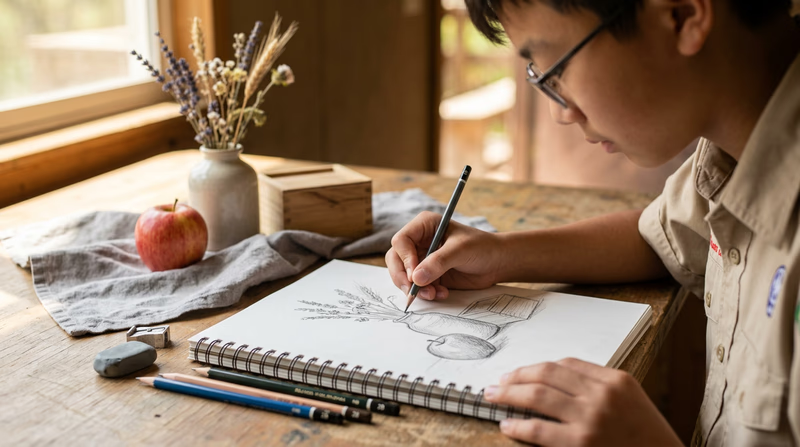
Drawing is where most artists begin. With just a pencil and paper, you can sketch anything you see — or anything you imagine. Illustration takes drawing a step further by telling a story or explaining an idea. Comic books, scientific diagrams, and courtroom sketches are all forms of illustration.
Painting
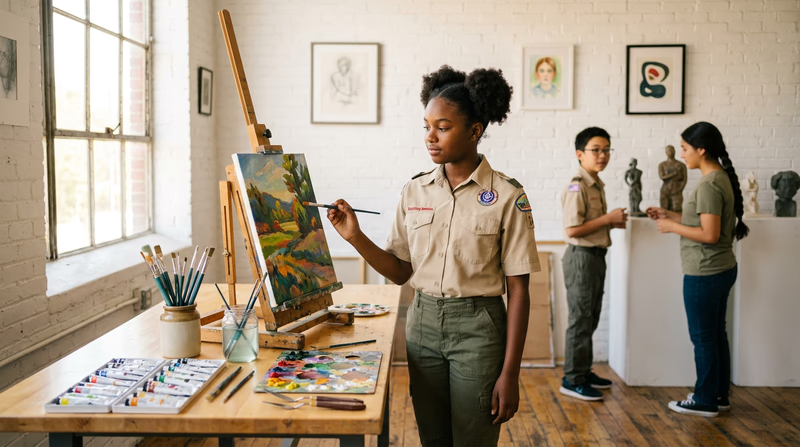
Painting adds color, texture, and depth to a surface using wet media like watercolors, acrylics, oils, or tempera. Each medium behaves differently — watercolors flow and blend on wet paper, while oils can be layered thickly and reworked over days. Learning to paint teaches you how colors interact and how light falls on objects.
Sculpture
Sculpture is three-dimensional art. You might carve wood, mold clay, weld metal, or assemble found objects. Unlike a painting, a sculpture occupies real space — you can walk around it, touch it (when allowed!), and see it change as the light shifts. Public parks, memorials, and museums are full of sculptures you can visit.
Digital Art
Digital art uses computers, tablets, and software as creative tools. This category includes digital painting, photo manipulation, 3-D modeling, animation, and graphic design. Many of the movies, video games, and advertisements you see every day are made almost entirely with digital art tools.
Photography
Photography captures light to create an image. While some debate whether photography is “art” or “documentation,” the greatest photographers make creative choices about composition, lighting, timing, and subject matter that are every bit as intentional as a painter’s brushstrokes. Your phone camera is a powerful creative tool.
Mixed Media & Collage
Mixed media art combines multiple materials or techniques in a single piece. A collage might layer magazine clippings, fabric, paint, and found objects. Mixed media encourages you to experiment and break rules — there is no wrong way to combine materials if the result communicates your idea.
Now that you know what art is and the many forms it takes, let’s dive into the requirements.