Req 6 — Visiting Art in Person
There is something that happens when you stand in front of a real piece of art that no screen, book, or poster can replicate. You see the actual size — a painting might be as tall as a wall or as small as your hand. You see the brushstrokes, the texture, the layers. You feel the space the artist created for you to stand in. This requirement gets you out of your sketchbook and into the world where art lives.
Where to Go
You have several options. Pick the one that is most accessible to you.
Museums are the most traditional choice. They house permanent collections and host rotating exhibits. Many museums have free admission days or discounted rates for youth. Look for art museums, history museums with art collections, or even science museums with design exhibits.
Art galleries are smaller venues that display and sell artwork, often by living artists. Galleries typically change their shows every few weeks, so the art you see will be current. Most galleries are free to enter and the staff is usually happy to talk about the work.
Art exhibits are temporary shows that can pop up anywhere — a community center, a library, a university, a park, or even a warehouse. Check local event listings for exhibits happening near you.
Artists’ co-ops are shared spaces where multiple artists work and display their art together. Visiting a co-op lets you see the creative process in action and ask artists directly about their work.
Artist’s workshops or studios give you a behind-the-scenes look at how art is made. Some artists offer open studio events where you can watch them work, ask questions, and see works in progress.
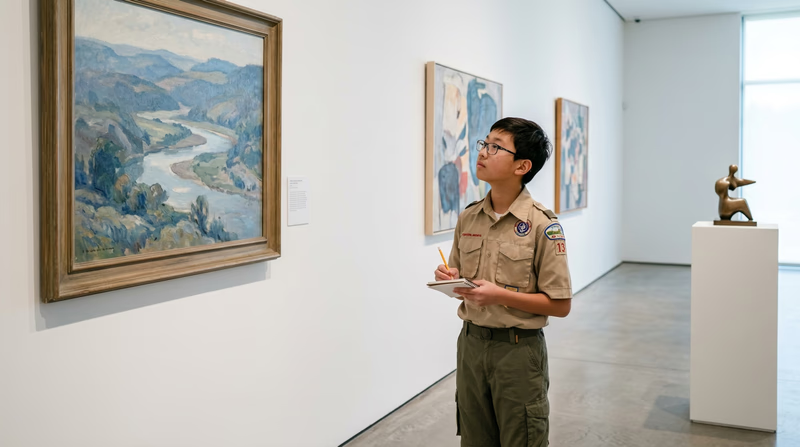
How to Prepare
Going in with a plan will make your visit more meaningful — and give you plenty to discuss with your counselor afterward.
Before Your Visit
Plan ahead for a great experience
- Get permission from your parent or guardian and approval from your counselor
- Check the venue’s hours, admission cost, and any rules (some places do not allow backpacks or photography)
- Decide if you want to focus on a particular artist, time period, or style — or explore broadly
- Bring a small notebook and pencil for jotting down observations and artist names
- Wear comfortable shoes — museum floors are hard and you will be on your feet
What to Look For
You do not need to study every piece in the building. In fact, trying to see everything is a recipe for exhaustion. Instead, take your time and really look at a handful of works that catch your eye.
For each artwork that interests you, ask yourself:
- What elements of art do I see? (Line, value, shape, form, space, color, texture — you learned these in Requirement 2)
- What principles of design are at work? (Rhythm, balance, proportion, variety, emphasis, unity — from Requirement 3)
- What medium did the artist use? Can I see brushstrokes, chisel marks, or pencil lines?
- What is the subject? What is the artist trying to show or say?
- How does it make me feel? Do I like it? Am I confused by it? Does it remind me of anything?
- What is the context? When and where was it created? What was happening in the world at that time?
What to Discuss with Your Counselor
After your visit, your counselor will want to hear about your experience. Be ready to cover:
- Where you went and what kind of art was displayed
- Which artworks stood out to you and why
- What you learned about the artists, techniques, or styles you saw
- How the experience connected to what you have already learned in this merit badge — the elements, principles, and media
- What surprised you or changed your perspective about art
Virtual Options
While an in-person visit is ideal, many world-class museums offer virtual tours and online collections. If travel is genuinely not possible, ask your counselor if a virtual visit might be acceptable. These resources can supplement your in-person experience as well:
Google Arts & Culture — Virtual Museum Tours Walk through hundreds of museums around the world from your computer or phone. Explore collections from the Metropolitan Museum of Art, the Louvre, the Smithsonian, and many more. Smithsonian American Art Museum The Smithsonian's art museum features one of the largest collections of American art in the world, with free admission and extensive online resources. National Gallery of Art Located in Washington, D.C., the National Gallery offers free admission and an incredible collection spanning centuries of art from around the world.