Req 7 — Careers in Art
Art is not just a hobby — it is a career path that millions of people follow every day. Chances are, almost everything you have touched, worn, or looked at today was shaped by someone with art skills. Your phone was designed by an industrial designer. The app icons were drawn by a graphic designer. The movie you watched was created by animators, set designers, and visual effects artists. Art careers are everywhere, and many of them pay well and are in high demand.
Career Fields in Art
Here is a look at some of the many career paths available to people with art skills. For this requirement, you need to research three of these (or others you discover), then do a deep dive into one.
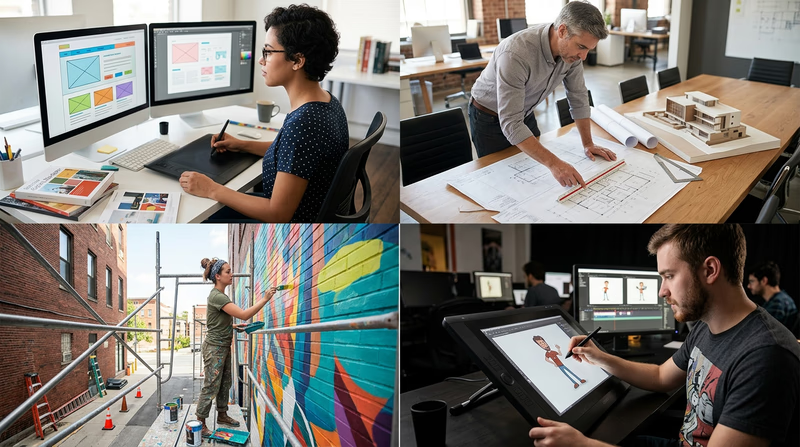
Visual & Fine Arts
Fine Artist / Painter / Sculptor Creates original works of art for galleries, commissions, and personal expression. Fine artists may sell through galleries, at art fairs, online, or through commissions from collectors and businesses.
Illustrator Creates images for books, magazines, advertisements, products, and digital media. Illustrators work in publishing, advertising, editorial, medical, scientific, and children’s book illustration.
Muralist Paints large-scale works on walls and buildings. Muralists work with cities, businesses, schools, and community organizations to create public art.
Printmaker Creates art through printing processes — screen printing, lithography, woodcuts, and etching. Printmakers may produce limited-edition prints for collectors or create designs for commercial products.
Design & Applied Arts
Graphic Designer Creates visual content for print and digital media — logos, websites, advertisements, packaging, and branding. This is one of the most in-demand art careers. Nearly every business needs a graphic designer.
Industrial / Product Designer Designs the physical products people use every day — furniture, appliances, sporting goods, vehicles, and consumer electronics. Industrial designers combine art skills with engineering and user experience.
Interior Designer Plans and designs indoor spaces — homes, offices, restaurants, and public buildings. Interior designers choose colors, materials, furniture, lighting, and layouts to create functional, beautiful environments.
Architect Designs buildings and structures that are safe, functional, and visually compelling. Architecture combines art, engineering, and problem-solving at a large scale.
Fashion Designer Creates clothing, shoes, and accessories. Fashion designers sketch concepts, select fabrics, and oversee production. They work for clothing brands, design houses, or independently.
Digital & Media Arts
Animator Brings characters and stories to life through movement — in movies, TV shows, video games, and advertisements. Animators may work in 2-D (traditional drawing) or 3-D (computer-generated).
Video Game Artist Creates the visual world of video games — characters, environments, textures, user interfaces, and special effects. This is one of the fastest-growing art careers.
UX/UI Designer Designs the interfaces of websites, apps, and software. UX (User Experience) designers focus on how a product works and feels. UI (User Interface) designers focus on how it looks. Both require strong visual skills.
Photographer Captures images for commercial, editorial, artistic, or documentary purposes. Photographers may specialize in portraits, events, products, nature, photojournalism, or fine art.
Film / Video Production Directors, cinematographers, set designers, and visual effects artists all use art skills to create movies, TV shows, and online content.
Education & Community
Art Teacher Teaches art at the elementary, middle school, high school, or college level. Art teachers inspire the next generation of artists and help students develop creative thinking.
Museum Curator Selects, organizes, and cares for collections of art in museums and galleries. Curators research artworks, plan exhibitions, and write educational materials.
Art Therapist Uses art as a therapeutic tool to help people deal with stress, trauma, and mental health challenges. Art therapists work in hospitals, clinics, schools, and community centers.
Researching Your Chosen Career
Once you have identified three careers that interest you, pick one for a deeper investigation. Here is what to find out:
Career Research Guide
What to learn about your chosen art career
- Education: What degree or training is typically required? (High school diploma, associate’s degree, bachelor’s degree, master’s degree?)
- Training: Are there specific skills, software, or certifications you need? (For example, architects need licensure in most states.)
- Experience: How do people typically break into this field? (Internships, apprenticeships, portfolio development, freelance work?)
- Day-to-day work: What does a typical workday look like?
- Work environment: Do they work in a studio, office, outdoors, or remotely?
- Salary range: What can someone expect to earn at entry level and with experience?
- Job outlook: Is demand for this career growing, stable, or declining?
Where to Research
Bureau of Labor Statistics — Arts and Design Occupations The official U.S. government resource for career information. Find detailed profiles of art careers including salary data, job outlook, and education requirements. My Next Move — Career Explorer An interactive tool that helps you explore careers based on your interests. Search for art-related careers and see what skills and education they require.Discussing with Your Counselor
When you meet with your counselor, be ready to share:
- The three careers you researched and a brief summary of each
- The one career you chose for your deep dive
- The education and training path for that career
- Why this career interests you — connect it to your own skills, passions, and experiences from working on this merit badge