Req 2c — Balanced Diet
Food is fuel. Just like a car will not run well on the wrong type of gas, your body will not perform at its best without the right nutrients. A balanced diet gives you the energy to train, the building blocks to grow and repair muscle, and the vitamins and minerals to keep every system in your body running smoothly.
The Building Blocks of Nutrition
There are three macronutrients (nutrients your body needs in large amounts) and several key micronutrients (vitamins and minerals you need in smaller amounts). Together, they form the foundation of a healthy diet.
Carbohydrates — Your Primary Fuel
Carbohydrates are your body’s preferred energy source, especially during exercise. They break down into glucose, which your muscles burn during activity. Without enough carbs, you will feel tired, sluggish, and unable to maintain intensity.
- Good sources: Whole grains (oatmeal, brown rice, whole wheat bread), fruits, vegetables, beans, and legumes.
- Limit: Added sugars and highly processed foods like candy, soda, and pastries give you a quick energy spike followed by a crash.
Protein — Your Repair Crew
Protein is essential for building and repairing muscle tissue. After a hard workout, your muscles have small tears that protein helps repair — making you stronger for the next session.
- Good sources: Lean meats (chicken, turkey, fish), eggs, dairy (milk, yogurt, cheese), beans, nuts, and tofu.
- How much? Active teenagers need about 0.5 to 0.8 grams of protein per pound of body weight per day. A 130-pound Scout needs roughly 65–100 grams daily.
Fats — Your Long-Lasting Energy Reserve
Fats sometimes get a bad reputation, but your body absolutely needs them. Healthy fats support brain function, protect your organs, help absorb vitamins, and provide a long-lasting energy source for lower-intensity activities.
- Good sources: Avocados, nuts, seeds, olive oil, and fatty fish like salmon.
- Limit: Trans fats (found in many fried and processed foods) and excessive saturated fats.
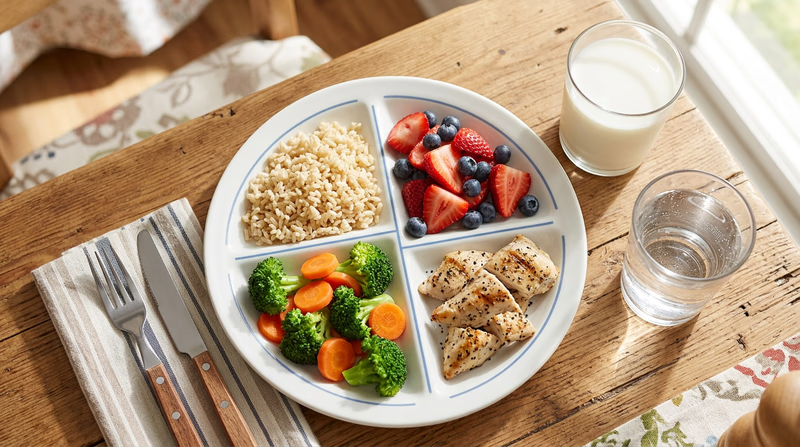
The MyPlate Model
The USDA’s MyPlate is a simple visual guide to building a balanced meal. Imagine your plate divided into sections:
- Fruits and vegetables fill half the plate — they provide vitamins, minerals, fiber, and antioxidants.
- Grains fill about a quarter — choose whole grains over refined grains whenever possible.
- Protein fills the remaining quarter — vary your sources throughout the week.
- Dairy on the side — a glass of milk, a cup of yogurt, or a serving of cheese provides calcium for strong bones.
- Water — always have a glass of water with your meal. It is the best drink for hydration.
Micronutrients Athletes Should Know
While macronutrients get most of the attention, certain vitamins and minerals are especially important for active bodies:
- Calcium — Builds strong bones and teeth. Found in dairy products, fortified plant milks, broccoli, and almonds.
- Iron — Carries oxygen in your blood to your muscles. Found in lean red meat, beans, spinach, and fortified cereals.
- Vitamin D — Helps your body absorb calcium and supports immune function. Found in sunlight exposure, fortified milk, eggs, and fatty fish.
- Potassium — Helps muscles contract and prevents cramps. Found in bananas, potatoes, oranges, and yogurt.
- B Vitamins — Help convert food into energy. Found in whole grains, eggs, lean meats, and leafy greens.
Eating for Training
What you eat and when you eat it matters during a training program:
Before exercise (1–3 hours before): Eat a meal or snack rich in carbohydrates with some protein. Examples: a peanut butter sandwich, oatmeal with fruit, or a banana with yogurt.
During exercise (over 60 minutes): Sip water or a sports drink. For very long sessions, a small carb-rich snack like an energy bar or handful of raisins can help.
After exercise (within 30–60 minutes): Eat a combination of carbs and protein to replenish energy stores and kickstart muscle repair. Examples: chocolate milk (a classic recovery drink), a turkey wrap, or a smoothie with fruit and protein.
Maintaining Your Own Healthy Diet
The requirement asks you to explain what you do to eat well. Here are some practical strategies:
- Eat breakfast every day. It jumpstarts your metabolism and gives you energy for the morning.
- Pack healthy snacks. Trail mix, fruit, yogurt, and granola bars are easy to carry and keep you fueled between meals.
- Drink water as your default beverage. Save sports drinks for during or after intense exercise.
- Read labels. Check serving sizes, sugar content, and ingredient lists. If sugar is one of the first three ingredients, it is probably not a great choice.
- Eat together. Family meals tend to be more balanced than eating alone or on the go.