Req 4d — Sportsmanship
You can be the fastest runner, the strongest lifter, or the most accurate shooter on the field — but none of that matters if you cannot win with grace and lose with dignity. Sportsmanship is the quality that separates an athlete from a good athlete.
What Is Sportsmanship?
Sportsmanship is the combination of respect, fairness, and integrity that an athlete brings to competition. It is how you treat your opponents, your teammates, the officials, and yourself — especially when the pressure is on.
Traits of Good Sportsmanship
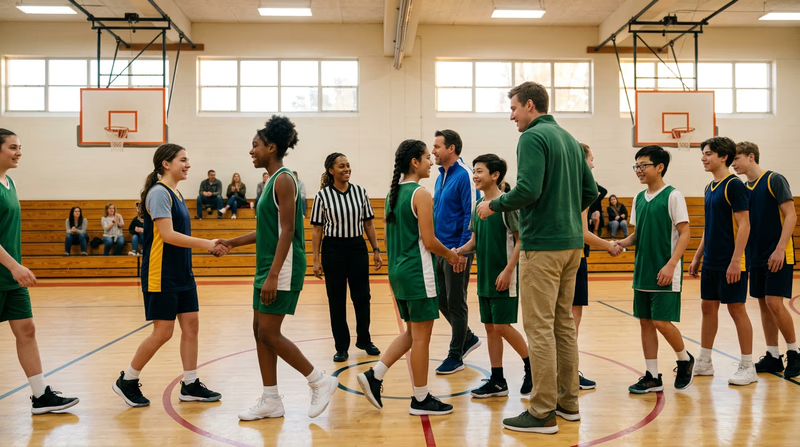
Respect for opponents. Your opponents are not your enemies. They are fellow athletes who trained hard to compete. Shake hands before and after. Acknowledge a great play, even when it hurts your score.
Respect for officials. Officials make mistakes — they are human. A good sport accepts the call and moves on. Arguing, gesturing, or showing up an official hurts your team and undermines the game.
Respect for teammates. Lift your teammates up when they struggle. Celebrate their success. Never blame a teammate for a loss — athletics is about shared effort.
Playing by the rules. Good sportsmanship means following the rules even when you could get away with breaking them. If the ball was out and only you saw it, you call it honestly.
Self-control. Frustration, anger, and disappointment are natural feelings in competition. The difference between a good sport and a poor one is what you do with those emotions. A good sport channels them into motivation. A poor sport channels them into tantrums or dirty play.
Humility in victory. Celebrate, but do not taunt. A touchdown dance is fine; pointing and laughing at the other team is not. Remember that the person you beat today might beat you tomorrow.
Grace in defeat. Losing is hard, but how you handle it reveals your character. Congratulate the winner. Reflect on what you can improve. Come back stronger next time.
Sportsmanship in Individual Activities
In individual sports — running, swimming, jumping, throwing — you are competing mostly against yourself and the clock. Sportsmanship here looks like:
- Congratulating the winners instead of making excuses
- Not blaming equipment, weather, or officials for a poor performance
- Competing clean — no performance-enhancing substances, no shortcuts
- Encouraging other competitors, even your rivals
- Respecting the integrity of the results (no false starts, no cutting corners)
Sportsmanship in Group Activities
In team sports — basketball, soccer, football, baseball — sportsmanship extends to how you interact with your own team as well as the opposition:
- Support struggling teammates. Everyone has an off day. A pat on the back means more than a frustrated sigh.
- Share credit for victories. No one wins a team game alone.
- Accept your role. Not everyone can be the star. Playing your position well — even if it is not glamorous — is sportsmanship in action.
- Respect the other team. Running up the score on a weaker opponent, trash-talking, and unsportsmanlike celebrations cross the line from competitive to disrespectful.
The Scout Connection
The Scout Law includes being trustworthy, loyal, helpful, friendly, courteous, kind, and brave — all traits that overlap directly with sportsmanship. When you compete with integrity, you are not just being a good athlete. You are being a good Scout.
Positive Coaching Alliance Resources for athletes, coaches, and parents on building a positive sports culture through character and sportsmanship.