Req 5f — Baseball Throw
Activities:
- Baseball throw for accuracy: 10 throws at a target (distance by age: 11–12 years = 20 feet; 13–15 years = 30 feet; 16–17 years = 40 feet)
- Baseball throw for distance: 5 throws (total distance)
Throwing a baseball combines coordination, arm strength, and whole-body mechanics into one fluid motion. This option tests two very different skills: the precision of hitting a target and the raw power of throwing as far as you can.
Throwing Mechanics
A good throw is not just about your arm — it starts from the ground and moves up through your entire body. This is called the kinetic chain.
1. Grip Hold the ball across the seams with your index and middle fingers on top and your thumb underneath. Keep a gap between the ball and your palm — you are holding it with your fingers, not squeezing it.
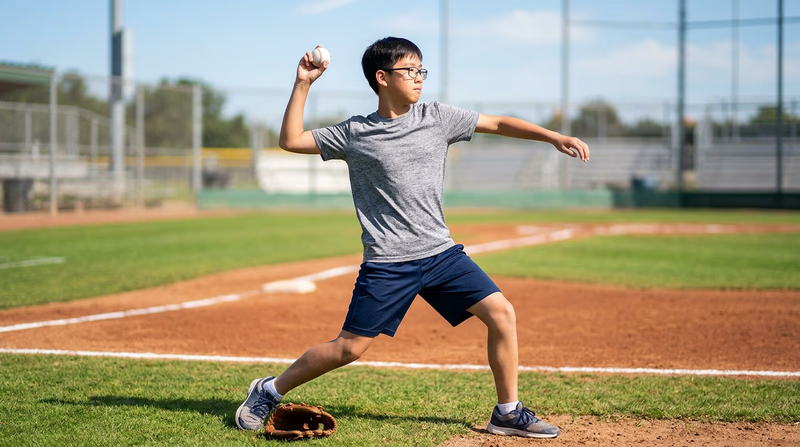
2. Stance and Wind-Up Face your target sideways (perpendicular). Your front shoulder points at the target. Step toward the target with your lead foot as you bring the ball back.
3. Arm Action Bring the ball behind your ear with your elbow at or above shoulder height. Your arm should make an “L” shape before you throw. Lead with your elbow, then snap your wrist forward at release.
4. Follow-Through After releasing the ball, let your throwing arm continue across your body. Your back foot should come forward naturally. A full follow-through protects your arm and adds power.
Throwing for Accuracy
The accuracy test measures how many of your 10 throws hit the target from the age-appropriate distance. To improve:
- Pick a consistent routine. Line up the same way every time — same stance, same grip, same wind-up. Consistency breeds accuracy.
- Focus on the target. Look at a specific spot on the target (not the whole thing) and throw to that spot.
- Stay relaxed. Tension in your arm and shoulder causes wild throws. A smooth, relaxed motion is more accurate than a tight, forced one.
- Practice at shorter distances first and gradually move back as your accuracy improves.
Throwing for Distance
Distance throwing is about generating maximum force through the kinetic chain. Tips for throwing farther:
- Use your legs. Power comes from your lower body. Drive hard off your back leg as you step toward your target.
- Full body rotation. Rotate your hips and torso toward the target before your arm comes through. This “lag” generates more whip in your throw.
- Optimal release angle. For maximum distance, aim to release the ball at roughly a 35–45 degree angle above horizontal.
- Throw on the run. A crow-hop (a small running start) before throwing adds momentum and increases distance.
Training for Throwing
Throwing Practice Plan
Build accuracy and arm strength safely
- Long toss: Start close (30 feet) and gradually increase distance, focusing on easy, arcing throws. This builds arm strength safely.
- Target practice: Set up a target (a bucket, a marked area on a wall, or a net) and throw 10 balls from your test distance.
- Wrist flicks: Hold the ball and flick it using only your wrist to build forearm strength and snap.
- Band exercises: Use resistance bands to strengthen your rotator cuff muscles (the small muscles that protect your shoulder joint).
- Core work: Planks, Russian twists, and medicine ball rotations build the core strength that powers your throw.