Req 5e — Pull-Ups & Push-Ups
Activities: Pull-ups in two minutes and push-ups in two minutes.
Pull-ups and push-ups are the ultimate bodyweight exercises. They require no gym, no equipment (just a bar for pull-ups), and no fees. They build functional, real-world strength — the kind of strength that helps you climb, carry, push, and pull in everyday life and in every other sport.
Pull-Ups: Proper Form
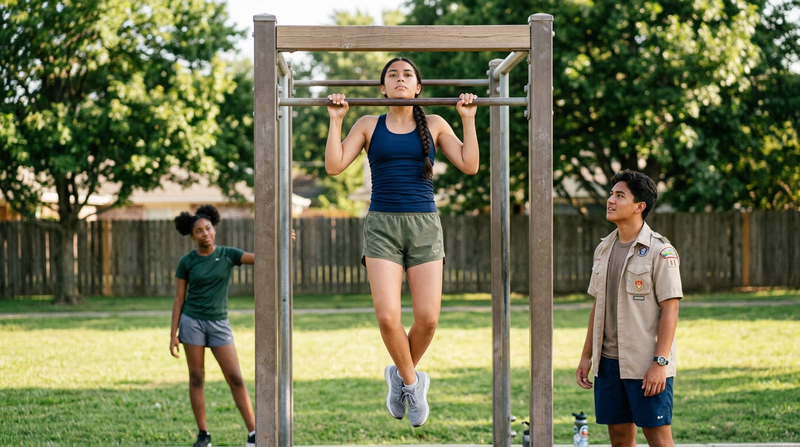
A proper pull-up starts and ends in a dead hang — arms fully extended, body still, no swinging.
- Grip: Grab the bar with an overhand grip (palms facing away from you), hands slightly wider than shoulder-width apart.
- Pull: Engage your back muscles and pull your body straight up until your chin clears the top of the bar.
- Lower: Slowly lower yourself back to a full dead hang. Control the descent — do not just drop.
- Repeat: Each rep should be smooth and controlled. No kipping (swinging), jerking, or half reps.
Push-Ups: Proper Form
A proper push-up is more demanding than most people think. Here is the standard:
- Starting position: Hands slightly wider than shoulder-width, fingers pointing forward. Body in a straight line from head to heels — no sagging hips, no raised rear.
- Lower: Bend your elbows and lower your chest until it is 2–3 inches from the floor (or your upper arms are parallel to the ground). Keep your elbows at about a 45-degree angle from your body — do not let them flare out to the sides.
- Push: Drive through your palms to straighten your arms and return to the starting position.
- Repeat: Maintain the straight-line body position throughout. A rep does not count if your hips sag or your chest does not go low enough.
The Two-Minute Test
For this requirement, you will perform as many pull-ups (and separately, as many push-ups) as you can in two minutes. Here are strategies for maximizing your count:
Pace yourself. Two minutes is longer than you think. If you sprint through the first 30 seconds and burn out, you will spend the remaining 90 seconds staring at the bar. Start at a steady rhythm you can sustain.
Rest strategically. In push-ups, you can rest in the “up” position (arms locked out). In pull-ups, you can rest in the dead hang. Brief 5–10 second pauses can help you squeeze out extra reps.
Breathe. Exhale on the effort (pushing up or pulling up) and inhale on the return. Holding your breath causes you to fatigue faster.
Training Program
Pull-Up & Push-Up Training
Three workouts per week
- Max set: Do as many reps as you can with perfect form. Record the number.
- Volume sets: Do 3–5 sets at 50–60% of your max (if your max is 10 push-ups, do sets of 5–6).
- Negative emphasis: Do 3 sets of 5 reps with a very slow lowering phase (3–5 seconds down).
- Variety: Add close-grip push-ups, wide-grip push-ups, diamond push-ups, and chin-ups (palms facing you) to work different muscle angles.
- Core work: Planks, hollow holds, and leg raises strengthen the core muscles that keep your body stable during both exercises.