Req 7 — Careers & Lifestyle
Athletics does not end when the final whistle blows. The skills, habits, and passion you build through sports can shape your career, your hobbies, and your health for the rest of your life. For this requirement, choose one of the two options below.
Option 7a: Careers in Athletics
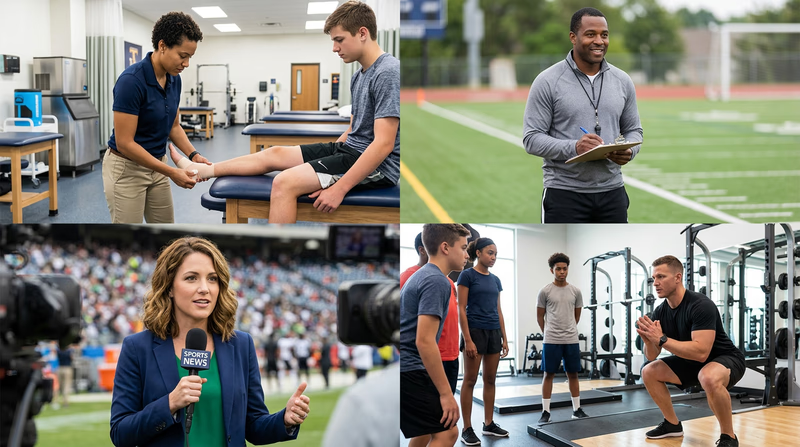
The world of athletics supports a huge range of careers beyond being a professional athlete. Here are several categories to explore:
Sports Medicine and Health
- Athletic trainer — Works directly with athletes to prevent, diagnose, and treat injuries. Requires a bachelor’s or master’s degree in athletic training and national certification.
- Physical therapist — Helps athletes recover from injuries and surgery through guided exercise and rehabilitation. Requires a Doctor of Physical Therapy (DPT) degree.
- Sports psychologist — Helps athletes manage performance anxiety, motivation, and mental health. Requires a graduate degree in psychology.
- Sports nutritionist/dietitian — Designs meal plans and nutrition strategies for athletes. Requires a degree in nutrition or dietetics and certification.
Coaching and Instruction
- High school or college coach — Teaches and leads athletes in a specific sport. May require teaching certification and sport-specific experience.
- Personal trainer — Works one-on-one with clients to design fitness programs. Certification through NASM, ACE, or similar organizations.
- Strength and conditioning coach — Designs training programs for teams and athletes to improve performance. Often requires CSCS certification.
Sports Management and Media
- Sports marketing manager — Promotes teams, events, and athletes through advertising and partnerships.
- Sports journalist — Reports on sports for newspapers, websites, TV, or podcasts.
- Event coordinator — Plans and manages sports events, tournaments, and meets.
- Sports data analyst — Uses statistics and data to evaluate player performance and strategy.
Facilities and Operations
- Athletic director — Oversees sports programs at a school or university.
- Facility manager — Manages stadiums, arenas, pools, and sports complexes.
- Groundskeeper/turf manager — Maintains playing fields, tracks, and courts.
Research Framework for Option 7a
When you research your chosen career, cover these six areas:
| Area | Questions to Answer |
|---|---|
| Training/Education | What degree, certification, or experience is required? |
| Expenses | What does the education cost? Are there scholarships or financial aid options? |
| Job Outlook | Is demand for this career growing, stable, or declining? |
| Salary | What is the typical starting salary? What can an experienced professional earn? |
| Advancement | What does the career ladder look like? Where can this job lead? |
| Day-to-Day | What does a typical workday involve? |
Option 7b: Athletics as a Hobby and Lifestyle
Not everyone who loves athletics will make it a career — and that is perfectly fine. Option 7b asks you to explore how a specific athletic activity could become a lifelong hobby that keeps you healthy, happy, and connected to your community.
Research areas:
- Education: What do you need to learn to participate at a recreational level? Are there classes, clubs, or community programs?
- Costs: What equipment do you need? What are membership or registration fees? How can you participate affordably?
- Organizations: What local, regional, or national organizations support this activity? (Running clubs, swim teams, community leagues, etc.)
- Health benefits: How does this activity contribute to long-term physical and mental health?
- Community: How does this activity connect you with other people? Are there social leagues, volunteer opportunities, or events?
Examples of Lifelong Athletic Activities
- Running — Low cost, can be done anywhere, massive community of recreational runners and road races.
- Swimming — Easy on joints, excellent for lifelong fitness, available through community pools and masters swim programs.
- Basketball — Community recreation leagues and pickup games are available in almost every city.
- Weight training — Gym memberships are widely available, and home gym setups can be minimal.
- Cycling — Combines fitness with transportation and exploration. Active cycling communities exist nationwide.
- Martial arts — Builds discipline, fitness, and self-defense skills across all ages.