Extended Learning
A. Introduction
Congratulations — you have earned the Automotive Maintenance merit badge! You now understand how vehicles work from bumper to bumper: safety, fluids, tires, engines, electrical systems, brakes, and more. But the automotive world is always evolving, and there is so much more to explore. Let’s take your knowledge even further.
B. Deep Dive: Understanding Your OBD-II Scanner
You learned about the OBD-II system and trouble codes earlier in this guide. Now let’s go deeper into how you can use a scanner to diagnose real problems — a skill that can save you hundreds of dollars in shop diagnostic fees.
Every vehicle sold in the United States since 1996 has a standardized OBD-II port, usually located under the dashboard near the steering column. When you plug in a scanner, you gain access to a wealth of real-time data about the engine and emissions systems. Basic scanners cost as little as $20 and can read and clear trouble codes. More advanced models (and smartphone apps with Bluetooth adapters) can display live data like engine RPM, coolant temperature, fuel trim, oxygen sensor readings, and more.
Trouble codes follow a standardized format. The first character tells you the system:
- P = Powertrain (engine and transmission)
- B = Body (interior systems)
- C = Chassis (brakes, steering, suspension)
- U = Network/Communication (data bus between modules)
The second character tells you if the code is generic (0) or manufacturer-specific (1). For example, P0301 is a generic code meaning “Cylinder 1 Misfire Detected.” The beauty of generic codes is that P0301 means the same thing on a Toyota as it does on a Ford.
When the check engine light comes on, the first step is always to read the code. The code will not tell you exactly what part to replace, but it points you toward the right system. For instance, P0171 (“System Too Lean, Bank 1”) tells you the engine is getting too much air or not enough fuel — so you might check for vacuum leaks, a dirty mass airflow sensor, or a failing fuel pump. Knowing this before you visit a shop means you can have an informed conversation with the technician rather than simply accepting whatever they recommend.
Many public libraries lend OBD-II scanners, and some auto parts stores (like AutoZone and O’Reilly) will scan your codes for free. Learning to read and interpret these codes is one of the most empowering skills you can develop as a vehicle owner.
OBD-II Code Database Searchable database of all standard OBD-II trouble codes with explanations and common causes.C. Deep Dive: The Future of Automotive Technology
The automotive industry is in the middle of its biggest transformation in over a century. Understanding where the technology is heading gives you a preview of the vehicles you will be driving and maintaining in the coming years.
Autonomous Driving is the most talked-about trend. Vehicles are being equipped with cameras, radar, lidar (laser-based distance sensors), and artificial intelligence to handle more and more driving tasks. The Society of Automotive Engineers defines six levels of autonomy, from Level 0 (no automation — the driver does everything) to Level 5 (full automation — no steering wheel needed). Most current vehicles are at Level 2, where the car can steer, accelerate, and brake on its own in certain situations but requires the driver to remain attentive. Reaching Level 4 and 5 will require not just better technology but also new laws, insurance frameworks, and public trust.
Solid-State Batteries promise to replace the current lithium-ion battery packs in electric vehicles. Solid-state batteries use a solid electrolyte instead of a liquid one, which makes them safer (less fire risk), lighter, faster to charge, and capable of storing more energy in the same space. Several major automakers are racing to bring solid-state batteries to production vehicles within the next decade.
Vehicle-to-Everything (V2X) Communication allows vehicles to wirelessly communicate with each other (V2V), with traffic signals and infrastructure (V2I), and with pedestrians’ smartphones (V2P). Imagine approaching an intersection and your car already knows the traffic signal is about to turn red, or receiving a warning that a vehicle two cars ahead has slammed on its brakes. V2X technology could prevent millions of accidents — but it requires widespread adoption to be effective.
Over-the-Air (OTA) Updates allow manufacturers to improve a vehicle’s software remotely — similar to how your phone receives updates. Tesla pioneered this approach, and most major automakers are now following suit. OTA updates can add new features, improve performance, fix bugs, and even update safety systems without the owner visiting a dealership.
These technologies mean that the automotive technician of the future will need strong skills in software, electronics, and networking alongside traditional mechanical knowledge.
D. Deep Dive: Building a Home Maintenance Kit
One of the best things you can do after earning this badge is set up your own vehicle maintenance station at home. You do not need a professional shop — a clean, organized garage corner is plenty.
Start with the tools and supplies from Requirement 1b. Store them in a tool chest or portable toolbox where they are organized and easy to find. A clean workspace with good lighting makes every job safer and more enjoyable.
Beyond the basics, consider building a vehicle emergency kit to keep in your car. This kit should include jumper cables (or a portable jump starter), a tire pressure gauge, a flashlight with extra batteries, reflective triangles or road flares, a first-aid kit, basic hand tools (screwdrivers, pliers, adjustable wrench), duct tape, zip ties, and a quart of engine oil. Add a warm blanket and bottled water if you drive in cold climates.
Keep a maintenance log — either a small notebook in the glove compartment or a spreadsheet on your computer. Record every maintenance task with the date, mileage, what was done, and what products were used. This log is invaluable for staying on schedule, diagnosing recurring problems, and proving maintenance history when selling the vehicle. There are also free apps like Drivvo, Fuelly, and Simply Auto that make tracking maintenance on your phone easy.
Finally, consider subscribing to a reliable automotive YouTube channel or website that covers DIY maintenance for your specific vehicle. Channels like ChrisFix, Engineering Explained, and Scotty Kilmer offer thousands of free tutorials that can walk you through nearly any maintenance or repair task step by step.
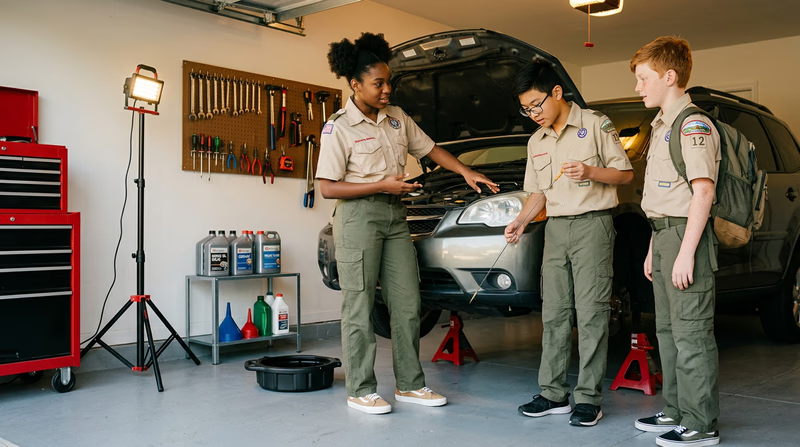
E. Real-World Experiences
Take your automotive knowledge beyond the garage with these hands-on experiences:
Visit a Professional Auto Shop
Attend a Local Car Show or Cars and Coffee
Tour an Auto Manufacturing Plant
Take a Vocational Auto Shop Class
Volunteer with Vehicles for Change or Similar Organizations
F. Organizations
These organizations support automotive education, safety, and career development:
Partners with high schools and colleges to accredit automotive technology programs, ensuring students get quality training that leads to ASE certification.
Represents the automotive aftermarket industry. Their SEMA Show in Las Vegas is one of the largest automotive events in the world, and they offer scholarships for students pursuing automotive careers.
A partnership of students, teachers, and industry working together to build a skilled workforce. Hosts regional and national automotive repair competitions for high school and college students.
The gold standard for automotive technician certification. Offers exams in over 40 specialty areas and is recognized by employers nationwide.
Dedicated to saving automotive culture through youth education, car preservation, and community events. Offers programs that teach young people to work on and appreciate cars.