Req 10 — Brakes
The brake system is arguably the most critical safety system on any vehicle. It converts your vehicle’s kinetic energy (the energy of motion) into heat energy through friction, slowing and stopping the car. Understanding how it works — and how to check its condition — is essential knowledge for every driver and Scout.
How the Brake System Works
When you press the brake pedal, here is what happens:
- Brake pedal — Your foot pushes on the pedal, which is connected to a lever that multiplies the force you apply.
- Brake booster — A vacuum-powered (or electric, in some newer vehicles) device that amplifies the force from your foot even further. Without the booster, you would need to push the pedal extremely hard.
- Master cylinder — Converts the mechanical force from the pedal into hydraulic pressure by pushing brake fluid through the brake lines.
- Brake lines — Steel and rubber tubes that carry pressurized brake fluid from the master cylinder to each wheel.
- Brake calipers (disc brakes) or wheel cylinders (drum brakes) — At each wheel, the hydraulic pressure pushes pistons outward, forcing the brake pads against the rotor (disc brakes) or the brake shoes against the drum (drum brakes).
- Friction — The pads or shoes press against the spinning rotor or drum, creating friction that slows the wheel. The kinetic energy is converted to heat, which is dissipated into the air.
Antilock Braking System (ABS)
ABS prevents the wheels from locking up during hard braking, which helps the driver maintain steering control. Without ABS, slamming the brakes on a slippery surface could lock the wheels, causing the vehicle to skid in a straight line — unable to steer around an obstacle.
How ABS works:
- Wheel speed sensors at each wheel continuously monitor how fast each wheel is rotating.
- If a sensor detects that one wheel is about to lock up (stop spinning while the car is still moving), the ABS control module rapidly pulses the brake pressure to that wheel — releasing and reapplying the brake many times per second.
- This pulsing action keeps the wheel rotating just enough to maintain traction and steering control.
- You may feel a pulsing or vibration in the brake pedal and hear a grinding or buzzing noise when ABS activates — this is normal.
Disc Brakes
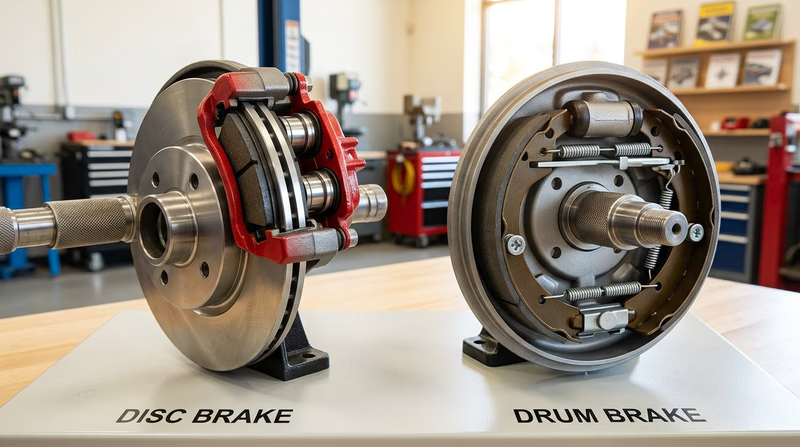
Disc brakes use a rotor (a flat, round metal disc) that spins with the wheel and a caliper that straddles the rotor. Inside the caliper, hydraulic pistons push brake pads against both sides of the rotor to create friction.
Advantages of disc brakes:
- Better heat dissipation — the rotor is exposed to air, so heat escapes quickly.
- Better performance in wet conditions — water is flung off the spinning rotor by centrifugal force.
- More consistent braking under repeated hard use (less “brake fade”).
- Easier to inspect — you can often see the brake pad thickness through the wheel spokes.
Drum Brakes
Drum brakes use a hollow drum that spins with the wheel. Inside the drum, brake shoes (curved pads) are pushed outward against the inside surface of the drum by a wheel cylinder.
Advantages of drum brakes:
- Less expensive to manufacture.
- Self-energizing — the rotation of the drum helps pull the shoe into tighter contact, requiring less hydraulic pressure.
- Better integration with the parking brake mechanism.
Modern Vehicles
Most vehicles today use disc brakes on the front wheels (which do 60–80% of the braking work) and either disc or drum brakes on the rear. Many newer vehicles use disc brakes on all four wheels.
How to Inspect Brakes
A basic brake inspection can be done visually and by paying attention to how the brakes feel and sound.
Visual inspection (disc brakes):
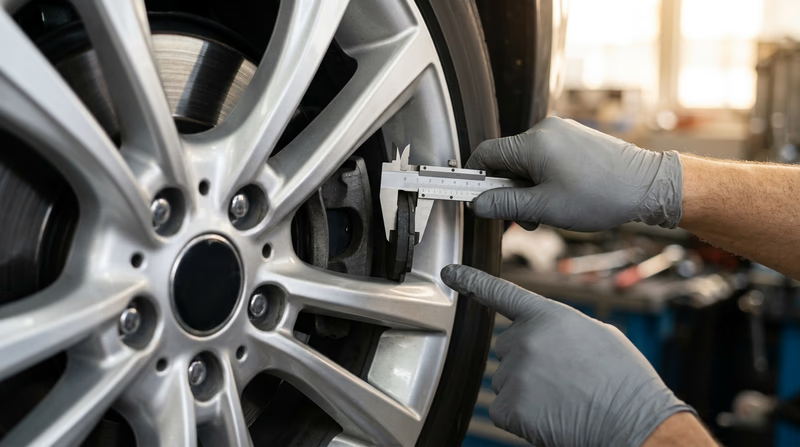
- Look through the wheel spokes at the brake caliper. You should be able to see the brake pad pressed against the rotor.
- Measure the pad thickness. New pads are typically 10 to 12 mm thick. They should be replaced when they reach 3 mm or less.
- Examine the rotor surface. It should be smooth and even. Deep grooves, scoring, or a lip at the outer edge indicate the rotor may need to be resurfaced or replaced.
- Look for brake fluid leaks around the caliper and along the brake lines.
Listen and feel:
- Squealing or squeaking — Many brake pads have a built-in metal wear indicator that makes a high-pitched squeal when the pad wears down to the replacement point. This is a designed warning.
- Grinding — A harsh grinding noise means the pads have worn completely through and metal is grinding on metal. This damages the rotor and requires immediate repair.
- Pulling — If the vehicle pulls to one side when braking, a caliper may be sticking or pads may be wearing unevenly.
- Soft pedal — If the brake pedal feels spongy or sinks to the floor, there may be air in the brake lines or a brake fluid leak.
- Vibration — Pulsing or vibration in the pedal during normal braking (not ABS activation) usually indicates a warped rotor.
Brake Inspection Checklist
What to check and what to look for
- Brake pad thickness: Should be more than 3 mm. Replace if worn thin.
- Rotor condition: Should be smooth, no deep grooves or scoring.
- Brake fluid level: Check the reservoir (covered in Req 2a). Should be between MIN and MAX.
- Brake fluid condition: Should be clear to light amber, not dark or murky.
- Brake lines and hoses: No visible leaks, cracks, or bulging.
- Brake pedal feel: Should be firm, not spongy or sinking.
- Parking brake: Should hold the vehicle on a moderate slope.
- Warning lights: ABS and brake warning lights should not be illuminated during driving.