Req 12 — Career Exploration
The automotive industry is one of the largest employers in the United States, supporting millions of jobs — and it is not just about turning wrenches. From designing the next generation of electric vehicles to developing self-driving software, from running a repair shop to crash-testing new safety features, the automotive world offers career paths for almost every interest and skill set.
Career Categories
Here are some of the many career areas within the automotive industry. As you research, try to find three that interest you from different categories.
Hands-On / Technical Careers:
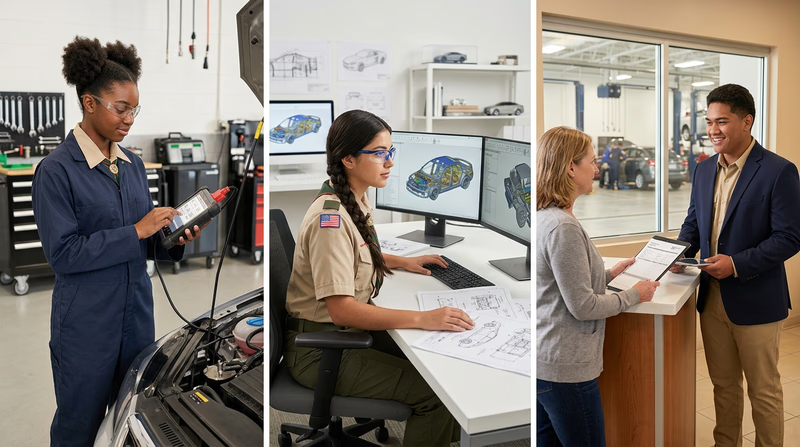
- Automotive technician / mechanic — Diagnoses and repairs vehicles. Modern technicians use computer diagnostics as much as hand tools. ASE (Automotive Service Excellence) certification is the industry standard.
- Diesel technician — Specializes in diesel engines found in commercial trucks, buses, and heavy equipment.
- Auto body / collision repair technician — Repairs vehicle bodies after accidents. Involves metalwork, painting, frame straightening, and working with advanced materials like carbon fiber and aluminum.
- EV/hybrid specialist — A rapidly growing field focused on high-voltage battery systems, electric motors, and the electronics in electrified vehicles. Requires specialized safety training.
Engineering and Design Careers:
- Automotive engineer — Designs vehicle systems including engines, transmissions, suspension, and safety features. Requires a bachelor’s degree in mechanical, electrical, or automotive engineering.
- Industrial designer — Creates the look and feel of vehicles, from exterior styling to interior layout.
- Software engineer — Develops the code that runs everything from infotainment systems to advanced driver-assistance systems (ADAS) and autonomous driving.
Business and Management Careers:
- Service advisor — The link between the customer and the technician. Explains needed repairs, provides cost estimates, and ensures customer satisfaction.
- Parts manager — Manages the inventory of replacement parts for a dealership or repair shop.
- Dealership general manager — Oversees all operations of a car dealership, from sales to service to finance.
Safety and Regulation Careers:
- Crash test engineer — Designs and conducts vehicle safety tests to meet federal standards.
- Emissions specialist — Works on technologies and regulations related to vehicle emissions and environmental compliance.
- Insurance claims adjuster — Evaluates vehicle damage after accidents and determines repair costs for insurance companies.
Researching Your Career
When you choose one career to explore in depth for your counselor, find out:
Career Research Questions
Prepare answers for your counselor discussion
- What does a typical day look like in this job?
- What education is required? (High school diploma, trade school, associate degree, bachelor’s degree, or more?)
- What certifications or training are needed? (ASE certification, manufacturer training, engineering license?)
- How much experience is typically needed for entry-level positions?
- What is the salary range? (Entry-level, mid-career, and experienced)
- What is the job outlook — is demand growing, shrinking, or stable?
- Why does this career interest you personally?
Pathways into Automotive Careers
Vocational/Technical Schools: Many automotive careers — technician, body repair, diesel mechanic — begin with a program at a vocational or technical school. Programs typically take 6 months to 2 years and combine classroom learning with hands-on shop time.
Apprenticeships: Some employers offer paid apprenticeships where you learn on the job under an experienced mentor while earning a paycheck. Dealer-sponsored programs from manufacturers like Toyota (T-TEN), Ford (ASSET), and GM (ASEP) are well-respected pathways.
College Degrees: Engineering, design, and management careers typically require a bachelor’s degree. Some positions (like research engineering) may require a master’s degree or Ph.D.
ASE Certification: The National Institute for Automotive Service Excellence (ASE) offers certifications in specific areas like brakes, electrical systems, engine repair, and more. ASE certification is widely recognized and often required by employers. Technicians must pass a written exam and have relevant work experience.