Req 1a — Shop Safety Hazards
Working on vehicles is rewarding, but a garage or shop is full of real dangers. Heavy parts, toxic chemicals, hot surfaces, and moving components can cause serious injuries if you are not careful. The good news is that almost every accident in a shop is preventable. Knowing the hazards before you start is the first step to staying safe.
Chemical Hazards
You will encounter many chemicals when working on a car. Engine oil, brake fluid, coolant (antifreeze), transmission fluid, and battery acid are all hazardous in different ways.
- Coolant/antifreeze has a sweet smell and taste that attracts animals and small children, but it is highly toxic. Even a small amount can be fatal if swallowed. Always clean up spills immediately and store containers with tight lids.
- Brake fluid is corrosive — it can damage paint and irritate your skin and eyes. Wear gloves and safety glasses whenever you handle it.
- Battery acid (sulfuric acid) can cause severe chemical burns. Never tip a battery on its side, and always wear eye protection when working near one.
- Used motor oil contains carcinogens (cancer-causing compounds) absorbed during engine operation. Avoid prolonged skin contact and always wash your hands thoroughly after handling it.
Physical Hazards
Cars are heavy — a typical sedan weighs around 3,500 pounds. When you lift a vehicle with a jack, you are holding thousands of pounds overhead. If the jack fails or the car slips, the results can be fatal.
- Crushing injuries are the most serious risk. Never work under a vehicle supported only by a jack. Always use jack stands rated for the vehicle’s weight.
- Burns can come from hot engine parts, exhaust components, or radiator fluid. An engine that has been running can have surface temperatures above 200°F. Let the engine cool before working near hot components.
- Cuts and scrapes from sharp metal edges, broken parts, and hand tools are common. Keep your tetanus vaccination up to date.
- Back injuries happen when you lift heavy parts like batteries, wheels, or engine components without proper technique. Lift with your legs, not your back, and ask for help with heavy items.
Electrical Hazards
A standard car battery operates at 12 volts, which is not enough to shock you through dry skin — but it can deliver hundreds of amps of current. That is enough to heat a wrench red-hot in seconds if it accidentally bridges the battery terminals, potentially causing burns or starting a fire.
Hybrid and electric vehicles present a much greater electrical danger. Their high-voltage battery packs operate at 200 to 800 volts — more than enough to cause a fatal shock. We will cover high-voltage safety in detail in Requirement 1d.
Fire and Explosion Hazards
Gasoline vapors are extremely flammable and heavier than air, so they collect in low spots like pits and floor drains. A single spark — from a tool, a light switch, or static electricity — can ignite them.
- Never smoke in or near a garage.
- Keep a fire extinguisher rated for Class B (flammable liquids) and Class C (electrical) fires within reach.
- Store gasoline and other flammable liquids in approved containers, away from heat sources.
Exhaust Hazards
Running an engine in an enclosed space produces carbon monoxide (CO), a colorless, odorless gas that can kill within minutes. Always ensure adequate ventilation when an engine is running indoors. If the garage door must be closed, use a tailpipe exhaust hose vented to the outside.
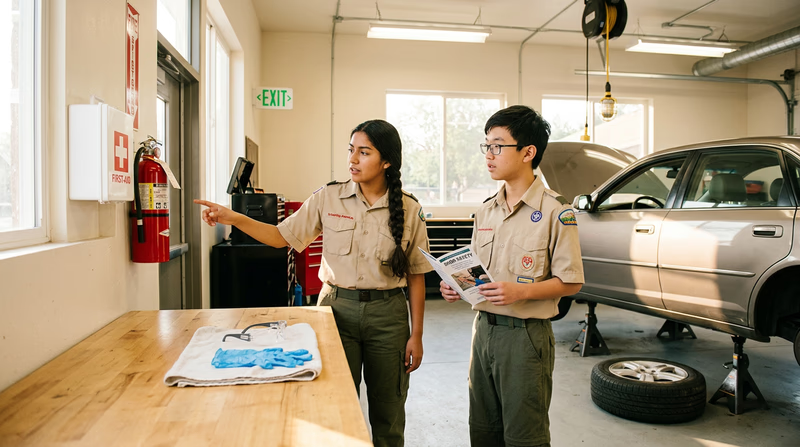
Anticipate, Prevent, Mitigate
Your counselor will want to hear you use these three concepts:
- Anticipate: Before you start any job, look around the workspace. What could go wrong? Is the floor slippery? Is the car securely supported? Are flammable materials nearby?
- Prevent: Take action to stop hazards from becoming injuries. Wear protective gear, use the right tools, follow procedures, and keep your workspace clean and organized.
- Mitigate: If something does go wrong, know how to minimize the damage. Know where the fire extinguisher is. Know how to shut off the engine. Know basic first aid. Have a phone nearby to call for help.