Req 1b — Safety Equipment & Clothing
Before you touch a single bolt, you need the right gear. Just like a firefighter would never enter a burning building without protective equipment, you should never work on a vehicle without the proper safety gear, tools, and clothing. The right equipment protects you from the hazards we discussed in Requirement 1a and makes every job easier and safer.
Personal Protective Equipment (PPE)
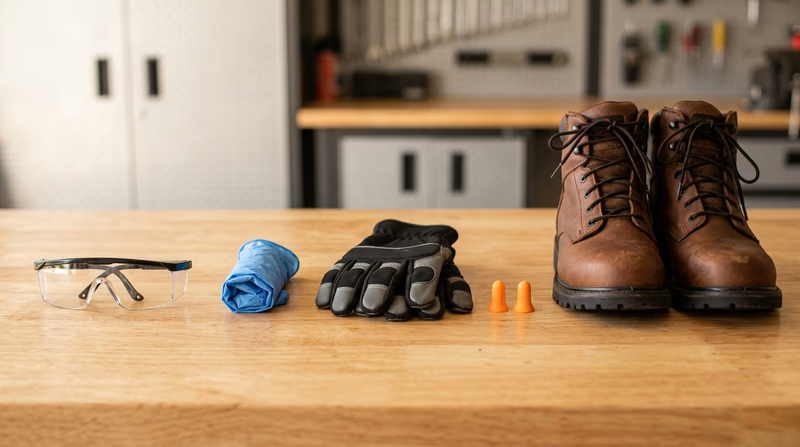
PPE is gear you wear to protect your body from injury. In an automotive shop, the most important items are:
Essential PPE for Automotive Work
Wear these every time you work on a vehicle
- Safety glasses or goggles: Protect your eyes from flying debris, chemical splashes, and brake dust. Regular eyeglasses are not a substitute — they do not have side shields.
- Nitrile or mechanic’s gloves: Shield your hands from chemicals like brake fluid, coolant, and used oil. Nitrile gloves are chemical-resistant and disposable. Heavier mechanic’s gloves add cut and abrasion protection.
- Closed-toe shoes or boots: Protect your feet from dropped tools and heavy parts. Steel-toe boots are ideal. Never wear sandals or sneakers in the shop.
- Hearing protection: Power tools like impact wrenches and grinders can damage your hearing over time. Foam earplugs or earmuffs are inexpensive insurance.
Clothing
What you wear matters more than you might think.
- Fitted clothing — Loose shirts, dangling sleeves, and untucked shirttails can get caught in belts, pulleys, and fans. Wear fitted clothes or roll up your sleeves.
- Long pants — Protect your legs from hot surfaces, sharp edges, and chemical splashes. Jeans or heavy work pants are ideal.
- No synthetic fabrics near sparks — If you are grinding or welding, polyester and nylon can melt onto your skin. Wear cotton or flame-resistant fabrics for those tasks.
Essential Hand Tools
A good set of hand tools is the foundation of automotive work. You do not need a professional-grade collection to get started — a basic set will cover most of the tasks in this merit badge.
Starter Tool Kit
The basics every Scout mechanic needs
- Socket set (metric and SAE): The most-used tools in automotive work. Sockets fit over bolt heads and nuts for fast, secure turning.
- Combination wrenches (metric and SAE): Open-end and box-end wrenches for bolts in tight spaces where a socket cannot reach.
- Screwdriver set: Phillips and flat-head in multiple sizes.
- Pliers: Needle-nose for small items, slip-joint for general use, and locking pliers (like Vise-Grips) for stubborn fasteners.
- Torque wrench: Measures how tightly a bolt is tightened. Critical for lug nuts, drain plugs, and many engine components.
- Oil filter wrench: Designed to grip and remove oil filters without crushing them.
- Funnel set: For adding fluids without spilling. A small funnel for oil and a larger one for coolant.
- Drain pan: Catches used oil and other fluids during changes.
Shop Safety Equipment
Beyond personal gear, a properly equipped shop has safety features built into the workspace.
Shop Safety Essentials
Every workspace should have these
- Fire extinguisher: ABC-rated (handles ordinary combustibles, flammable liquids, and electrical fires). Mount it near the exit so you can grab it on your way out — or on your way to the fire.
- First-aid kit: Stocked with bandages, antiseptic, burn cream, and eye wash.
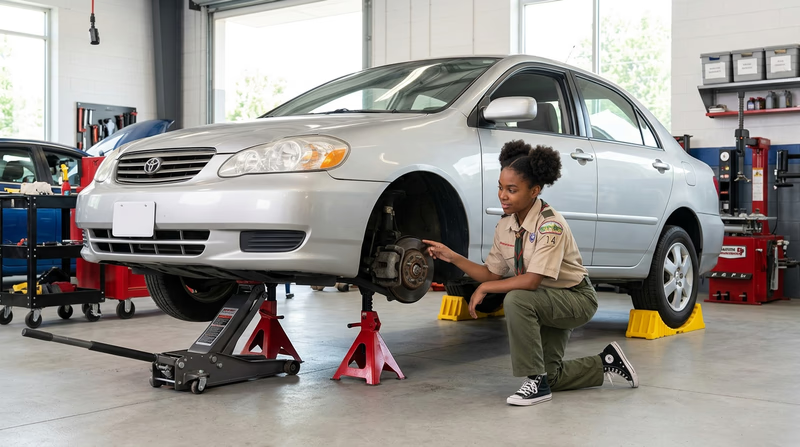
- Jack stands: Heavy-duty stands rated for the vehicle’s weight. The jack lifts the car; jack stands hold it.
- Wheel chocks: Blocks placed against the tires that stay on the ground to prevent the vehicle from rolling.
- Adequate lighting: A drop light or LED work light lets you see what you are doing. Working in the dark leads to mistakes and injuries.
- Ventilation: An open garage door, exhaust fan, or tailpipe hose. Essential whenever the engine is running.
Keeping Your Workspace Clean
A clean shop is a safe shop. Oil on the floor is a slip hazard. Tools left on the ground are tripping hazards. Rags soaked with oil or solvents can spontaneously combust if left in a pile.
- Clean up spills immediately with absorbent material.
- Put tools back in their place when you are done using them.
- Dispose of oily rags in a sealed metal container — never toss them in a regular trash can.
- Keep walkways clear so you can move quickly in an emergency.