Req 1g — Inspections & Registration
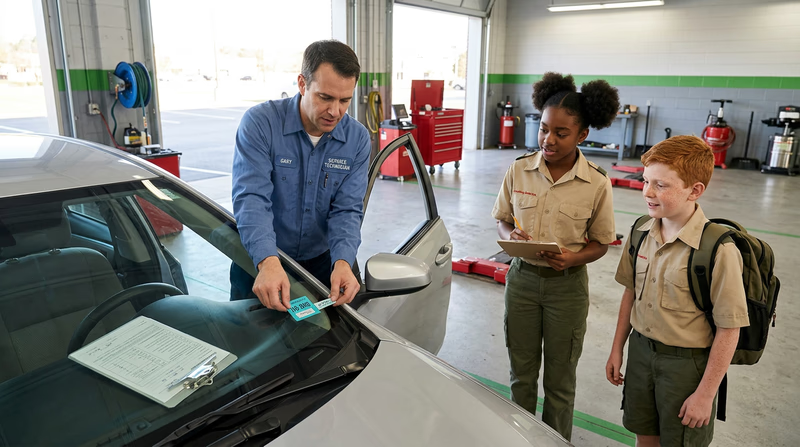
Many states require vehicles to pass periodic inspections before they can be legally driven on public roads. These inspections are designed to keep unsafe and heavily polluting vehicles off the road, protecting both drivers and the environment.
Types of Inspections
Safety inspections check that critical vehicle components are working properly:
- Brakes (including parking brake)
- Tires (tread depth, condition, proper inflation)
- Lights (headlights, taillights, brake lights, turn signals)
- Windshield and wipers (no major cracks, wipers functional)
- Steering and suspension
- Mirrors
- Horn
- Seat belts
Emissions inspections (also called “smog checks”) measure the pollutants coming from your vehicle’s exhaust system. The test typically checks for:
- Carbon monoxide (CO)
- Hydrocarbons (HC)
- Nitrogen oxides (NOx)
- The proper functioning of the vehicle’s OBD-II system and catalytic converter
State-by-State Differences
Inspection requirements vary widely by state. Some important things to research for your state:
- Does your state require safety inspections? Not all do.
- Does your state require emissions inspections? These are more common in urban areas with air quality concerns.
- How often? Most states that require inspections do so annually, but some require them every two years or only when a vehicle changes ownership.
- Are there exemptions? Some states exempt new vehicles for the first few years, or exempt vehicles older than a certain age, or exempt electric vehicles from emissions testing.
- What happens if you fail? You typically have a set period to make repairs and return for a re-inspection.
Requirement 1h — Vehicle Registration
Why Registration Matters
Every vehicle driven on public roads must be registered with the state. Registration serves several important purposes:
- Identification: Registration links a vehicle to its owner through a unique license plate number and registration card. This helps law enforcement identify vehicles involved in accidents, thefts, or traffic violations.
- Safety accountability: Registration ensures the state knows who is responsible for each vehicle on the road.
- Revenue: Registration fees fund road construction, maintenance, bridges, and highway safety programs.
- Insurance verification: Many states tie registration to proof of insurance, ensuring drivers carry the minimum required coverage.
The Registration Process
When a vehicle is purchased (new or used), the owner must register it with their state’s DMV. This involves:
- Completing a registration application
- Providing proof of ownership (title)
- Showing proof of insurance
- Paying the registration fee
- Receiving license plates and a registration card
Registration must be renewed periodically — usually every one or two years. The renewal process is simpler (often done online or by mail) and typically requires only payment of the renewal fee and proof of insurance.
Finding Your Family’s Registration Fee
Research Steps
Find your family's annual registration cost
- Ask a parent or guardian to show you the vehicle’s current registration card or renewal notice.
- Look up your state’s DMV website and find the registration fee schedule.
- Note that fees may vary based on the vehicle’s weight, age, value, or type (passenger car vs. truck).
- Some states charge additional fees for electric vehicles to offset the gas tax revenue they do not generate.
- Add up the base registration fee plus any additional fees to find the total annual cost.